🛕About Temple
Chitragupta Swamy Temple in Kanchipuram is a rare Hindu shrine dedicated to Chitragupta, the divine recorder associated with Yama, the god of death and justice. The temple stands in the historic temple city of Kanchipuram in Tamil Nadu and is especially noted because Chitragupta is more often represented in mythology than worshipped as the principal deity of an independent temple. The presiding deity is worshipped as Sri Chitragupta Swamy, seated with writing implements that symbolize the recording of human actions.
The shrine is important in the religious landscape of Kanchipuram, a city better known for its major Shaiva, Vaishnava and Shakta temples. Unlike large royal temple complexes, this temple is comparatively focused in scale and identity, centering on the moral and karmic role of Chitragupta. Devotees visit the temple to pray for ethical clarity, relief from karmic burdens, and disciplined conduct in daily life. The consort of the deity is worshipped as Karnigambal, also known as Karnambikai in local usage.
The temple is closely associated with Chitra Pournami, the full-moon day of the Tamil month of Chithirai, which is widely observed as a day connected with Chitragupta worship. On this day, devotees remember the idea that every action has consequence and seek forgiveness for wrong conduct. The temple’s significance lies in its unusual presiding deity, its connection with karma and accountability, and its place within Kanchipuram’s long religious tradition.
ℹ️Temple Information
🛕
Presiding Deity
Sri Chitragupta Swamy
⭐
Temple Type
Hindu temple, Chitragupta temple, Karma and dharma worship shrine, Parihara shrine
📅
Built Period
9th century CE
Need Help Planning your visit to
Shri Chitragupta Swamy Temple?
Our travel experts can help you with transportation,
darshan timings, nearby sightseeing and complete temple tour planning.
⭐Temple Significance
The temple is significant as one of the best-known independent shrines for Chitragupta Swamy in Tamil Nadu. It connects temple worship with the Hindu concept of karma, moral responsibility and the divine recording of human actions. It is especially associated with Chitra Pournami observances in Kanchipuram.
📜History
Chitragupta Swamy Temple is generally identified in temple accounts as an early medieval shrine of Kanchipuram, associated with the Chola period and often dated to about the ninth century CE. Kanchipuram was an important religious and political centre before, during and after the Chola age, and the Cholas supported many temples across the Tamil region. The precise name of the individual founder or royal patron of this temple is not securely established in widely available historical summaries, so the temple is best described as a Chola-period foundation rather than the work of a named king.
The temple’s historical importance comes from its unusual dedication. Most early Tamil temples were built for Shiva, Vishnu, Devi, Subrahmanya or Ganesha, while Chitragupta is usually known from Puranic and ritual contexts as the celestial accountant of human deeds. The presence of an independent shrine for him in Kanchipuram shows the city’s ability to accommodate many forms of worship within its sacred geography. The temple preserves a living devotional tradition that links ideas of conduct, responsibility and karmic record with temple worship.
Later repairs, renewals and local patronage are part of the continuing life of the shrine, as with many smaller temples in old urban centres. However, detailed inscriptional records, renovation dates and complete architectural chronology are not widely published for this temple. Its documented identity rests on its Chola-period association, its location in Kanchipuram, its rare dedication to Chitragupta Swamy, and its continued importance during Chitra Pournami worship.
🕉️Mythology
In Hindu mythology, Chitragupta is the divine scribe who records the actions of every being. He is associated with Yama, the deity who presides over death and justice. The name Chitragupta is commonly explained through the ideas of chitra, meaning picture or record, and gupta, meaning hidden or protected. Mythological accounts describe him as the one who maintains the subtle account of merit and sin, so that each soul receives the results of its own actions according to dharma.
Several Puranic and later traditions narrate his origin in different ways. One account connects him with Brahma, who creates Chitragupta to assist Yama in the difficult task of judging the countless actions of living beings. Another devotional explanation presents him as a divinely appointed accountant whose writing instruments represent knowledge, memory and justice. These narratives belong to mythology and should be understood separately from the historical date of the Kanchipuram temple.
The Kanchipuram shrine embodies this mythological role in temple worship. Chitragupta Swamy is depicted with a palm-leaf manuscript and stylus, symbols of recording and assessment. Devotees especially worship him on Chitra Pournami, a full-moon day connected with reflection on one’s actions. The observance is not merely about fear of judgment; it also emphasizes repentance, self-correction and conscious living. In this way, the mythology of Chitragupta becomes a practical spiritual reminder that every thought, word and deed carries moral consequence.
🏛Architecture
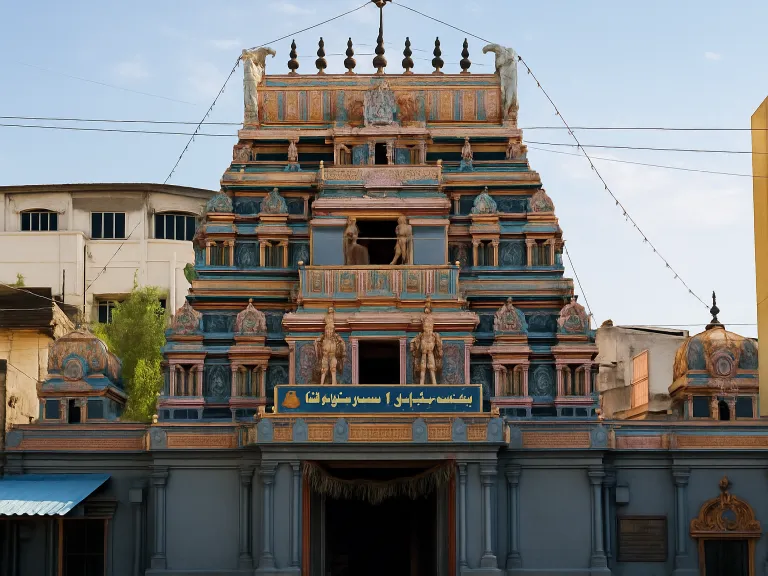
Chitragupta Swamy Temple is a modest South Indian temple within the urban sacred setting of Kanchipuram. Its architectural character follows the broad Dravidian temple idiom of Tamil Nadu, with a sanctum for the presiding deity and associated spaces for worship. The temple is not known for the monumental scale of Kanchipuram’s great royal complexes, but for its distinctive dedication and devotional focus. The compact arrangement suits the character of a specialized shrine centered on Chitragupta worship.
The main iconography is central to the temple’s architectural and ritual identity. Chitragupta Swamy is shown seated, holding a stylus and palm-leaf manuscript, which represent his mythological role as the recorder of karma. The presence of Karnigambal as the goddess gives the temple a complete household-deity character in the manner of many Tamil shrines. The sanctum and worship spaces are designed to direct attention to the deity’s symbolic function rather than to a large sculptural program.
Publicly available historical descriptions do not provide a complete, verified architectural chronology of the temple’s structures, inscriptions or successive renovations. Therefore, specific claims about original builders of individual components, exact measurements, sculptural schools, mandapa dates or tower phases should be treated with caution unless supported by direct temple or archaeological documentation. What can be stated securely is that the temple belongs to Kanchipuram’s traditional religious fabric, carries a Chola-period association, and preserves the iconographic theme of divine accounting through its presiding image and ritual layout.
✨
Temple Highlights
✨
Rare shrine for Chitragupta
The temple is notable because Chitragupta, the divine accountant associated with Yama, is worshipped here as the principal deity rather than as a subsidiary figure.
✨
Chitra Pournami importance
The full-moon day of the Tamil month of Chithirai is closely connected with Chitragupta worship and draws special devotional attention to the temple.
✨
Icon with writing symbols
Chitragupta Swamy is represented with a palm-leaf manuscript and stylus, symbolizing the recording of human actions and karmic accountability.
✨
Kanchipuram sacred setting
The shrine forms part of the wider religious landscape of Kanchipuram, one of Tamil Nadu’s most important temple cities.
✨
Ketu parihara association
In temple tradition, devotees connect worship of Chitragupta Swamy with prayers for relief from difficulties associated with Ketu.
🙏
Spiritual Benefits
Devotees seek forgiveness for wrong actions and omissions.
Devotees pray for clarity in moral decision-making.
Devotees seek discipline in speech, thought and conduct.
Devotees worship for relief from karmic burdens through repentance and self-correction.
Devotees pray for protection from the negative effects of past mistakes.
Devotees seek blessings connected with education, writing and record-keeping symbolism.
Devotees perform worship connected with Ketu-related parihara according to temple tradition.
Devotees use Chitra Pournami worship as a day of reflection and renewal.
🎉
Major Festivals
🎉
Chitra Pournami
Chitra Pournami, the full-moon day of the Tamil month of Chithirai, is the principal observance associated with Chitragupta worship. Devotees use the day for prayer, repentance and reflection on conduct.
🪔
Special Poojas
🪔
Chitra Pournami worship
Special worship associated with Chitragupta Swamy is performed on Chitra Pournami, the day most closely connected with the deity’s role as recorder of karma.
🪔
Ketu parihara worship
Devotees visit the temple for worship connected with Ketu-related parihara according to the temple’s devotional tradition.
🚗
How to Reach
🛣️
By Road
Kanchipuram is well connected by road with Chennai and other towns of northern Tamil Nadu. Local transport is available within the town to reach the temple area.
🚆
By Rail
Kanchipuram has railway connectivity, and visitors can reach the temple from Kanchipuram railway station by local transport.
✈️
By Air
The nearest major airport is Chennai International Airport, from where Kanchipuram can be reached by road or rail connections.
💡
Visitor Tips
Verify current opening hours directly with the temple or local sources before travelling.
Plan extra time if visiting on Chitra Pournami, as the temple can receive more devotees on that day.
Wear modest clothing suitable for a Hindu temple visit.
Respect restrictions around the sanctum and ask temple staff before taking photographs.
Combine the visit with other major Kanchipuram temples if time permits.
Carry drinking water during summer, as Kanchipuram can be very hot.
Use local transport within Kanchipuram’s older temple streets where large vehicles may be inconvenient.
Maintain silence and avoid blocking queues during worship.

 WhatsApp Us