🛕About Temple
Dharbaranyeswarar Temple at Thirunallar is a major Shaiva temple in the Karaikal district of the Union Territory of Puducherry. The presiding deity is Lord Shiva worshipped as Dharbaranyeswarar, a name connected with the ancient sacred grove of darbha grass from which the place derives its identity. The temple is also known throughout India for the shrine of Sri Saneeswara Bhagavan, the planetary deity Saturn, placed within the same sacred complex.
Thirunallar is one of the celebrated Paadal Petra Sthalams, the Shiva temples praised in the Tevaram hymns of the Tamil Saiva saints. The temple occupies an important place in the spiritual geography of the Kaveri delta and is associated with deep-rooted Tamil Shaiva worship, pilgrimage, ritual bathing, and Navagraha devotion. Devotees visit first for Lord Dharbaranyeswarar and Goddess Pranambikai, and also seek the blessings of Saneeswara Bhagavan.
The temple is especially crowded on Saturdays, during Sani Peyarchi, and on important Shaiva observances such as Pradosham and Maha Shivaratri. The Nala Theertham, the sacred tank associated with King Nala, is central to the temple's living pilgrimage tradition. Although popular devotion often identifies Thirunallar primarily with Saturn worship, the temple's core identity remains that of an ancient Shiva temple with a distinguished literary, religious, and ritual heritage.
ℹ️Temple Information
🛕
Presiding Deity
Dharbaranyeswarar
⭐
Temple Type
Shiva temple, Paadal Petra Sthalam, Navagraha Sthalam for Shani, Dravidian temple
📅
Built Period
The shrine is documented in the Tevaram period, with the present structural temple associated with early medieval and Chola-period development, especially from the 10th to 11th centuries CE onward.
🏛
Dynasty
Chola patronage is historically documented through inscriptions; later renovations and additions occurred under subsequent regional powers.
Need Help Planning your visit to
Sri Dharbaranyeswarar Temple?
Our travel experts can help you with transportation,
darshan timings, nearby sightseeing and complete temple tour planning.
⭐Temple Significance
Dharbaranyeswarar Temple is significant as a Paadal Petra Sthalam, an ancient Shiva temple praised in the Tevaram, and as the most famous Navagraha shrine associated with Shani in South India. Its sacred identity combines worship of Lord Shiva, Goddess Pranambikai, the Nala Theertham mythology, and devotional practices for relief from Saturn-related afflictions.
📜History
Dharbaranyeswarar Temple belongs to the early medieval sacred landscape of the Tamil region and is documented in the Tevaram hymns, placing it firmly within the established Shaiva pilgrimage network of the 7th to 9th centuries CE. The temple is counted among the Paadal Petra Sthalams, a category reserved for Shiva temples sung by the Nayanmar saints. This literary record is one of the strongest indicators of the temple's antiquity as a living place of worship.
The present structural temple bears the marks of medieval South Indian temple development. Chola-period inscriptions and later records associated with the temple indicate royal endowments, gifts, and administrative attention during the medieval period. Like many important Kaveri delta temples, it received additions and renovations over time rather than being the work of a single builder. Its growth reflects the continuity of Shaiva worship across changing political periods.
Thirunallar later formed part of the Karaikal region, which came under European colonial administration in the early modern period, but the temple continued to function as a major Hindu pilgrimage centre. In the modern period it has become one of the best-known Navagraha pilgrimage destinations while retaining its older identity as a Tevaram Shiva temple. The temple's fame has expanded beyond Tamil Nadu and Puducherry, especially because of the worship of Sri Saneeswara Bhagavan and the Sani Peyarchi festival.
🕉️Mythology
The most widely known mythology of Thirunallar is connected with King Nala of the Mahabharata tradition. Local temple tradition narrates that Nala, the righteous king of Nishadha and husband of Damayanti, suffered severe hardships under the influence of Shani. After losing his kingdom and enduring separation, sorrow, and wandering, he reached Thirunallar, bathed in the sacred tank, and worshipped Lord Dharbaranyeswarar.
By the grace of Shiva, Nala was relieved from the affliction of Shani and regained peace, clarity, and prosperity. The sacred tank came to be known as Nala Theertham, and pilgrims continue to associate bathing there with cleansing past suffering and seeking relief from the difficult effects of Saturn. This mythology is the foundation for the temple's immense popularity among devotees performing Saturn-related prayers.
Another sacred association of the temple is the name Dharbaranyam, meaning a forest of darbha or kusa grass. The presiding Shiva is therefore worshipped as Dharbaranyeswarar, the Lord of the darbha forest. In devotional understanding, the place is a kshetra where Shiva's grace is supreme and where even the stern influence of Shani becomes compassionate. The mythology of Thirunallar thus brings together Shaiva devotion, Navagraha worship, and the moral story of endurance, repentance, and restoration.
🏛Architecture
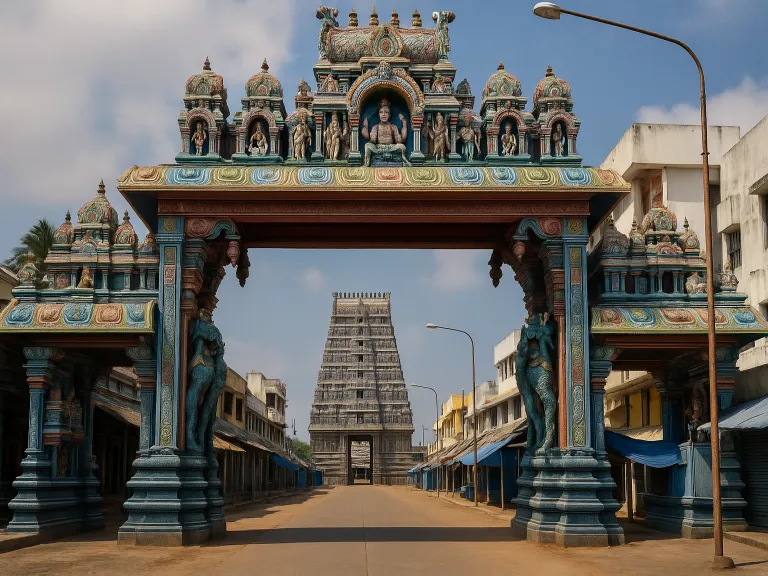
Dharbaranyeswarar Temple follows the Dravidian temple layout characteristic of the Tamil region. The complex has a prominent entrance tower, enclosed prakaras, mandapas, subsidiary shrines, and a sanctum for the presiding Shiva linga. The spatial arrangement reflects the organic growth of a medieval South Indian temple, with structures added, repaired, and expanded across different periods of patronage.
The main sanctum houses Lord Dharbaranyeswarar in linga form. Goddess Pranambikai has a separate shrine within the temple complex, and the shrine of Sri Saneeswara Bhagavan forms an important focus for pilgrims. The temple also contains shrines for deities commonly found in major Shaiva temples, including Ganesha, Subrahmanya, Chandikeswarar, and other forms connected with the Shaiva ritual circuit. The circumambulatory paths accommodate both regular worship and large festival crowds.
Architecturally, the temple is valued not only for sculpture and layout but also for how it integrates the older Shaiva sanctum with the later prominence of Navagraha worship. The Nala Theertham is an essential element of the temple landscape and is used by devotees before entering the temple for worship. The built environment emphasizes ritual movement: bathing, entry through the gopuram, worship of the presiding Shiva, darshan of the Goddess, and worship at the Saneeswara shrine.
🌳
Sacred Features
🌳 Temple Tree
Darbha grass
The sacred association of the site is with a darbha forest, reflected in the name Dharbaranyam and in the deity name Dharbaranyeswarar.
💧 Temple Tank
Nala Theertham
The temple tank is associated with King Nala's release from the affliction of Shani. Devotees bathe here before worship as part of the Thirunallar pilgrimage tradition.
✨
Temple Highlights
✨
Paadal Petra Sthalam
The temple is one of the Shiva shrines praised in the Tevaram hymns of the Tamil Saiva Nayanmar saints, giving it a revered place in Tamil Shaiva tradition.
✨
Famous Shani Shrine
Sri Saneeswara Bhagavan has a major shrine within the temple complex, making Thirunallar the best-known Navagraha sthalam for Saturn worship.
✨
Nala Theertham
The sacred tank is associated with King Nala's release from the affliction of Shani and is central to the pilgrimage practice at Thirunallar.
✨
Dharbaranyam Tradition
The name of the deity and the place is linked with a sacred forest of darbha grass, reflected in the name Dharbaranyeswarar.
✨
Karaikal Pilgrimage Centre
Located near Karaikal, the temple is a major spiritual destination for devotees from Tamil Nadu, Puducherry, and other parts of India.
🙏
Spiritual Benefits
Seeking the grace of Lord Dharbaranyeswarar for spiritual purification
Prayers for relief from the difficult effects of Shani according to devotional belief
Worship for mental strength during hardship and delay
Devotional bathing at Nala Theertham for symbolic cleansing
Prayers for stability, discipline, and patience
Seeking removal of obstacles through Shiva worship
Offering gratitude after recovery from personal difficulties
Strengthening faith through Tevaram and Shaiva pilgrimage tradition
🎉
Major Festivals
🎉
Sani Peyarchi
The transit of Saturn is the most prominent event associated with Thirunallar. Devotees gather in large numbers for worship of Sri Saneeswara Bhagavan and Lord Dharbaranyeswarar.
🎉
Maha Shivaratri
Maha Shivaratri is observed with special worship to Lord Dharbaranyeswarar, night-long devotion, and increased pilgrim attendance.
🎉
Pradosham
Pradosham, sacred to Lord Shiva, is observed regularly with special worship and circumambulation practices in the temple.
🎉
Aadi and Thai Saturdays
Saturdays in the Tamil months of Aadi and Thai are important for devotees performing prayers connected with Saneeswara Bhagavan.
🪔
Special Poojas
🪔
Saneeswara Archana
Devotees offer archana to Sri Saneeswara Bhagavan, especially on Saturdays and during Saturn-related observances.
🪔
Abhishekam to Lord Dharbaranyeswarar
Ritual bathing of the Shiva linga is performed as part of regular Shaiva worship and on special observance days.
🪔
Pradosha Pooja
Special worship of Lord Shiva is performed during Pradosham, a sacred period in the Shaiva calendar.
🪔
Nala Theertham Bathing and Worship
Pilgrims bathe in Nala Theertham and proceed for darshan of Lord Dharbaranyeswarar and Sri Saneeswara Bhagavan as part of the temple tradition.
🚗
How to Reach
🛣️
By Road
Thirunallar is near Karaikal and is connected by road to Karaikal, Nagapattinam, Mayiladuthurai, Kumbakonam, and other towns of the Kaveri delta. Buses, taxis, and private vehicles are commonly used.
🚆
By Rail
The nearest major rail access is Karaikal Railway Station, from where local transport is available to Thirunallar.
✈️
By Air
The nearest major airport is Tiruchirappalli International Airport. Chennai International Airport is another option for long-distance travellers connecting by road or rail.
💡
Visitor Tips
Visit Lord Dharbaranyeswarar and Goddess Pranambikai before or along with worship at the Saneeswara shrine.
Expect heavy crowds on Saturdays, Sani Peyarchi days, and major Shaiva festival days.
If bathing at Nala Theertham, follow the hygiene and safety instructions displayed by temple authorities.
Check current temple timings and festival arrangements from the temple administration before travel.
Carry minimal valuables during crowded festival periods.
Wear modest clothing suitable for a traditional South Indian temple.
Plan extra time for darshan during Saturn transit festivals and long weekends.
Use official counters or temple-authorized services for offerings and poojas.

 WhatsApp Us