🛕About Temple
Garbharakshambigai Temple at Thirukarukavoor, also written as Thirukkarugavur, is an ancient Shiva temple in Thanjavur district of Tamil Nadu. The presiding deity is Lord Mullaivananathar, a form of Shiva, and the goddess is Sri Garbharakshambigai, revered as the divine mother who protects pregnancy and childbirth. The village lies near Papanasam and is reached from Thanjavur and Kumbakonam by road.
The temple is one of the celebrated Tevaram Paadal Petra Sthalams of the Chola country. Its sanctity is recorded in the hymns of the early Tamil Shaiva saints, which confirms that the shrine was already an established place of worship by the 7th century CE. The name Mullaivananathar is connected with the sacred mullai creeper and the ancient image of Shiva in the temple.
The shrine is especially known across Tamil Nadu and among devotees abroad for prayers related to conception, safe pregnancy, and smooth delivery. Devotees worship the goddess with deep faith, and the temple is associated with specific prasadam offerings for couples seeking children and for pregnant women. At the same time, it remains a full Shaiva temple centered on Lord Shiva, with regular worship, festivals, and observances such as Pradosham and Maha Shivaratri.
ℹ️Temple Information
🛕
Presiding Deity
Mullaivananathar
👸
Goddess
Garbharakshambigai
⭐
Temple Type
Shaiva temple, Tevaram Paadal Petra Sthalam, Shakti shrine associated with pregnancy prayers
📅
Built Period
Temple documented by 7th-century CE Tevaram hymns; present structural phases are associated with the medieval Chola period and later additions.
Need Help Planning your visit to
Garbharakshambigai Temple?
Our travel experts can help you with transportation,
darshan timings, nearby sightseeing and complete temple tour planning.
⭐Temple Significance
Garbharakshambigai Temple is significant as a Tevaram Paadal Petra Sthalam dedicated to Lord Mullaivananathar and as one of Tamil Nadu’s most revered shrines for prayers connected with conception, pregnancy, and safe childbirth. The temple’s goddess, Garbharakshambigai, is worshipped as the divine mother who protects the womb.
📜History
The history of Garbharakshambigai Temple is anchored in the early Tamil Shaiva devotional tradition. Thirukarukavoor is included among the Tevaram Paadal Petra Sthalams, the sacred Shiva temples praised by the Nayanmars. The hymns of Thirugnanasambandar and Appar refer to the shrine, showing that it was a recognized sacred site by the 7th century CE. This is the strongest historical marker for the temple’s antiquity.
The temple stands in the old Chola region, an area where many early shrines developed into stone temples during the medieval Chola period. The present temple complex reflects the typical growth pattern of Tamil temples, with a principal Shiva sanctum, a separate shrine for the goddess, circumambulatory spaces, mandapas, and a temple tank. The specific founder of the temple is not securely established in widely available historical records, and the early wooden or brick phases of the shrine are not separately documented.
Through the medieval and later periods, the temple remained an active place of worship and pilgrimage. Its identity combines two streams of sacred memory: the Shaiva significance of Mullaivananathar as a Tevaram deity and the popular devotional importance of Garbharakshambigai as the protector of the womb. In modern times, the temple has become one of the best-known pregnancy-related pilgrimage centers in Tamil Nadu while retaining its place in the traditional Shaiva pilgrimage landscape.
🕉️Mythology
The temple mythology centers on the compassion of Goddess Garbharakshambigai. According to the sthala purana, a sage named Nidhruva and his wife Vedikai lived in the region and worshipped the divine mother for the blessing of a child. Vedikai conceived, and during her pregnancy the sage was away from the hermitage. At that time another sage, Urdhvapada, arrived seeking hospitality.
Vedikai, weakened by pregnancy, could not receive the visitor properly. In anger, Urdhvapada cursed her, and the unborn child was endangered. The goddess intervened and protected the embryo, preserving it safely until the time of birth. Because the divine mother guarded the womb, she came to be worshipped as Garbharakshambigai, meaning the goddess who protects the garbha, or womb.
The child was born by the grace of the goddess, and the local tradition also connects the episode with divine nourishment and protection. This mythology is the source of the temple’s special devotional focus on conception, pregnancy, and childbirth. Devotees approach the goddess not merely as a fertility deity, but as a motherly presence who shelters life at its most vulnerable stage. The mythology is kept distinct from historical evidence, but it remains central to the living worship and ritual identity of the temple.
🏛Architecture
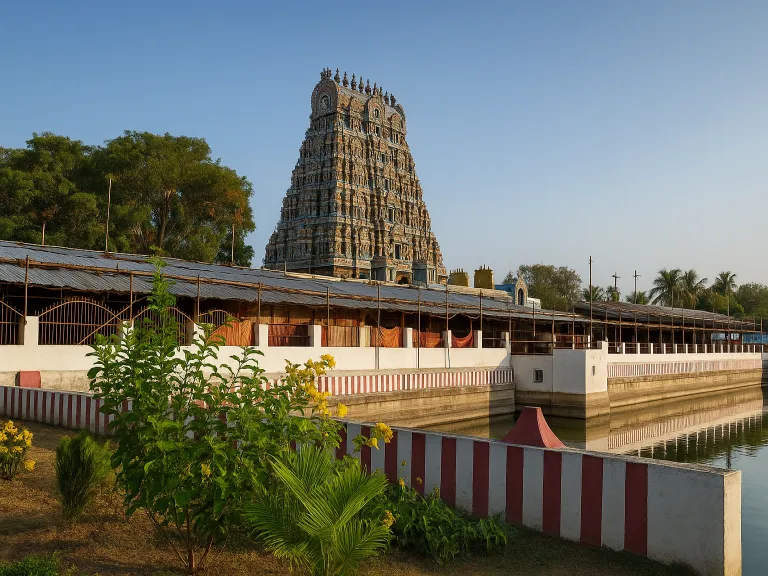
Garbharakshambigai Temple follows the Dravidian temple layout common to the Chola country of Tamil Nadu. The complex contains the sanctum of Lord Mullaivananathar, the separate shrine of Goddess Garbharakshambigai, prakaras for circumambulation, mandapas, subsidiary shrines, and a sacred temple tank. The arrangement reflects the structure of a mature Tamil Shaiva temple in which Shiva is the presiding deity and the goddess has an important independent shrine.
The Shiva linga of Mullaivananathar is especially significant in the temple’s worship. It is regarded as a self-manifested linga associated with the ancient mullai forest. The linga is not treated like ordinary stone icons in all ritual details; the temple is known for the application of fragrant substances such as punugu rather than routine ablution directly over the main linga. This ritual feature is an important part of the temple’s distinctive identity.
The goddess shrine is the main devotional focus for many visitors, particularly families praying for children and expectant mothers. The sacred tree is the mullai creeper, and the temple tank is known as Ksheera Theertham or Ksheera Kundam, both linked to the shrine’s mythology and worship. The architecture is not only a physical arrangement of shrines and halls; it supports the temple’s layered identity as a Tevaram Shiva temple and as a major shrine of maternal protection.
🌳
Sacred Features
🌳 Temple Tree
Mullai
The mullai creeper is the sacred tree of the temple and is connected with the name Mullaivananathar, the Lord of the mullai forest.
💧 Temple Tank
Ksheera Theertham
Ksheera Theertham, also called Ksheera Kundam, is the sacred tank associated with the temple’s mythology and ritual landscape.
✨
Temple Highlights
✨
Tevaram Paadal Petra Sthalam
The temple is one of the sacred Shiva shrines praised in the Tevaram hymns of the Tamil Shaiva saints, confirming its importance in the early devotional tradition.
✨
Goddess Garbharakshambigai
The goddess is revered as the protector of pregnancy and childbirth, drawing devotees who pray for conception, safe pregnancy, and healthy delivery.
✨
Lord Mullaivananathar
The presiding deity is Shiva as Mullaivananathar, associated with the sacred mullai creeper and the ancient sacred landscape of the temple.
✨
Distinctive worship of the Shiva linga
The main linga is associated with a special ritual tradition in which fragrant substances such as punugu are used in worship.
✨
Ksheera Theertham
The temple tank, known as Ksheera Theertham or Ksheera Kundam, is connected with the temple’s sacred mythology.
🙏
Spiritual Benefits
Prayers for safe pregnancy
Prayers for smooth childbirth
Protection of mother and unborn child
Relief from anxiety related to childbirth through devotional worship
Blessings for healthy children
Grace of Lord Mullaivananathar for devotees of Shiva
Family welfare and marital harmony through prayer
🎉
Major Festivals
🎉
Maha Shivaratri
A major festival for Lord Shiva, observed with special worship and extended devotional activity.
🎉
Navaratri
Nine nights of worship for the goddess, especially significant for devotees of Sri Garbharakshambigai.
🎉
Pradosham
A regular Shaiva observance dedicated to Lord Shiva, attracting devotees for evening worship.
🎉
Aadi Fridays
Fridays in the Tamil month of Aadi are important for Amman worship and draw devotees to the goddess shrine.
🎉
Annual temple festival
The temple observes an annual festival with special rituals for the presiding deities.
🪔
Special Poojas
🪔
Ghee prasadam for conception prayers
Couples praying for childbirth receive and use ghee prasadam according to the procedure prescribed by the temple.
🪔
Oil prasadam for safe delivery prayers
Pregnant women receive oil prasadam associated with prayers to Goddess Garbharakshambigai for safe delivery, following temple instructions.
🪔
Archana to Garbharakshambigai Amman
Devotees offer archana to the goddess for family welfare, conception, pregnancy protection, and childbirth-related prayers.
🪔
Worship of Lord Mullaivananathar
Special worship is offered to the presiding Shiva deity, whose shrine is central to the temple’s Tevaram significance.
🪔
Pradosha worship
Pradosham is observed for Lord Shiva with special devotion, as in other traditional Shaiva temples.
🚗
How to Reach
🛣️
By Road
Thirukarukavoor is accessible by road from Papanasam, Thanjavur, and Kumbakonam. Local buses, taxis, and private vehicles are commonly used to reach the temple.
🚆
By Rail
Papanasam railway station is the nearest commonly used station. From there, visitors can reach the temple by road.
✈️
By Air
The nearest major airport is Tiruchirappalli International Airport, from where the temple is reached by road through Thanjavur or Kumbakonam.
💡
Visitor Tips
Verify current temple timings before travel, especially on festival days.
Papanasam is the nearest commonly used railway access point for the temple.
Devotees seeking the temple’s special prasadam should follow the procedure prescribed by the temple authorities.
Wear modest clothing suitable for a traditional South Indian temple.
Major festival days and weekends can attract larger crowds.
Check locally before taking photographs, especially inside the temple premises.
Carry drinking water during hot months in the Thanjavur region.
Plan additional time if combining the visit with nearby temples around Papanasam, Kumbakonam, or Thanjavur.

 WhatsApp Us