🛕About Temple
Girigujambigai Amman Temple is the celebrated goddess shrine within the Sri Naganathaswamy Temple complex at Thirunageswaram, near Kumbakonam in Tamil Nadu. The temple complex is one of the most revered Shaiva shrines of the Kaveri delta and is widely known as the Rahu Sthalam among the Navagraha temples. Girigujambigai is worshipped in a separate sanctum associated with the divine feminine presence of the temple, while the presiding Shiva deity is Sri Naganathaswamy.
The goddess shrine is notable because Girigujambigai is worshipped along with forms associated with Lakshmi and Saraswati, representing prosperity, wisdom, and divine grace. Devotees visit the shrine for Ambal worship, family welfare, education, prosperity, and protection. The temple is also an important stop for pilgrims visiting Kumbakonam, Oppiliappan Temple, and the Navagraha circuit, especially those undertaking worship connected with Rahu.
Thirunageswaram has a strong sacred identity in Tamil Shaiva tradition. The main temple is a Paadal Petra Sthalam, praised in the Tevaram hymns of the Nayanmars, and its sacred landscape is connected with serpent worship, Shiva devotion, and the Navagraha tradition. Girigujambigai Amman’s shrine forms an integral part of this living temple complex, where daily worship, festival observances, and pilgrimage practices continue in a historic Dravidian temple setting.
ℹ️Temple Information
🛕
Presiding Deity
Sri Naganathaswamy
👸
Goddess
Sri Girigujambigai Amman
⭐
Temple Type
Hindu temple, Shaiva temple, Amman shrine, Paadal Petra Sthalam temple complex, Navagraha Rahu Sthalam
📅
Built Period
The temple was a recognised Shaiva shrine by the 7th century CE; the existing stone temple complex was developed principally during the Chola period, around the 9th to 11th centuries CE, with later additions.
Need Help Planning your visit to
Arulmigu Girigujambigai Amman Temple?
Our travel experts can help you with transportation,
darshan timings, nearby sightseeing and complete temple tour planning.
⭐Temple Significance
Girigujambigai Amman Temple is significant as the principal goddess shrine within the historic Sri Naganathaswamy Temple at Thirunageswaram, a Tevaram Paadal Petra Sthalam and the Rahu Sthalam of the Navagraha pilgrimage tradition. The shrine is especially revered for Ambal worship and for the presence of Girigujambigai with divine feminine aspects associated with Lakshmi and Saraswati.
📜History
The history of Girigujambigai Amman Temple is inseparable from the history of Sri Naganathaswamy Temple at Thirunageswaram. The shrine was already an important Shaiva centre by the 7th century CE, as the temple was praised in the Tevaram hymns of the Tamil Shaiva saints. This establishes Thirunageswaram as an ancient site of worship within the sacred geography of the Chola country.
The surviving stone temple bears the marks of Chola-period development and later additions. The Cholas were major patrons of temple building in the Kaveri delta, and Thirunageswaram’s architecture, inscriptions, and ritual prominence reflect that historical environment. Later periods, including subsequent South Indian royal and regional patrons, contributed to the maintenance, renovation, and expansion of many temples in this region. The separate historical date for the Girigujambigai shrine is not securely documented apart from the larger temple complex.
In historical religious practice, the temple became widely known not only as a Tevaram shrine of Shiva but also as the Rahu Sthalam of the Navagraha pilgrimage tradition. The presence of Girigujambigai Amman, the main Shiva shrine, the Rahu shrine, mandapas, prakaras, sacred tank, and sthala vriksha together preserve a layered sacred history. The temple continues to be an active place of worship rather than a monument alone, linking early Tamil devotional history, Chola temple culture, and ongoing pilgrimage traditions.
🕉️Mythology
The mythology of Thirunageswaram centres on Shiva as Naganathaswamy, the Lord worshipped by serpents. Sacred accounts connect the place with serpent beings such as Adisesha, Takshaka, and Karkotaka worshipping Shiva. The name Thirunageswaram itself reflects this association with naga worship. These narratives belong to the temple’s sacred tradition and explain why Shiva is revered here as Naganathaswamy.
The temple is also closely associated with Rahu, one of the Navagrahas. In the temple tradition, Rahu worshipped Shiva at Thirunageswaram and received divine grace. The shrine of Rahu in the temple complex is therefore central to the pilgrimage identity of the place. Devotees especially visit during Rahu Kalam and on occasions connected with Rahu Peyarchi to perform worship and seek relief from afflictions associated with Rahu in astrology.
Girigujambigai Amman is worshipped as the powerful mother goddess of the temple. Her shrine is connected with the combined presence of divine feminine energies represented by Girigujambigai, Lakshmi, and Saraswati. This gives the shrine a special place among devotees who pray for prosperity, learning, family harmony, and protection. Mythological and devotional traditions at Thirunageswaram therefore bring together Shiva worship, Ambal worship, serpent symbolism, and Navagraha devotion in one sacred complex.
🏛Architecture
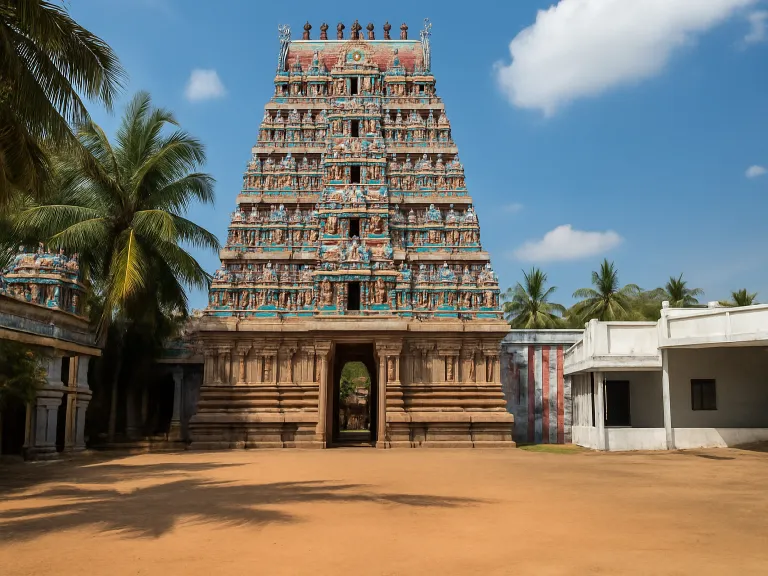
The Girigujambigai Amman shrine is part of the larger Sri Naganathaswamy Temple complex, which follows the Dravidian temple tradition of the Kaveri delta. The complex contains gopurams, enclosed prakaras, pillared mandapas, subsidiary shrines, and a sacred tank. The main shrine is dedicated to Shiva as Naganathaswamy, while the Ambal shrine of Girigujambigai occupies a distinct and revered position within the temple layout.
A distinctive feature of the Girigujambigai shrine is the worship of the goddess along with forms associated with Lakshmi and Saraswati. The icons of this shrine are noted in temple tradition for being treated with special ritual care, and water abhishekam is not performed to the stucco image of Girigujambigai. Instead, offerings such as fragrant substances are associated with the worship of the goddess. This ritual distinction is an important identifying feature of the shrine.
The temple complex also includes the famous Rahu shrine, where Rahu is worshipped with his consorts. The architecture reflects the layered growth of a major South Indian temple, with Chola-period foundations and later structural additions visible in its sacred spaces. Stone inscriptions, mandapas used for ritual movement, subsidiary shrines, and the temple tank together create the atmosphere of a living temple where architecture serves both devotion and festival practice.
🌳
Sacred Features
🌳 Temple Tree
Shenbaga tree
The sacred tree is associated with the temple’s traditional identity, and Thirunageswaram is connected with the sacred name Shenbagaranyam.
💧 Temple Tank
Surya Pushkarini
The temple tank is part of the sacred landscape of Sri Naganathaswamy Temple and is associated with ritual purity and temple tradition.
✨
Temple Highlights
✨
Girigujambigai Amman Shrine
A revered goddess shrine within the Sri Naganathaswamy Temple complex, associated with the worship of the divine mother along with aspects of Lakshmi and Saraswati.
✨
Rahu Sthalam
Thirunageswaram is widely known as the Rahu Sthalam among the Navagraha temples of Tamil Nadu and attracts devotees for Rahu-related worship.
✨
Paadal Petra Sthalam
The main temple is a Tevaram shrine praised by the Tamil Shaiva saints, confirming its antiquity and devotional importance.
✨
Serpent Worship Tradition
The sacred identity of Naganathaswamy is connected with naga worship and mythological accounts of serpents worshipping Shiva.
✨
Historic Dravidian Temple Complex
The temple includes gopurams, prakaras, mandapas, subsidiary shrines, inscriptions, a sacred tank, and Chola-period architectural elements.
✨
Special Ritual Care for the Goddess
The Girigujambigai shrine is known for distinctive ritual practice, including the avoidance of water abhishekam to the stucco image of the goddess.
🙏
Spiritual Benefits
Devotees pray for the blessings of the divine mother and family welfare.
Devotees seek protection from difficulties and negative influences.
Students and learners pray for knowledge, clarity, and success in education.
Families pray for prosperity, harmony, and auspiciousness.
Devotees worship Rahu in the same complex for relief from Rahu-related astrological afflictions.
Devotees seek mental peace through worship of Shiva and Ambal.
Pilgrims pray for spiritual growth through darshan at a Tevaram shrine.
Devotees seek blessings for health, stability, and overall well-being.
🎉
Major Festivals
🎉
Navaratri
A major festival for Ambal worship, during which the goddess is worshipped with special devotion and festive observances.
🎉
Maha Shivaratri
An important Shaiva festival observed in honour of Lord Shiva at the Naganathaswamy shrine.
🎉
Rahu Peyarchi
A significant astrological observance at Thirunageswaram because of the temple’s association with Rahu.
🎉
Pradosham
A regular Shaiva observance dedicated to Shiva, attracting devotees for evening worship on Pradosha days.
🎉
Margazhi Tiruvadhirai
A Shaiva festival associated with Lord Shiva, observed in many historic Shiva temples including the Thirunageswaram temple complex.
🎉
Aipasi Annabhishekam
A Shaiva temple observance in which special worship is offered to the Shiva lingam during the Tamil month of Aipasi.
🪔
Special Poojas
🪔
Girigujambigai Amman Worship
Special worship is offered to Girigujambigai Amman, who is revered for motherly grace, prosperity, knowledge, and protection.
🪔
Rahu Abhishekam
A prominent ritual performed at the Rahu shrine in the same temple complex, especially sought by devotees undertaking Rahu-related worship.
🪔
Pradosha Pooja
Special worship to Lord Shiva is performed on Pradosham, a significant observance in Shaiva temples.
🪔
Navaratri Alankaram and Pooja
During Navaratri, the goddess is worshipped with special decoration and devotional observances.
🪔
Archana
Devotees offer archana to Shiva, Girigujambigai Amman, Rahu, and other deities in the temple complex according to temple practice.
🚗
How to Reach
🛣️
By Road
Thirunageswaram is near Kumbakonam and is accessible by road from Kumbakonam, Mayiladuthurai, Thanjavur, and other towns in the Kaveri delta. Buses, taxis, and auto-rickshaws are available from Kumbakonam.
🚆
By Rail
Thirunageswaram has a railway station, and Kumbakonam Railway Station is the major nearby railhead with wider connectivity.
✈️
By Air
The nearest major airport is Tiruchirappalli International Airport, from where travellers can reach Thirunageswaram by road or rail via Kumbakonam.
💡
Visitor Tips
Confirm current temple timings before travelling, as timings may change during festivals and special rituals.
Expect larger crowds during Rahu Kalam, Sundays, Rahu Peyarchi, Navaratri, and major Shaiva festivals.
Remove footwear before entering the temple premises and follow local temple discipline.
Wear modest clothing suitable for worship in an active South Indian temple.
Ask temple authorities before taking photographs, especially inside the temple complex.
If visiting for Rahu worship, plan additional time for queues at the Rahu shrine.
The temple can be conveniently combined with visits to Oppiliappan Temple and other Kumbakonam-area temples.
Use Kumbakonam as a practical base for food, transport, and accommodation.

 WhatsApp Us