🛕About Temple
Gotha Parameswarar Temple at Kunnathur, also identified in devotional sources with Sangani near Tirunelveli, is a Shiva temple associated with the Nava Kailasam group of temples on the banks and cultural route of the Tamiraparani river. The presiding deity is Lord Shiva worshipped as Gotha Parameswarar. The shrine is best known among pilgrims as the Rahu sthalam within the Nava Kailasam tradition.
The temple belongs to the living Shaiva worship tradition of southern Tamil Nadu. Its identity is closely tied to the Tamiraparani sacred geography, where nine Shiva temples are visited together by devotees seeking the grace of Shiva and the remedial blessings connected with the Navagrahas. Kunnathur is counted as the fourth shrine in this pilgrimage sequence in many temple lists.
Unlike major epigraphically documented temples of Tamil Nadu, publicly available historical details for Gotha Parameswarar Temple are limited. The temple is therefore most securely described through its present worship, its association with the Nava Kailasam circuit, and the local mythological tradition connected with Sage Romasa and the Tamiraparani. Details such as the original builder, consecration date, ruling dynasty, temple tree, temple tank, formal Agama, and exact antiquity are not consistently established in widely available historical records. Devotees visit the temple for Shiva worship, Rahu-related prayers, and as part of the complete Nava Kailasam pilgrimage.
ℹ️Temple Information
🛕
Presiding Deity
Gotha Parameswarar
⭐
Temple Type
Shiva temple, Nava Kailasam temple, Rahu sthalam, Navagraha-associated temple
Need Help Planning your visit to
Arulmigu Gotha Parameswarar Temple?
Our travel experts can help you with transportation,
darshan timings, nearby sightseeing and complete temple tour planning.
⭐Temple Significance
Gotha Parameswarar Temple is significant as the Rahu-associated shrine in the Nava Kailasam pilgrimage circuit of the Tamiraparani region. It is visited by devotees worshipping Lord Shiva for spiritual purification, relief from Rahu-related afflictions, and completion of the nine-temple Nava Kailasam journey.
📜History
The verifiable history of Gotha Parameswarar Temple is closely connected with the religious landscape of Tirunelveli district and the Tamiraparani river basin. The temple is widely included in the Nava Kailasam group, a set of nine Shiva shrines linked with the Navagrahas. Kunnathur is identified in that sequence as the shrine associated with Rahu, giving the temple a distinct place in regional pilgrimage practice.
Clear historical evidence regarding the original founder, exact construction date, patron dynasty, or early inscriptions of this temple is not widely documented in standard public historical accounts. Because of that, the temple cannot be responsibly assigned to a specific king, dynasty, or century without stronger evidence. Its historical continuity is better understood through ongoing worship, regional memory, and its inclusion in the long-standing Tamiraparani Shiva pilgrimage route.
The broader region around Tirunelveli contains temples developed under several South Indian powers, including the Pandyas, later Nayakas, and local chieftains, but such regional history should not be treated as direct proof for this particular shrine. Gotha Parameswarar Temple’s documented importance rests mainly on its living role as the Rahu-linked Nava Kailasam temple. Pilgrims who visit Papanasam, Cheranmahadevi, Kodaganallur, Kunnathur, Murappanadu, Srivaikuntam, Thenthiruperai, Rajapathy, and Sernthapoomangalam regard the Kunnathur temple as an essential stop in the sequence. The temple’s historical value therefore lies in its place within a continuing sacred circuit rather than in a securely published dynastic record.
🕉️Mythology
The mythology of Gotha Parameswarar Temple is part of the Nava Kailasam tradition of the Tamiraparani river. In this tradition, Sage Romasa, a disciple of Sage Agastya, sought liberation and divine guidance. Agastya instructed him to worship Shiva at places where sacred flowers released into the Tamiraparani came to rest. These places became the nine Shiva shrines known collectively as Nava Kailasam.
Kunnathur is associated with one of those sacred halting places and is worshipped as the Rahu sthalam among the nine. The presiding Shiva here is Gotha Parameswarar. In the pilgrimage tradition, each Nava Kailasam temple is linked with one of the Navagrahas, not as a separate planetary shrine alone, but as a Shiva temple where planetary afflictions are addressed through the grace of Shiva. The Kunnathur shrine is therefore visited especially by devotees seeking relief from Rahu-related difficulties.
The mythology separates the temple’s sacred identity from its historical documentation. The story of Romasa Maharishi, Agastya, the Tamiraparani, and the nine Shiva shrines belongs to religious tradition and devotional memory rather than inscriptional history. For pilgrims, however, this narrative gives the temple its spiritual meaning. Worship at Kunnathur is understood as part of a larger journey along the Tamiraparani, where Shiva is approached through nine manifestations connected with cosmic order, karma, and the Navagrahas. The Rahu association makes this temple particularly important for prayers related to confusion, obstacles, serpent-related doshas, and karmic disturbances in devotional practice.
🏛Architecture
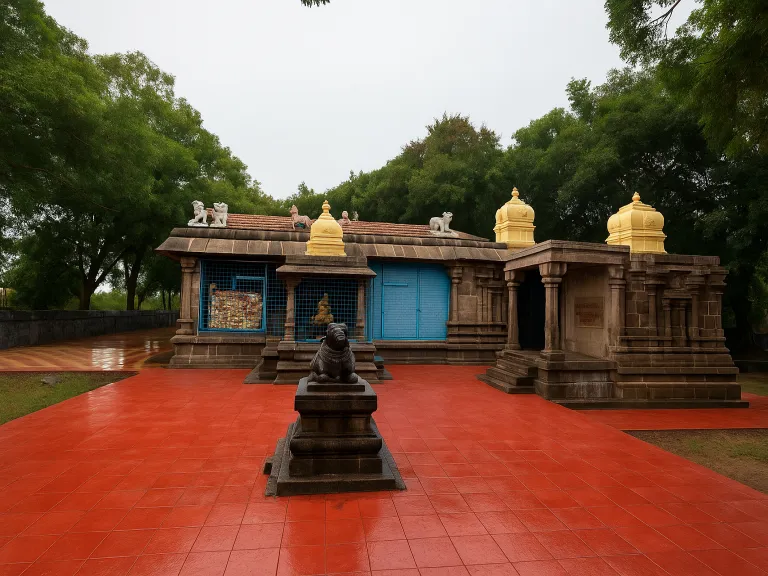
Gotha Parameswarar Temple is best described as a regional Tamil Shaiva temple within the Tamiraparani pilgrimage landscape. Publicly available descriptions do not provide a detailed, inscription-backed architectural history comparable to major protected monuments. Therefore, its architecture should be understood primarily in relation to its present liturgical function as a Shiva temple rather than through a firmly dated art-historical classification.
The temple’s worship focus is the sanctum of Lord Shiva as Gotha Parameswarar. As with Tamil Shaiva temples, the devotional experience centers on darshan of the Shiva lingam, worship of the goddess shrine, and the ritual movement through the temple space. Nandi, the vehicle of Shiva, forms an important symbolic presence in Shaiva temple worship. The temple is visited by devotees not because of a large monumental scale, but because of its place in the Nava Kailasam sequence and its Rahu association.
No widely established architectural record confirms the original construction phase, the name of the architect, the donor king, the exact period of renovation, or a definitive stylistic attribution. For this reason, details such as gopuram height, number of prakaras, sculptural program, inscriptions, temple tank architecture, and mandapa chronology should not be stated as fixed facts without direct temple or archaeological documentation. The safest architectural summary is that Gotha Parameswarar Temple functions as a traditional Shaiva shrine of southern Tamil Nadu, preserving a sacred layout suitable for daily worship, abhishekam, circumambulation, and Nava Kailasam pilgrimage observance.
✨
Temple Highlights
✨
Rahu Sthalam of Nava Kailasam
Kunnathur Gotha Parameswarar Temple is identified with Rahu among the nine Nava Kailasam Shiva temples connected with the Tamiraparani river.
✨
Tamiraparani Sacred Circuit
The temple forms part of the wider Shiva pilgrimage route along the Tamiraparani, a river of major religious importance in southern Tamil Nadu.
✨
Worship of Lord Shiva as Gotha Parameswarar
The principal deity is Lord Shiva worshipped as Gotha Parameswarar, the focus of the temple’s ritual and devotional identity.
✨
Romasa Maharishi Tradition
The temple is linked in mythology to the Nava Kailasam legend of Sage Romasa and Sage Agastya.
✨
Pilgrimage Importance
Devotees include this temple while visiting all nine Nava Kailasam shrines for Navagraha-related Shiva worship.
🙏
Spiritual Benefits
Worship of Lord Shiva for spiritual purification
Prayers for relief from Rahu-related afflictions
Devotional remedy for obstacles and confusion attributed to Rahu dosha
Seeking peace from karmic disturbances through Shiva worship
Completion of the Nava Kailasam pilgrimage circuit
Prayers for mental clarity and stability
Devotional surrender to Lord Shiva along the Tamiraparani sacred route
🎉
Major Festivals
🎉
Maha Shivaratri
Maha Shivaratri is the foremost festival associated with Shiva worship and is observed by devotees through special prayers and night worship at Shiva temples.
🎉
Pradosham
Pradosham is a regular Shaiva observance dedicated to Lord Shiva. Devotees worship Shiva during the pradosha period for grace and removal of obstacles.
🪔
Special Poojas
🪔
Rahu Parihara Worship
Devotees visit this Rahu-associated Nava Kailasam temple to offer prayers to Lord Shiva for relief from Rahu-related afflictions.
🪔
Abhishekam to Lord Shiva
Abhishekam is a central form of Shiva worship performed with sacred offerings to the presiding deity.
🪔
Pradosha Puja
Pradosha worship is performed in honor of Lord Shiva and is especially important in Shaiva temples.
🚗
How to Reach
🛣️
By Road
Kunnathur is accessible by road from Tirunelveli. Devotees visiting the Nava Kailasam circuit usually travel by private vehicle or local transport between the Tamiraparani-region temples.
🚆
By Rail
The nearest major railway access is through Tirunelveli Junction, from where road transport can be used to reach Kunnathur.
✈️
By Air
The nearest commonly used airport for Tirunelveli-region temple travel is Tuticorin Airport; onward travel is by road.
💡
Visitor Tips
Verify current temple opening hours locally before travelling.
Plan the visit with other Nava Kailasam temples if undertaking the full circuit.
Wear modest clothing suitable for a Hindu place of worship.
Carry drinking water when travelling through multiple temples in the Tirunelveli region.
Respect local temple customs and follow instructions from temple staff or priests.
Avoid assuming that photography is allowed inside the temple; ask before taking pictures.
Carry small cash for offerings or archana if you intend to participate in worship.
Start early if visiting several Nava Kailasam temples in one day.

 WhatsApp Us