🛕About Temple
Jambukeswarar Temple at Thiruvanaikaval, near Tiruchirappalli in Tamil Nadu, is one of the most revered Shiva temples of South India. The presiding deity is Jambukeswarar, worshipped as a Shiva linga representing water, and the goddess is Akilandeswari. The temple stands on the island formed by the Kaveri and Kollidam rivers, close to Srirangam, and is an active centre of Tamil Shaiva worship.
The temple is celebrated as the Appu Sthalam, the water shrine among the Pancha Bhoota Sthalams, where Shiva is worshipped through the five elemental forms of earth, water, fire, air and space. A natural water source is associated with the sanctum, and water is seen around the linga, giving the temple its distinctive spiritual identity. It is also one of the Paadal Petra Sthalams praised in the Tevaram hymns of the Nayanmars.
Thiruvanaikaval is equally famous for the shrine of Akilandeswari, one of the prominent goddess shrines of Tamil Nadu. The temple’s daily worship preserves a distinctive midday ritual in which the priest symbolically represents the goddess worshipping Jambukeswarar. With its ancient legends, inscriptions, vast prakarams, gopurams and long continuity of worship, Jambukeswarar Temple remains a major pilgrimage destination for devotees of Shiva and Shakti.
ℹ️Temple Information
🛕
Presiding Deity
Jambukeswarar
⭐
Temple Type
Pancha Bhoota Sthalam, Appu Sthalam, Paadal Petra Sthalam, Shaiva temple, Shakti shrine
📅
Built Period
Core shrine associated with the early Chola period, around the 2nd century CE; major recorded structural additions and endowments from the medieval Chola period and later.
🏛
Dynasty
Early Chola; later Chola, Pandya, Hoysala, Vijayanagara and Nayak patronage
🙏
Sampradaya
Shaivism, especially the Tamil Shaiva Siddhanta tradition
Need Help Planning your visit to
Arulmigu Jambukeswarar Temple?
Our travel experts can help you with transportation,
darshan timings, nearby sightseeing and complete temple tour planning.
⭐Temple Significance
Jambukeswarar Temple is the Appu Sthalam, the water shrine among the Pancha Bhoota Sthalams of Shiva. It is also a Paadal Petra Sthalam praised in the Tevaram hymns and a major centre of Akilandeswari worship in Tamil Nadu.
📜History
Jambukeswarar Temple is associated with Kocengannan, also known as Kochengat Chola, an early Chola ruler remembered in Tamil Shaiva tradition and counted among the 63 Nayanmars. The temple’s origin is placed in the early Chola period, while its present architectural form reflects many centuries of additions. The shrine is mentioned in the devotional hymns of the Tevaram, confirming its importance in Tamil Shaiva sacred geography by the early medieval period.
Epigraphic and architectural evidence shows that the temple received patronage from several South Indian ruling powers. Medieval Chola inscriptions record gifts, lands, lamps and arrangements for worship. Later contributions came under the Pandyas, Hoysalas, Vijayanagara rulers and Nayaks, who supported renovations, mandapas, walls, festivals and temple administration. These layers of patronage made the temple one of the great institutional Shaiva centres of the Kaveri region.
The temple also preserves the historical prominence of Akilandeswari worship. The goddess shrine became one of the notable Shakti centres in Tamil Nadu, and the tradition connecting Adi Shankara with the installation of Sri Chakra-related ornaments for the goddess is widely associated with the temple’s religious memory. Over time, Thiruvanaikaval developed as a major pilgrimage site alongside nearby Srirangam, forming part of the sacred landscape of Tiruchirappalli. The temple continues to function as a living place of worship under established Shaiva ritual practice.
🕉️Mythology
The mythology of Jambukeswarar Temple explains the shrine’s identity as the water element among the Pancha Bhoota Sthalams. In the sacred narrative, Parvati came to earth to perform penance and worship Shiva at this place. She formed a linga from the waters of the Kaveri and worshipped beneath a jambu tree. Shiva appeared as Jambukeswarar and imparted spiritual knowledge to her, while she became revered as Akilandeswari.
Another important legend gives the place its name Thiruvanaikaval. An elephant and a spider worshipped Shiva at the same spot under the jambu tree. The elephant performed worship by bringing water and bathing the linga, while the spider protected the linga by weaving a web above it. Their different forms of devotion led to conflict, and both attained divine grace. The spider was later born as Kocengannan Chola, who built temples in a raised form so that elephants could not enter the sanctum area.
The temple’s ritual tradition preserves the relationship between Jambukeswarar and Akilandeswari in a distinctive way. During the midday worship, the priest dresses in a manner symbolically representing the goddess and performs worship to Shiva. This reflects the mythology in which Akilandeswari receives instruction from Jambukeswarar. Unlike many Shiva temples where the divine marriage is central, Thiruvanaikaval emphasizes the goddess as a disciple and worshipper, making its theological character unique among major Shaiva temples.
🏛Architecture
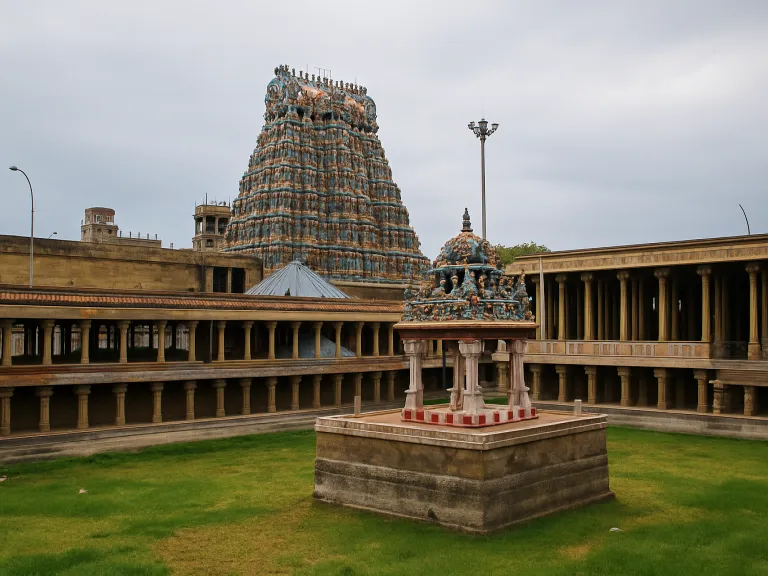
Jambukeswarar Temple is a large Dravidian temple complex with multiple concentric prakarams, tall gopurams, pillared mandapas, shrines, sacred water features and extensive stone walls. The temple is laid out as a major South Indian sacred complex, with the sanctum of Jambukeswarar forming the ritual centre and the shrine of Akilandeswari standing as a major independent focus of worship. The large enclosure walls and gateways reflect successive phases of construction and renovation.
The sanctum is architecturally and ritually distinctive because the linga represents the water element. A natural water source is associated with the shrine, and water is seen around the linga even during dry periods. The deity is viewed in a subdued inner space, emphasizing the elemental and ancient character of the shrine. The temple also has the notable stone window with nine openings, through which devotees have darshan, symbolically linked with the nine openings of the human body.
The Akilandeswari shrine is one of the architectural highlights of the complex. The goddess faces Jambukeswarar across the temple axis, reinforcing the theological relationship between Shiva as teacher and the goddess as worshipper. The temple contains several mandapas used for festivals, processions and ritual gatherings. Inscriptions on the walls and structures record the involvement of different dynasties, while the sculptural and spatial arrangement preserves the grandeur of medieval Tamil temple architecture.
🌳
Sacred Features
🌳 Temple Tree
Jambu tree
The sacred jambu tree is central to the temple’s mythology. Parvati is described in the temple tradition as worshipping Shiva beneath this tree, and the deity’s name Jambukeswarar is connected with it.
💧 Temple Tank
Nava Theerthams
The temple is associated with sacred waters known as the Nava Theerthams. The water element is central to the shrine’s identity as the Appu Sthalam.
✨
Temple Highlights
✨
Appu Sthalam of the Pancha Bhoota Sthalams
The temple represents the water element among the five elemental Shiva shrines of South India.
✨
Sacred water around the linga
The sanctum is associated with a natural water source, and water is seen around the Jambukeswarar linga.
✨
Akhilandeswari Shrine
The goddess Akilandeswari is one of the most prominent forms of Shakti worshipped in Tamil Nadu.
✨
Unique midday worship
During the Uchikala Pooja, the priest symbolically represents the goddess worshipping Jambukeswarar.
✨
Paadal Petra Sthalam
The temple is praised in the Tevaram hymns of the Nayanmar saints.
✨
Large Dravidian temple complex
The temple has multiple prakarams, gopurams, mandapas and inscriptions showing centuries of royal patronage.
🙏
Spiritual Benefits
Devotees worship Jambukeswarar for spiritual purification and inner calm associated with the water element.
Worship at the Appu Sthalam is sought for balance of emotions and clarity of mind.
Devotees pray to Akilandeswari for protection, wisdom and family welfare.
The temple is visited for blessings connected with Shiva-Shakti worship.
Pilgrims seek the grace of Jambukeswarar for relief from obstacles and mental burdens.
Participation in Pradosham and Maha Shivaratri worship is considered spiritually meritorious.
Darshan of the Pancha Bhoota Sthalam is valued as part of a wider Shiva pilgrimage.
🎉
Major Festivals
🎉
Maha Shivaratri
A major festival for Shiva, observed with special worship, night prayers and large numbers of devotees.
🎉
Panguni Brahmotsavam
One of the important annual festivals of the temple, celebrated with processions and special rituals.
🎉
Navaratri
A significant festival for Akilandeswari, marked by special worship of the goddess.
🎉
Aadi Pooram
A festival associated with goddess worship, celebrated for Akilandeswari Amman.
🎉
Arudra Darisanam
A major Shaiva observance connected with Shiva’s cosmic dance, celebrated in Tamil temples.
🎉
Pradosham
A regular sacred observance for Shiva, performed on the thirteenth lunar day with special worship.
🪔
Special Poojas
🪔
Uchikala Pooja
The distinctive midday worship in which the priest symbolically represents Akilandeswari worshipping Jambukeswarar.
🪔
Pradosha Pooja
Special worship offered to Shiva during Pradosham, an important observance in Shaiva temples.
🪔
Maha Shivaratri Poojas
Special rituals and extended worship are performed for Jambukeswarar during Maha Shivaratri.
🪔
Akhilandeswari Amman Pooja
Special worship is offered to Akilandeswari, especially during goddess-related observances such as Navaratri and Aadi Pooram.
🪔
Abhishekam and Archana
Regular temple worship includes abhishekam, alankaram and archana according to temple practice.
🚗
How to Reach
🛣️
By Road
Thiruvanaikaval is well connected by road from Tiruchirappalli and Srirangam. City buses, taxis and auto-rickshaws are available from major points in Tiruchirappalli.
🚆
By Rail
The nearest convenient railway station is Srirangam Railway Station, with Tiruchirappalli Junction serving as the major railhead for long-distance trains.
✈️
By Air
The nearest airport is Tiruchirappalli International Airport, which has domestic and international services.
💡
Visitor Tips
Visit early in the morning or during non-festival weekdays for a calmer darshan experience.
Allow enough time to visit both Jambukeswarar and Akilandeswari shrines within the complex.
The midday Uchikala Pooja is an important ritual, so plan ahead if you wish to witness it.
Festival days draw large crowds; expect longer queues during Maha Shivaratri, Panguni Brahmotsavam and Navaratri.
Wear modest clothing appropriate for an active place of worship.
Check current temple timings locally before travelling, as schedules can change on festival days.
Combine the visit with nearby Srirangam, which is very close to Thiruvanaikaval.
Keep footwear only in designated areas and follow temple staff instructions inside the prakarams.

 WhatsApp Us