🛕About Temple
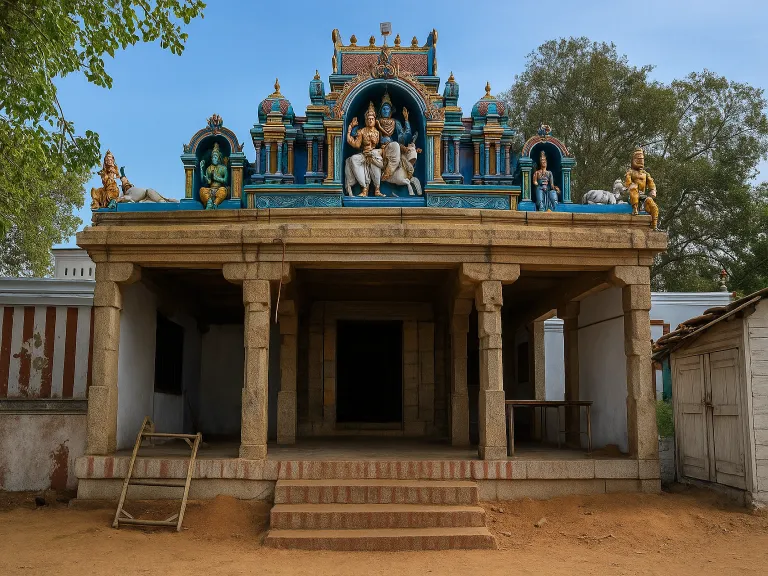
Kailasanathar Temple at Murappanadu is a Shiva temple in Murappanadu, a village on the Tirunelveli–Thoothukudi route in southern Tamil Nadu. The temple is dedicated to Lord Shiva as Kailasanathar and is known in the regional sacred geography of the Tamiraparani river. Murappanadu is especially important to devotees who visit the chain of Nava Kailasam temples situated along the river.
The temple is identified as the Guru, or Jupiter, sthalam among the Nava Kailasam shrines. In this devotional circuit, each of the nine Shiva temples is associated with one of the Navagrahas. Murappanadu Kailasanathar Temple is therefore visited by devotees seeking the grace of Lord Shiva along with relief connected with Guru dosha, education, wisdom, marriage blessings and spiritual guidance. The presiding goddess is worshipped as Sivakami Amman.
The temple’s importance comes from its combination of Shiva worship, Tamiraparani river sanctity and Navagraha association. Local tradition connects the site with the sage Romasa and the origin legend of the Nava Kailasam shrines. Another well-known feature of the temple is the unusual Nandi associated with the local legend of a horse-faced princess. The shrine continues to be part of the living Saiva worship tradition of the Tirunelveli–Thoothukudi region and is commonly included in pilgrimage itineraries covering Papanasam, Cheranmahadevi, Kodaganallur, Srivaikuntam, Then Thirupperai, Rajapathy and Sernthapoomangalam.
ℹ️Temple Information
🛕
Presiding Deity
Kailasanathar
⭐
Temple Type
Shiva temple, Nava Kailasam temple, Navagraha Guru sthalam
Need Help Planning your visit to
Arulmigu Kailasanathar Temple?
Our travel experts can help you with transportation,
darshan timings, nearby sightseeing and complete temple tour planning.
⭐Temple Significance
Murappanadu Kailasanathar Temple is significant as the Guru sthalam among the Nava Kailasam temples of the Tamiraparani region. It is a Shiva temple where devotees worship Kailasanathar and Sivakami Amman and include the shrine in pilgrimages dedicated to the Navagraha-linked Nava Kailasam circuit.
📜History
Murappanadu Kailasanathar Temple is historically known chiefly through its place in the Nava Kailasam group of Shiva temples on the banks of the Tamiraparani river. The Nava Kailasam shrines form a distinctive sacred route in the old Tirunelveli region, linking Saiva worship with the river’s ritual geography. Murappanadu is the shrine associated with Guru, and this identity is widely used by devotees and temple guides in the region.
The exact foundation date, original builder and political patronage of the present temple are not securely established in widely available historical records. Unlike some major Tamil temples that have extensive published inscriptional histories, the documented historical details for Murappanadu Kailasanathar Temple are limited in public sources. For that reason, no specific king, dynasty or construction century can be stated with confidence here without overreaching the available evidence.
The temple’s continuity is best understood as part of the long-standing Saiva religious landscape of southern Tamil Nadu. The Tamiraparani basin has supported numerous Shiva, Vishnu and village temples, many of which developed through local patronage, agrarian communities, river-based ritual practice and periodic renovations. Murappanadu Kailasanathar Temple remains historically significant because it preserves one of the nine sacred Shiva stations of the Nava Kailasam pilgrimage and maintains the Guru-sthalam identity that links the shrine to Navagraha worship in the region.
🕉️Mythology
The mythology of Murappanadu Kailasanathar Temple is connected with the larger Nava Kailasam legend of Sage Romasa. According to the traditional account, Romasa Maharishi, associated with Sage Agastya, wished to worship Lord Shiva at sacred places along the Tamiraparani. He released nine flowers into the river, and each place where a flower came to rest became a Shiva shrine known as one of the Nava Kailasams.
Murappanadu is identified with the flower connected to Guru, or Jupiter. In the devotional understanding of the Nava Kailasam circuit, the nine shrines represent the nine planets, while the central worship remains directed to Lord Shiva. Devotees therefore approach Kailasanathar at Murappanadu as the Shiva who grants the benevolent qualities associated with Guru, including wisdom, learning, auspicious family life, prosperity and higher understanding.
A local temple legend also explains the distinctive Nandi of Murappanadu. The story describes a royal princess who was afflicted with a horse-like face and received divine grace through worship at this shrine and through the sanctity of the Tamiraparani. In the devotional retelling, the princess was restored, while Nandi bore the mark connected with that episode. This legend belongs to the temple’s sacred tradition and is one reason the Nandi at Murappanadu is remembered by pilgrims.
🏛Architecture
Murappanadu Kailasanathar Temple follows the basic plan of a Tamil Saiva temple, with the sanctum of Lord Shiva as Kailasanathar forming the ritual centre. The deity is worshipped in the form of a Shiva linga, and the shrine of Goddess Sivakami Amman forms an important part of the temple’s worship arrangement. The temple also includes the usual Saiva elements such as Nandi facing the main sanctum, subsidiary shrines and spaces for circumambulation.
The most noted architectural and iconographic feature of the temple is the Nandi associated with the horse-faced princess legend. In many Shiva temples Nandi is represented in a conventional seated form, but at Murappanadu the Nandi is remembered for its unusual connection to the sthala purana. This feature gives the temple a distinct identity within the Nava Kailasam circuit and is frequently mentioned by pilgrims visiting the Guru sthalam.
The temple’s architecture is valued more for its sacred function and regional identity than for a securely published royal building history. No verified information is available here on original measurements, sculptors, dated inscriptions or a confirmed construction phase. The temple nevertheless represents the practical Dravidian temple idiom of the region: a sanctum-based layout, goddess worship, Nandi mandapa, ritual circumambulation and river-linked sacred practice. Its setting near the Tamiraparani adds to the spatial and ritual character of the shrine.
🌳
Sacred Features
💧 Temple Tank
Tamiraparani River
The temple is part of the Tamiraparani river’s sacred Nava Kailasam geography, and the river is central to the traditional legends and pilgrimage identity of the shrine.
✨
Temple Highlights
✨
Guru Sthalam of Nava Kailasam
Murappanadu Kailasanathar Temple is identified with Guru, or Jupiter, among the nine Nava Kailasam Shiva temples associated with the Tamiraparani river.
✨
Kailasanathar and Sivakami Amman
The presiding deity is Lord Shiva as Kailasanathar, worshipped with Goddess Sivakami Amman.
✨
Tamiraparani Sacred Geography
The temple belongs to the river-based Saiva pilgrimage tradition of the Tirunelveli–Thoothukudi region.
✨
Horse-faced Nandi Tradition
The temple is remembered for the Nandi connected with the local legend of a princess who received divine grace at the shrine.
✨
Part of Nava Kailasam Pilgrimage
Pilgrims commonly include Murappanadu with the other eight Nava Kailasam temples situated along the Tamiraparani.
🙏
Spiritual Benefits
Blessings of Lord Shiva through worship of Kailasanathar
Devotional relief connected with Guru dosha
Growth in wisdom, learning and clarity
Blessings for education and guidance from teachers
Auspiciousness in marriage and family life
Prosperity and righteous living associated with Guru worship
Spiritual discipline through pilgrimage along the Tamiraparani
Peace of mind through Shiva worship and river-linked sacred practice
🎉
Major Festivals
🎉
Maha Shivaratri
A major annual festival for Lord Shiva, observed by devotees with special worship and night-long devotion in Shiva temples.
🎉
Pradosham
A recurring Saiva observance dedicated to Lord Shiva and Nandi, especially significant for devotees performing Shiva worship.
🎉
Guru Peyarchi
Because the temple is identified as the Guru sthalam of the Nava Kailasam circuit, devotees visit for worship connected with the transit of Guru, subject to the locally announced schedule.
🪔
Special Poojas
🪔
Guru Parihara Worship
Devotees worship Kailasanathar at Murappanadu for devotional relief connected with Guru dosha and for blessings associated with wisdom, learning and auspicious life events.
🪔
Pradosha Pooja
Worship of Lord Shiva during Pradosham is significant in Saiva practice and is associated with prayers to Shiva and Nandi.
🪔
Abhishekam to Kailasanathar
Ritual bathing of the Shiva linga with sacred offerings is a central form of Shiva worship; availability and schedule should be confirmed locally.
🚗
How to Reach
🛣️
By Road
Murappanadu lies on the road route between Tirunelveli and Thoothukudi. Buses, taxis and private vehicles from Tirunelveli, Thoothukudi and Srivaikuntam can be used to reach the village.
🚆
By Rail
Murappanadu is served by the regional rail route in the Tirunelveli–Thoothukudi belt. Travellers may also use Tirunelveli Junction for broader rail connectivity.
✈️
By Air
The nearest major air access is through Thoothukudi Airport, with onward travel by road to Murappanadu.
💡
Visitor Tips
Confirm current opening hours with the temple or local residents before travelling.
If covering the Nava Kailasam circuit, plan the route in advance because the temples are spread across the Tamiraparani region.
Carry drinking water during daytime travel, especially in the warmer months.
Wear modest clothing appropriate for worship in a Hindu temple.
Avoid photography inside the temple unless permission is clearly granted by temple authorities.
Be cautious near riverbanks and bathing ghats, especially during monsoon flow or after heavy rain.
Festival days and Guru Peyarchi may draw more devotees; allow extra time for darshan.
Local road transport or a hired vehicle is convenient for visiting multiple Nava Kailasam temples in one trip.

 WhatsApp Us