🛕About Temple
Kailasanathar Temple at Rajapathi, also written Rajapathy, is a Shiva temple in Thoothukudi district, Tamil Nadu, known chiefly through its place in the Nava Kailasam group of temples connected with the Tamiraparani river. The presiding deity is Shiva as Kailasanathar, worshipped in the form of a lingam. Within the Nava Kailasam pilgrimage sequence, Rajapathi is associated with Ketu, one of the nine planetary grahas in Hindu astrology.
The temple is not widely known for large royal inscriptions or monumental architecture like the major medieval temples of the region. Its importance rests mainly on sacred geography: the chain of Shiva shrines along the Tamiraparani, beginning near Papanasam in the Western Ghats and moving eastward toward the river’s lower course. Rajapathi is counted as the eighth shrine in this sequence, before the final Nava Kailasam temple at Sernthapoomangalam.
The present shrine functions as a local place of worship and as a stop for pilgrims who undertake the Nava Kailasam circuit. Devotees visit Rajapathi especially for worship connected with Ketu and for darshan of Kailasanathar. Since many operational details of the temple are not consistently documented in authoritative public sources, visitors should confirm current timings, access, and ritual arrangements locally before planning a visit.
ℹ️Temple Information
🛕
Presiding Deity
Kailasanathar
⭐
Temple Type
Shiva temple, Nava Kailasam temple, Ketu sthalam
Need Help Planning your visit to
Arulmigu Kailasanathar Temple?
Our travel experts can help you with transportation,
darshan timings, nearby sightseeing and complete temple tour planning.
⭐Temple Significance
Kailasanathar Temple, Rajapathi, is significant as the eighth temple in the Nava Kailasam circuit of Shiva temples along the Tamiraparani river and as the shrine associated with Ketu among the Navagrahas.
📜History
The historical record for Kailasanathar Temple, Rajapathi, is limited when compared with major inscriptional temples of the Pandya, Chola, or Nayaka periods in southern Tamil Nadu. The temple is most securely documented through its inclusion in the Nava Kailasam tradition, a group of nine Shiva temples situated along the Tamiraparani river. These shrines are linked in devotional practice with the Navagrahas, and Rajapathi is identified with Ketu.
No widely accepted inscriptional evidence is available in public historical summaries that fixes the original builder, exact construction date, ruling dynasty, or formal endowment history of the Rajapathi shrine. For that reason, the temple’s built period and dynastic attribution cannot be stated with confidence as historical fact. Unlike larger temples at towns such as Srivaikuntam or Papanasam, Rajapathi’s known identity has been preserved primarily through pilgrimage memory, regional temple lists, and living worship traditions.
Modern accounts of the Nava Kailasam circuit note that the Rajapathi temple had experienced periods of decline and revival. Its current importance is therefore both historical and devotional: it preserves one point in an older sacred landscape of the Tamiraparani basin while continuing to attract worshippers seeking darshan of Kailasanathar. The absence of firm epigraphic data should not be confused with absence of religious importance; it simply means that historical claims about its founder, century, or royal patronage should be treated cautiously unless supported by verifiable temple records.
🕉️Mythology
The mythology of Kailasanathar Temple, Rajapathi, belongs to the wider Nava Kailasam legend associated with Sage Romasa, Sage Agastya, and the sacred Tamiraparani river. In this tradition, Sage Romasa sought spiritual liberation and approached Agastya for guidance. Agastya instructed him to worship Shiva at places sanctified along the river, and the nine shrines that emerged from this sacred journey came to be revered as the Nava Kailasam temples.
According to the devotional narrative, nine flowers were set afloat on the Tamiraparani. The places where the flowers came to rest were identified as sacred sites for the worship of Shiva. Each of these locations became associated with one of the Navagrahas. Rajapathi is counted as the eighth of these sites and is linked with Ketu. This association gives the temple a special role for devotees who perform worship connected with Ketu-related astrological concerns.
This mythology is distinct from verifiable architectural or dynastic history. It expresses the sacred geography of the Tamiraparani and explains why geographically separate Shiva temples are treated as a single pilgrimage circuit. For pilgrims, the Rajapathi shrine is not an isolated village temple but one station in a spiritually ordered journey from the upper Tamiraparani region toward its eastern course. Worship at Rajapathi is therefore understood within the larger narrative of Shiva’s grace, river sanctity, planetary symbolism, and the pursuit of liberation.
🏛Architecture
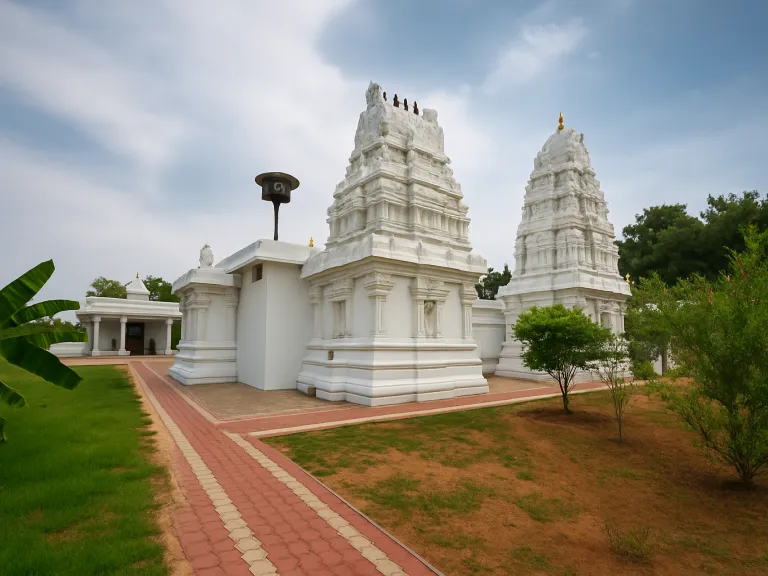
Kailasanathar Temple at Rajapathi is not documented as a large, heavily ornamented monument with a well-published architectural chronology. The present shrine is best understood as a functional South Indian Shiva temple serving local worship and the Nava Kailasam pilgrimage. Its architectural identity is centered on the sanctum of Kailasanathar, where Shiva is worshipped as a lingam, and on the ritual axis typical of Saiva temples.
Published public information does not provide reliable details about original measurements, sculptural programs, dated inscriptions, construction phases, or the names of historical architects. For this reason, specific claims about its original vimana style, mandapa date, gateway tower, sculpture cycles, or stonework patronage should not be asserted without direct temple records or archaeological documentation. What can be stated safely is that the temple’s significance is not dependent on monumental scale; it lies in its ritual role within the Nava Kailasam circuit.
The architecture experienced by visitors today reflects a living shrine rather than a museum monument. The focus of worship is the Shiva lingam of Kailasanathar, with devotional movement organized around darshan and circumambulation where available. The rebuilt and maintained elements of the temple support daily or periodic worship as practiced locally. Because the shrine’s historical fabric has not been comprehensively documented in standard public sources, visitors interested in architectural study should verify details on site and distinguish observable features from later oral or devotional explanations.
✨
Temple Highlights
✨
Eighth Nava Kailasam Temple
Rajapathi is counted as the eighth shrine in the Nava Kailasam sequence of Shiva temples associated with the Tamiraparani river.
✨
Ketu Association
The temple is identified with Ketu in the Nava Kailasam Navagraha tradition, making it a devotional destination for Ketu-related worship.
✨
Kailasanathar as Presiding Deity
Shiva is worshipped here as Kailasanathar, the central deity of the shrine.
✨
Tamiraparani Sacred Geography
The temple forms part of a wider river-based pilgrimage tradition linking nine Shiva shrines across the Tamiraparani region.
🙏
Spiritual Benefits
Devotees seek relief from difficulties associated with Ketu in the Nava Kailasam tradition.
Worshippers pray for spiritual clarity and removal of inner confusion.
Pilgrims include the temple in the Nava Kailasam circuit for the merit of worshipping Shiva at all nine sacred sites.
Devotees seek protection from obstacles and unseen influences through worship of Kailasanathar.
The visit is valued as part of Tamiraparani river-based Shiva worship and pilgrimage discipline.
🪔
Special Poojas
🪔
Ketu-related worship
Devotees visit Rajapathi as the Ketu-associated Nava Kailasam shrine and offer prayers to Kailasanathar for relief from Ketu-related astrological concerns. Specific ritual schedules and fees should be confirmed locally.
🚗
How to Reach
🛣️
By Road
Rajapathi is reachable by local roads in Thoothukudi district. Pilgrims commonly approach the area while visiting the Nava Kailasam temples around Srivaikuntam, Then Thirupperai, and the lower Tamiraparani region.
🚆
By Rail
Rail access is available through stations on the Tirunelveli-Tiruchendur railway section. Visitors should confirm the most convenient station and onward local transport before travel.
✈️
By Air
The regional airport serving this part of Tamil Nadu is Tuticorin Airport. Madurai Airport is another major airport option for travellers coming from farther cities.
💡
Visitor Tips
Confirm the current opening hours locally before visiting, as reliable public timing information is not consistently available.
Plan the visit together with other Nava Kailasam temples if undertaking the full pilgrimage circuit.
Carry water and basic travel necessities, especially when visiting smaller village temples.
Use respectful conduct inside the temple and avoid disturbing ongoing worship.
Check local transport availability in advance, particularly for return travel from Rajapathi.

 WhatsApp Us