🛕About Temple
Kailasanathar Temple at Serndhapoomangalam is a Shaiva temple in Thoothukudi district, Tamil Nadu, venerated as one of the Nava Kailayam temples connected with the sacred course of the Thamirabarani River. The temple is dedicated to Lord Shiva as Kailasanathar, and its local importance comes especially from its place in the Nava Kailayam pilgrimage circuit, a group of nine Shiva temples associated with the nine grahas in the Thamirabarani region.
Serndhapoomangalam is identified in the Nava Kailayam tradition as the ninth Kailayam and as the Sukra Sthalam, the temple associated with Venus. Devotees visit the shrine as part of the complete Nava Kailayam yatra, beginning upstream at Papanasam and moving along the riverine sacred geography toward the lower Thamirabarani region. The temple is therefore not only a local village shrine but also a recognised destination for pilgrims seeking to worship Shiva through the symbolic framework of the Navagrahas.
The presiding deity is Kailasanathar, worshipped in the form of a Shiva Lingam. The goddess is widely identified in temple listings as Azhagiya Ponnammal. The temple is valued for its quiet setting, its association with the Romasa Maharishi legend, and its role as the concluding shrine of the Nava Kailayam sequence. Detailed historical records on its founder, exact date of construction, original patronage, inscriptions, and ritual manual are not widely available in standard public sources; those details are therefore best verified directly with the temple authorities or through epigraphical records.
ℹ️Temple Information
🛕
Presiding Deity
Kailasanathar
👸
Goddess
Azhagiya Ponnammal
⭐
Temple Type
Shaiva temple, Nava Kailayam temple, Sukra Sthalam, Navagraha-associated Shiva temple
Need Help Planning your visit to
Arulmigu Kailasanathar Temple?
Our travel experts can help you with transportation,
darshan timings, nearby sightseeing and complete temple tour planning.
⭐Temple Significance
Kailasanathar Temple, Serndhapoomangalam, is significant as the ninth temple of the Nava Kailayam circuit of the Thamirabarani region and as the Sukra Sthalam associated with Venus. It is a recognised Shaiva pilgrimage shrine where devotees worship Lord Shiva as Kailasanathar and complete the Nava Kailayam yatra.
📜History
Kailasanathar Temple, Serndhapoomangalam, is historically known mainly through its place in the Nava Kailayam group of temples of the Thamirabarani basin. The Nava Kailayam shrines form an important Shaiva sacred circuit in southern Tamil Nadu, linking worship of Lord Shiva with the nine planetary deities. Serndhapoomangalam is counted as the ninth temple in this sequence and is associated with Sukra, Venus. This identity is the most consistently documented aspect of the temple in pilgrimage accounts and regional temple guides.
Unlike major imperial temples with long inscriptional corpora in public circulation, detailed historical information for Serndhapoomangalam Kailasanathar Temple is limited. The name of the original builder, the exact year of consecration, the principal donor, and a firm dynastic attribution are not consistently documented in widely accessible historical sources. For this reason, any precise claim about a specific king, construction year, or founding dynasty should be treated cautiously unless supported by inscriptions or official temple records.
The temple’s historical importance lies in its continuity of worship and its integration into the sacred landscape of the Thamirabarani. The Nava Kailayam route reflects the strong medieval and later Shaiva devotional culture of the region, where river, shrine, planetary symbolism, and local community worship became interwoven. Serndhapoomangalam remains significant because it preserves this religious geography as the Sukra-associated Kailasam. Its present identity is therefore best understood as a living Shaiva shrine whose documented prominence comes from regional pilgrimage tradition rather than from a well-published royal foundation history.
🕉️Mythology
The mythology of Kailasanathar Temple, Serndhapoomangalam, is connected with the Nava Kailayam legend of Romasa Maharishi, a sage associated with deep devotion to Lord Shiva. According to the local sthala-purana tradition of the Thamirabarani region, Romasa Maharishi sought liberation and was guided to worship Shiva at sacred places along the river. The legend presents the Thamirabarani not merely as a river but as a divine path marked by Shiva’s grace.
In this tradition, the sage released nine flowers into the flowing waters of the Thamirabarani. Each flower came to rest at a particular place, and a Shiva shrine was established or worshipped at each of those locations. These nine places came to be revered as the Nava Kailayam temples. Each shrine is also linked with one of the Navagrahas, creating a sacred circuit in which Shiva worship and planetary symbolism are brought together within the river landscape.
Serndhapoomangalam is revered as the ninth and concluding point of this Nava Kailayam sequence. In the mythological understanding of the circuit, it is the Sukra Sthalam, associated with Venus, and worship here is connected with the completion of the pilgrim’s journey through the nine Kailasams. The name Serndhapoomangalam is also understood in local devotional memory in connection with the coming together or reaching of the sacred flowers. These details belong to the temple’s mythology and regional religious tradition rather than to verifiable political history.
🏛Architecture
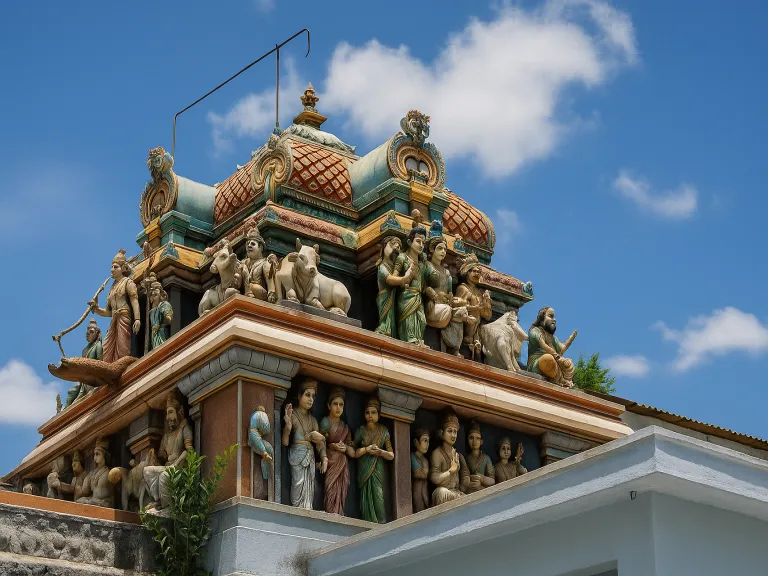
Kailasanathar Temple, Serndhapoomangalam, belongs to the Shaiva temple tradition of Tamil Nadu and follows the essential Dravidian pattern centred on the sanctum of Lord Shiva. The primary focus of the shrine is the garbhagriha housing Kailasanathar in the form of a Shiva Lingam. The goddess shrine for Azhagiya Ponnammal forms the complementary Shakti presence of the temple, reflecting the standard Shaiva theological pairing of Shiva and Amman in Tamil temple worship.
Publicly available architectural documentation for this temple is limited, and detailed measurements, inscriptional descriptions, sculpture catalogues, and renovation chronology are not widely published. Therefore, the temple should not be described with unsupported claims about specific mandapas, towers, sculptural programmes, or construction phases unless verified on site or through official records. Its architectural significance is best understood through its functional sacred layout and its place in the Nava Kailayam pilgrimage network rather than through monumental scale.
The temple’s architecture serves the devotional needs of a riverine Shaiva shrine: darshan of the Shiva Lingam, worship of the goddess, circumambulation, and observances connected with the Sukra association. As the ninth Kailayam of the Thamirabarani circuit, the temple is experienced by pilgrims as the architectural and ritual endpoint of a sequence of Shiva shrines. Its value lies in the combination of sacred geography, Navagraha symbolism, and living worship, while specific art-historical details require verification from temple authorities or formal surveys.
✨
Temple Highlights
✨
Ninth Nava Kailayam Temple
Serndhapoomangalam is revered as the ninth and concluding shrine in the Nava Kailayam circuit of the Thamirabarani region.
✨
Sukra Sthalam
The temple is associated with Sukra, Venus, within the Nava Kailayam Navagraha tradition.
✨
Lord Shiva as Kailasanathar
The presiding deity is Lord Shiva worshipped as Kailasanathar in the form of a Shiva Lingam.
✨
Linked with Romasa Maharishi Legend
The temple forms part of the local mythological tradition in which Romasa Maharishi worshipped Shiva at nine sacred places along the Thamirabarani.
✨
Thamirabarani Sacred Geography
The shrine is part of the river-based Shaiva pilgrimage landscape of southern Tamil Nadu.
🙏
Spiritual Benefits
Worship of Lord Shiva as Kailasanathar
Completion of the Nava Kailayam pilgrimage circuit
Prayers connected with Sukra or Venus in the Navagraha tradition
Seeking harmony in family and marital life through devotional worship
Prayers for prosperity, refinement, and wellbeing associated with Sukra symbolism
Spiritual merit through worship at a Thamirabarani sacred-site temple
Participation in a living Shaiva pilgrimage tradition
🎉
Major Festivals
🎉
Maha Shivaratri
Maha Shivaratri is a major annual observance dedicated to Lord Shiva and is important for devotees of Kailasanathar.
🎉
Pradosham
Pradosham is a recurring Shaiva observance connected with worship of Lord Shiva. Visitors should confirm the local schedule at the temple.
🪔
Special Poojas
🪔
Sukra Parihara Worship
As the Sukra Sthalam of the Nava Kailayam circuit, devotees offer prayers connected with Sukra. Specific procedures should be confirmed with the temple priest.
🪔
Abhishekam to Kailasanathar
Abhishekam and archana to Lord Shiva are central forms of worship at Shaiva temples. Availability and timing should be confirmed locally.
🪔
Pradosha Pooja
Pradosha worship is associated with Lord Shiva. Devotees should check the temple schedule for observance details.
🚗
How to Reach
🛣️
By Road
Serndhapoomangalam can be reached by road within Thoothukudi district. Pilgrims commonly include it while travelling through the Nava Kailayam route of the Thamirabarani region.
🚆
By Rail
Rail access should be planned through stations in the Thoothukudi, Tiruchendur, or Tirunelveli region after confirming the most convenient current connection.
✈️
By Air
The nearest regional air access is through the Thoothukudi and Tirunelveli region; onward travel is by road.
💡
Visitor Tips
Confirm temple opening hours locally before travelling, as published timings are not consistently documented.
Plan the visit with other Nava Kailayam temples if undertaking the full pilgrimage circuit.
Wear modest clothing suitable for a traditional Hindu temple.
Check locally before taking photographs inside the temple premises.
Carry drinking water when travelling through rural temple routes.
Use local guidance for the most convenient road approach to Serndhapoomangalam.
Avoid assuming availability of special darshan or ticketed services unless confirmed at the temple.
Respect ongoing rituals and avoid entering restricted areas of the shrine.

 WhatsApp Us