🛕About Temple
Kailasanathar Temple at Thingalur in Thanjavur district, Tamil Nadu, is an ancient Saiva temple dedicated to Lord Shiva as Kailasanathar. The goddess is worshipped as Periyanayaki Amman. The temple is best known as the Chandra Sthalam, the sacred shrine associated with the Moon among the celebrated Navagraha temples of the Kumbakonam-Thanjavur region.
Thingalur is located near Thiruvaiyaru and Thanjavur, in the fertile Cauvery delta. Although the temple is popularly visited as a Navagraha parihara shrine, its primary sanctum is that of Shiva. Devotees worship Kailasanathar first and then offer prayers to Chandra Bhagavan, whose shrine gives the temple its special astrological importance. The temple is also associated with Saiva devotional history through the story of Appoothi Adigal and Tirunavukkarasar, also known as Appar.
The temple attracts devotees seeking blessings for mental peace, emotional steadiness, family well-being, and relief from afflictions associated with Chandra in Hindu astrology. Mondays and full-moon days are especially important for Chandra worship. The temple’s atmosphere is quieter than many larger temple towns, making it significant both as a pilgrimage stop and as a place of focused worship. It remains an important part of the sacred geography of the Cauvery delta, where Saiva devotion, temple culture, and Navagraha worship are closely interwoven.
ℹ️Temple Information
🛕
Presiding Deity
Kailasanathar
⭐
Temple Type
Shiva temple, Navagraha temple, Chandra Sthalam, Saiva temple
📅
Built Period
Existing by the period remembered in the seventh-century Saiva tradition of Appar; the present temple is associated with Chola-period temple culture.
Need Help Planning your visit to
Shri Kailasanathar Temple?
Our travel experts can help you with transportation,
darshan timings, nearby sightseeing and complete temple tour planning.
⭐Temple Significance
Kailasanathar Temple, Thingalur is significant as the Chandra Sthalam among the Navagraha temples of Tamil Nadu. It is a Shiva temple where Chandra Bhagavan receives special worship, especially for lunar-related astrological afflictions. The temple is also important in Saiva devotional memory because of its association with Appoothi Adigal and Appar.
📜History
The exact founder of Kailasanathar Temple at Thingalur is not clearly established from widely available historical records. The temple is generally associated with the Chola-period temple culture of the Cauvery delta, a region that saw extensive development of stone temples, Saiva institutions, ritual endowments, and pilgrimage networks under the Cholas. Thingalur’s antiquity is also supported by its connection with the seventh-century Saiva saint Tirunavukkarasar, known as Appar.
The temple is important in Saiva hagiographical history through the account of Appoothi Adigal, a devotee of Appar who lived at Thingalur. This account is preserved in the Periyapuranam, the twelfth-century Tamil work that records the lives of the sixty-three Nayanmars. The story places Thingalur within the devotional landscape of early Tamil Saivism, even though it is not primarily treated as an inscriptional historical record. The association shows that the shrine and village had a recognized Saiva identity by the period remembered in the Nayanmar tradition.
In later centuries, the temple became widely known as the Chandra Sthalam among the Navagraha temples. Pilgrimage circuits linking the planetary shrines around Kumbakonam and Thanjavur brought renewed attention to Thingalur. The temple continues to function as a Shiva temple with a distinct Chandra shrine, maintaining both its Saiva character and its astrological significance. While later repairs and renovations have occurred, detailed verified information on individual patrons, reconstruction phases, and inscriptions is not sufficiently established in widely available sources.
🕉️Mythology
Kailasanathar Temple is closely connected with the mythology of Chandra, the Moon god. In Hindu sacred narratives, Chandra married the twenty-seven daughters of Daksha, who are identified with the lunar mansions or nakshatras. Chandra showed special affection to Rohini, causing distress to the other wives. Daksha cursed him to lose his brightness, and Chandra sought relief through worship of Lord Shiva. Shiva restored his radiance, and this story forms the devotional background for Chandra worship at Thingalur.
The temple is also linked with the Saiva devotional story of Appoothi Adigal and Appar. Appoothi Adigal, a householder devotee of Thingalur, revered Appar so deeply that he named objects and charitable works after the saint. When Appar visited Thingalur, Appoothi Adigal invited him for a meal. During the preparations, Appoothi Adigal’s son was bitten by a snake while cutting a plantain leaf. The family concealed the tragedy in order to complete service to the saint.
Appar came to know of the incident and prayed to Lord Shiva. In the devotional account, the child was restored to life by the grace of Shiva. This episode is remembered as an illustration of unwavering devotion, service to devotees, and the power of Shiva’s grace. The mythology of Thingalur therefore has two important strands: Chandra’s worship of Shiva for the restoration of his light, and the Nayanmar tradition that celebrates Appoothi Adigal’s devotion and Appar’s prayer at the shrine.
🏛Architecture
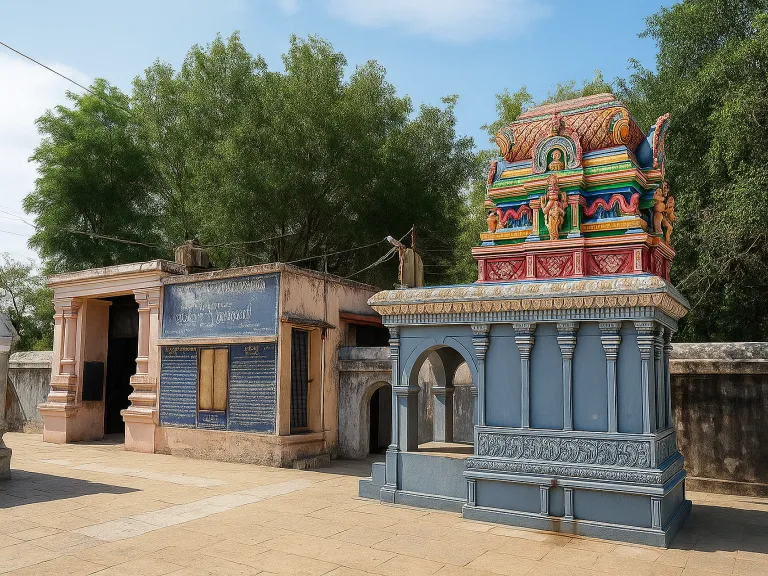
Kailasanathar Temple follows the South Indian Dravidian temple layout common to the Saiva temples of the Cauvery delta. The complex has a temple entrance with a gopuram, enclosed prakara spaces, the main sanctum for Lord Shiva, a shrine for Periyanayaki Amman, and a distinct shrine for Chandra Bhagavan. The temple is modest in scale when compared with the great imperial Chola monuments, but it preserves the essential ritual organization of a traditional Tamil Shiva temple.
The main deity, Kailasanathar, is worshipped in the form of a Shiva lingam. The goddess shrine is dedicated to Periyanayaki, who is venerated as the consort of the presiding deity. The Chandra shrine is the most distinctive feature for pilgrims on the Navagraha route. Chandra is commonly represented with attributes associated with coolness, purity, and lunar radiance, and devotees offer prayers connected with the Moon’s astrological influence. The temple layout directs worship from the principal Shiva shrine to the associated goddess and planetary shrine.
Architecturally, the temple reflects the functional sacred design of regional Saiva shrines: axial movement toward the sanctum, circumambulatory passages, subsidiary shrines, and sculptural images connected with Shiva worship. The use of stone, walled enclosures, mandapas, and gopuram elements places it within the temple-building traditions of Tamil Nadu. Its importance rests less on monumental scale and more on its layered religious role as a Shiva temple, a Chandra parihara shrine, and a site remembered in Saiva devotional literature.
🌳
Sacred Features
🌳 Temple Tree
Vilva
Vilva leaves are sacred to Lord Shiva and are used in Shiva worship.
💧 Temple Tank
Chandra Theertham
The temple tank is associated with Chandra worship and the sacred identity of the shrine as Chandra Sthalam.
✨
Temple Highlights
✨
Chandra Sthalam
The temple is the sacred shrine associated with Chandra, the Moon, among the Navagraha temples of the Kumbakonam-Thanjavur region.
✨
Presiding deity Kailasanathar
The main deity is Lord Shiva worshipped as Kailasanathar in the form of a Shiva lingam.
✨
Goddess Periyanayaki
The consort of the presiding deity is worshipped as Periyanayaki Amman.
✨
Association with Appar
The temple is connected with the Saiva saint Tirunavukkarasar, known as Appar, through the story of Appoothi Adigal.
✨
Navagraha pilgrimage circuit
Thingalur is an important stop for pilgrims visiting the nine planetary temples of Tamil Nadu.
🙏
Spiritual Benefits
Devotees seek relief from Chandra dosha and adverse lunar influences.
Devotees pray for mental peace and emotional balance.
Devotees seek blessings for the well-being of mother and family.
Devotees pray for harmony in domestic life.
Devotees seek support in overcoming anxiety, restlessness, and instability.
Devotees worship for improved concentration and clarity of mind.
Devotees pray for fertility, childbirth blessings, and healthy children.
Devotees seek the grace of Lord Shiva through worship of Kailasanathar.
🎉
Major Festivals
🎉
Maha Shivaratri
Maha Shivaratri is one of the most important festivals for Lord Shiva, marked by special worship to Kailasanathar.
🎉
Pradosham
Pradosham worship is observed for Lord Shiva, as in many Saiva temples, with special prayers during the twilight period.
🎉
Pournami
Full-moon days are significant for Chandra worship and attract devotees seeking the blessings of the Moon.
🎉
Mondays
Mondays are sacred to both Shiva and Chandra, making them important days for worship at Thingalur.
🪔
Special Poojas
🪔
Chandra Dosha Parihara Puja
Devotees perform special worship to Chandra Bhagavan for relief from adverse lunar influences in astrology.
🪔
Abhishekam to Kailasanathar
Ritual bathing and worship of the Shiva lingam are performed as part of regular Shiva worship.
🪔
Pournami Chandra Worship
Special prayers to Chandra are offered on full-moon days, which are considered especially auspicious for lunar worship.
🪔
Archana to Periyanayaki Amman
Devotees offer archana to the goddess Periyanayaki for family welfare and divine grace.
🚗
How to Reach
🛣️
By Road
Thingalur is accessible by road from Thanjavur and Thiruvaiyaru. Local buses, taxis, and private vehicles connect the village with nearby temple towns.
🚆
By Rail
The nearest major railway station is Thanjavur, from where visitors can reach Thingalur by road.
✈️
By Air
The nearest airport is Tiruchirappalli International Airport, from where Thingalur can be reached by road through Thanjavur.
💡
Visitor Tips
Worship at the main shrine of Kailasanathar before offering prayers at the Chandra shrine.
Mondays and full-moon days attract more devotees because of Chandra worship.
Confirm current temple timings before travelling, especially on festival days.
Dress modestly and follow normal temple etiquette inside the shrine.
Ask temple authorities before taking photographs, as photography rules may vary.
Thingalur can be combined with visits to Thiruvaiyaru and Thanjavur temples.
Carry cash for offerings or archana, as digital payment facilities may not always be available.
Avoid rushing the visit if performing Navagraha parihara worship.

 WhatsApp Us