🛕About Temple
Kaliamman Temple at Madapuram, more widely known as Madapuram Badrakaliamman Temple, is a prominent goddess shrine in Madapuram village near Thiruppuvanam in Sivaganga district, Tamil Nadu. The temple is associated with the worship of Sri Badrakali Amman, locally revered as Madapuram Kaliamman, and the guardian deity Sri Adaikalam Katha Ayyanar. It is an important pilgrimage point for devotees travelling between Madurai and the Sivaganga-Ramanathapuram region.
The shrine is especially known for its powerful village-deity character and for the close association between the fierce mother-goddess and Ayyanar, the guardian deity of the locality. The goddess is worshipped as a protector who grants courage, justice and relief from fear. Devotees from southern Tamil Nadu visit the temple to fulfil vows, offer prayers for family welfare, and seek divine protection during personal difficulties.
Unlike many large urban temples with an extensively documented royal history, Madapuram Kaliamman Temple is best understood as a living folk-Shakta shrine that has grown through continuous local devotion. Its importance rests in worship practice, oral sacred tradition and regional faith rather than in confirmed dynastic records. The temple is administered as a public Hindu temple and remains one of the well-known Kali shrines connected with the Madurai cultural region.
ℹ️Temple Information
🛕
Presiding Deity
Sri Adaikalam Katha Ayyanar
👸
Goddess
Sri Badrakali Amman
⭐
Temple Type
Amman temple, Badrakali temple, Village deity temple, Guardian deity shrine, Shakta shrine
Need Help Planning your visit to
Kaliamman Temple?
Our travel experts can help you with transportation,
darshan timings, nearby sightseeing and complete temple tour planning.
⭐Temple Significance
Madapuram Kaliamman Temple is significant as one of the best-known Badrakali Amman shrines of southern Tamil Nadu and as a major centre of guardian-goddess worship near the Madurai region. The temple is revered for protection, justice, fulfilment of vows and the combined worship of Badrakali Amman with Adaikalam Katha Ayyanar.
📜History
The documented history of Madapuram Kaliamman Temple is limited when compared with major inscription-rich temples of Tamil Nadu. No widely accepted inscriptional evidence is available in public historical records to identify a specific founder, construction date or royal patron. For that reason, the temple’s antiquity cannot be assigned with certainty to any particular dynasty or century. Its historical identity is mainly preserved through long-standing regional worship and the continuity of ritual practice.
Madapuram lies close to Thiruppuvanam and the Vaigai riverine region, an area that has been culturally connected with Madurai for centuries. The temple’s sacred narrative links it with the Madurai religious sphere, especially the traditions surrounding Meenakshi, Shiva and guardian deities. Historically, such shrines served as protective village temples, boundary shrines and centres of community justice, where the goddess was approached as a witness to truth and moral order.
In the modern period, the temple became a widely visited public shrine of southern Tamil Nadu. Its fame spread beyond Madapuram because of the distinctive open-air image of Badrakali Amman and the powerful presence of Adaikalam Katha Ayyanar. The temple is now commonly identified as Arulmigu Adaikalam Katha Ayyanar and Badrakaliamman Temple, Madapuram. Although royal patronage and early architectural phases remain undocumented, the temple’s living history is strongly rooted in continuous devotion, local guardianship traditions and public worship.
🕉️Mythology
The mythology of Madapuram Kaliamman Temple belongs to the sacred oral tradition of the Madurai region. Local tradition connects Madapuram with the divine presence of Shiva and Parvati, and with the protective role of Ayyanar. The name and sanctity of the place are explained through stories in which the goddess assumes a fierce protective form and remains at Madapuram for the welfare of devotees.
One popular local belief describes Madapuram as a boundary-associated sacred place linked with Madurai. In this tradition, the goddess appears as Badrakali to guard the region and to protect devotees from danger, injustice and fear. Ayyanar is revered here as Adaikalam Katha Ayyanar, meaning the guardian who gives refuge. This explains the close ritual association of Kaliamman and Ayyanar in the temple’s identity.
The goddess is approached as a powerful witness to truth. Devotees invoke her presence when seeking justice, protection from enemies, settlement of disputes and removal of distress. These beliefs are part of the temple’s living religious culture and should be understood as sacred tradition rather than documented political history. The mythology emphasizes the mother-goddess as both fierce and compassionate: she punishes falsehood, protects the innocent, grants courage, and stands as a guardian of the community.
🏛Architecture
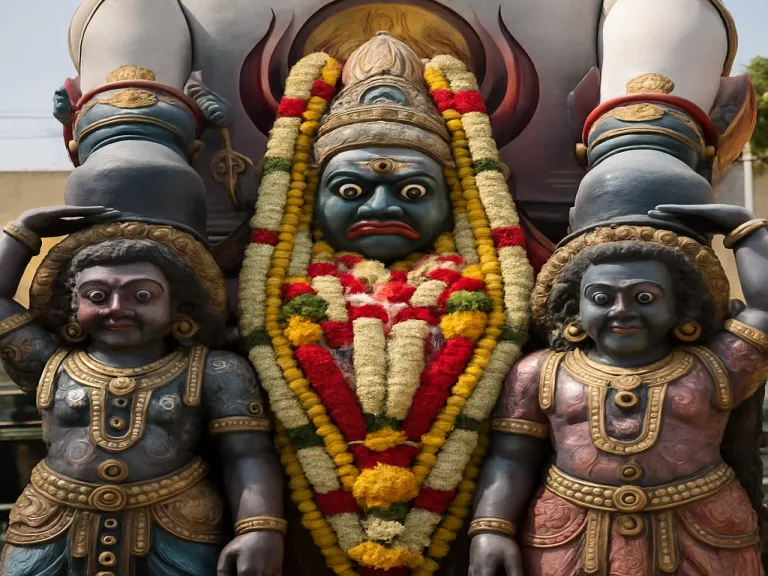
Madapuram Kaliamman Temple is architecturally notable for its open-air goddess shrine and its strong village-guardian visual language. The image of Badrakali Amman is worshipped in a setting that differs from enclosed stone sanctums of many classical temples. The absence of a conventional roof above the principal goddess image is one of the most recognized features of the temple and contributes to its distinct sacred atmosphere.
The temple’s visual identity is closely tied to the presence of Adaikalam Katha Ayyanar and the guardian-horse motif, a major feature in Tamil village deity worship. The goddess is seen in a fierce protective aspect, and the surrounding iconography reinforces the idea of divine guardianship. The architectural expression combines elements familiar to Tamil temple worship with folk-deity symbolism, especially the emphasis on protection, boundary and refuge.
The complex contains spaces for public worship, offerings and circumambulation, reflecting the needs of a popular living shrine rather than a purely monumental royal temple. Stucco forms, guardian imagery and painted sacred figures are part of its devotional environment. Because early construction phases are not securely documented, the architecture cannot be tied to a specific historical dynasty. Its importance lies in the continuity of worship and in the distinctive open-air presentation of the goddess within the Ayyanar-Kaliamman protective tradition.
✨
Temple Highlights
✨
Open-air Badrakali Amman shrine
The temple is widely recognized for the distinctive open-air worship of Sri Badrakali Amman, a feature that gives the shrine a powerful and unusual devotional identity.
✨
Adaikalam Katha Ayyanar association
Sri Adaikalam Katha Ayyanar is closely associated with the temple and is revered as the guardian who gives refuge and protection.
✨
Famous Kali shrine near Madurai
Madapuram Kaliamman Temple is a major pilgrimage shrine for devotees from Madurai, Sivaganga and other parts of southern Tamil Nadu.
✨
Protector and witness to truth
Devotees approach the goddess for protection, courage, justice and relief from fear, reflecting the temple’s strong guardian-deity tradition.
✨
Village-deity worship tradition
The temple preserves the living religious culture of Tamil folk-Shakta worship, combining goddess devotion with guardian deity symbolism.
🙏
Spiritual Benefits
Devotees pray for protection from fear and danger.
Devotees seek courage during difficult personal circumstances.
Devotees pray for justice and relief from false accusations.
Devotees seek removal of obstacles affecting family welfare.
Devotees offer vows for recovery from distress and hardship.
Devotees pray for protection from negative influences.
Devotees seek the blessings of the goddess and Ayyanar for peace and security.
🎉
Major Festivals
🎉
Aadi Fridays
Fridays in the Tamil month of Aadi are important for Amman worship, and devotees visit the temple in large numbers to offer prayers to Badrakali Amman.
🎉
Navaratri
Navaratri is an important goddess festival period during which devotees worship the divine feminine in her protective and benevolent forms.
🪔
Special Poojas
🪔
Abhishekam
Ritual bathing of the deity is part of Hindu temple worship and is offered to invoke divine grace and purification.
🪔
Archana
Devotees offer archana in the name of individuals or families, seeking the blessings of Sri Badrakali Amman and Sri Adaikalam Katha Ayyanar.
🪔
Vow offerings
Devotees visit the temple to fulfil vows made to the goddess after seeking protection, justice or relief from distress.
🚗
How to Reach
🛣️
By Road
Madapuram is accessible by road from Madurai and Thiruppuvanam. The temple lies in the Sivaganga district region connected to the Madurai-Ramanathapuram road network.
🚆
By Rail
The nearest commonly used railway access is Thiruppuvanam, with Madurai Junction serving as the major railhead for long-distance travellers.
✈️
By Air
The nearest major airport is Madurai Airport, from where visitors can travel by road to Madapuram.
💡
Visitor Tips
Verify current temple timings through official or local sources before travelling.
Expect heavier crowds during Aadi Fridays, Navaratri and important Amman worship days.
Dress modestly and follow local temple customs while entering the shrine.
Keep footwear only in the designated area outside the worship space.
Carry drinking water during summer, as the region can be very hot.
Respect the open-air sanctity of the goddess shrine and avoid obstructing other devotees.
Check local transport availability if travelling from Thiruppuvanam or Madurai in the evening.

 WhatsApp Us