🛕About Temple
Kalyanasundareswarar Temple at Thiruvelvikudi is a revered Shiva temple in Thiruvelvikudi village near Kuthalam in the Mayiladuthurai region of Tamil Nadu. The presiding deity is Lord Shiva worshipped as Kalyanasundareswarar, the auspicious bridegroom form of Shiva, and the goddess is worshipped as Parimala Sugandha Nayaki. The temple belongs to the sacred Kaveri delta, a region dense with ancient Shaiva shrines praised in Tamil devotional literature.
The temple is counted among the Paadal Petra Sthalams, the 276 Shiva temples glorified in the Tevaram hymns of the Nayanmar saints. Thiruvelvikudi is especially associated with the divine wedding theme of Shiva and Parvati. The name of the place is connected with “velvi,” meaning sacrificial ritual or yajna, linking the temple to sacred rites performed before a wedding in its mythology.
Devotees visit the temple seeking blessings for timely marriage, removal of obstacles in alliances, marital harmony, and auspicious family life. Its spiritual identity is closely connected with nearby Thirumanancheri, another celebrated temple associated with Shiva’s marriage. While the temple’s devotional fame is rooted in mythology and Tevaram tradition, its historical importance comes from its early medieval presence and its place within the Chola-period Shaiva sacred geography of the Kaveri delta.
ℹ️Temple Information
🛕
Presiding Deity
Kalyanasundareswarar
👸
Goddess
Parimala Sugandha Nayaki
⭐
Temple Type
Shiva temple, Paadal Petra Sthalam, Dravidian temple, Kaveri Delta temple
📅
Built Period
The shrine was in existence by the 7th century CE; the standing structural temple is associated with the medieval Chola period.
Need Help Planning your visit to
Arulmigu Kalyanasundareswarar Temple?
Our travel experts can help you with transportation,
darshan timings, nearby sightseeing and complete temple tour planning.
⭐Temple Significance
Kalyanasundareswarar Temple is significant as a Tevaram Paadal Petra Sthalam praised by Tirugnanasambandar and Tirunavukkarasar, and as a Shiva temple associated with marriage blessings through the mythology of Shiva and Parvati’s divine wedding rites.
📜History
Kalyanasundareswarar Temple at Thiruvelvikudi was already an established Shaiva shrine by the 7th century CE, as it is praised in the Tevaram hymns of the Tamil Shaiva saints Tirugnanasambandar and Tirunavukkarasar, also known as Appar. This literary evidence confirms the temple’s antiquity and its importance in the early medieval Tamil devotional movement.
The temple stands in the historic Chola country of the Kaveri basin, where many Tevaram shrines received patronage, rebuilding, and ritual endowments under the Cholas. The present structural form belongs to the Tamil stone-temple tradition that developed strongly during the medieval Chola period. As with many Paadal Petra Sthalams, the shrine’s sacred status predates later architectural expansions and inscriptions.
The specific original builder is not documented in widely established sources. Its historical identity is best understood through three layers: the Tevaram hymns that preserve its early sacred status, the Chola-period temple culture of the region, and the continuous worship that has maintained it as a living Shiva temple. Thiruvelvikudi remains part of the Mayiladuthurai-Kuthalam sacred circuit, where several temples connected with Shaiva mythology, Nayanmar hymns, and Chola-era religious patronage are located close to one another.
🕉️Mythology
The mythology of Thiruvelvikudi is centered on the divine wedding of Shiva and Parvati. Temple tradition connects the place with the preparatory rites for the marriage of the divine couple. The word “velvi” refers to a sacred sacrificial ritual or yajna, and the name Thiruvelvikudi is understood in this devotional context as the holy place where wedding-related ritual worship was performed.
In the local sacred narrative, Shiva is worshipped here as Kalyanasundareswarar, the beautiful and auspicious bridegroom. This form is connected with the grace of Shiva in granting marriage blessings. The goddess, Parimala Sugandha Nayaki, represents the divine bride and auspicious feminine presence. Devotees approach the shrine with prayers for suitable marriage alliances, removal of delays in marriage, and a peaceful married life.
Thiruvelvikudi is also remembered together with Thirumanancheri, another nearby shrine strongly associated with the marriage of Shiva and Parvati. In the devotional landscape of the Kaveri delta, these temples form a sacred sequence connected with wedding rites and divine union. These accounts belong to temple mythology and living devotional tradition, while the temple’s historical antiquity is separately supported by its mention in the Tevaram hymns.
🏛Architecture
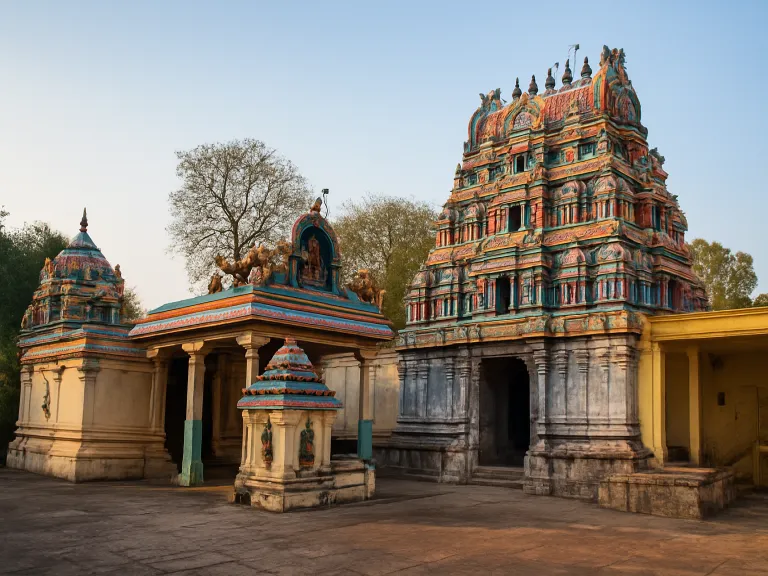
Kalyanasundareswarar Temple follows the Tamil Dravidian mode of Shaiva temple architecture found in the Kaveri delta. The temple is organized around the sanctum of Lord Shiva, worshipped in linga form as Kalyanasundareswarar. The sanctum, mandapas, circumambulatory space, and subsidiary shrines create the ritual layout typical of an ancient living Shiva temple.
The goddess Parimala Sugandha Nayaki has a separate shrine within the temple complex, reflecting the established pattern of Shaiva temples in Tamil Nadu where Shiva and Shakti are both worshipped. Nandi faces the main sanctum, and the inner temple arrangement supports daily puja, circumambulation, and festival worship. The architectural setting emphasizes the marriage aspect of the deity through the temple’s iconographic and ritual identity rather than through monumental scale alone.
As a Paadal Petra Sthalam in the Chola country, the temple belongs to the long architectural continuum of early medieval and later-period Tamil temple building. Its importance is not limited to sculptural or structural features; it is also defined by liturgical continuity, Tevaram sanctity, and its role in the regional network of sacred Shaiva sites. The temple remains a compact but spiritually significant shrine in the Mayiladuthurai-Kuthalam temple belt.
✨
Temple Highlights
✨
Paadal Petra Sthalam
The temple is one of the 276 Shiva temples praised in the Tevaram hymns, giving it high importance in Tamil Shaiva devotional tradition.
✨
Marriage Blessing Shrine
Kalyanasundareswarar is worshipped as the auspicious bridegroom form of Shiva, and devotees pray here for removal of marriage obstacles and marital harmony.
✨
Association with Divine Wedding Mythology
The name Thiruvelvikudi is connected with sacred wedding rites and yajna, forming part of the local mythology of Shiva and Parvati’s marriage.
✨
Kaveri Delta Shaiva Heritage
The temple belongs to the historic Chola country, a region known for ancient Shaiva temples, Tevaram hymns, and continuous ritual worship.
✨
Connection with Thirumanancheri
The temple is closely associated in local devotional practice with nearby Thirumanancheri, another major shrine connected with Shiva-Parvati wedding traditions.
🙏
Spiritual Benefits
Blessings for timely marriage
Removal of obstacles in marriage alliances
Harmony and understanding in married life
Auspicious beginning for family life
Grace of Lord Shiva and Goddess Parimala Sugandha Nayaki
Spiritual merit from worship at a Tevaram Paadal Petra Sthalam
Peace of mind through prayer and circumambulation
🎉
Major Festivals
🎉
Maha Shivaratri
A major Shaiva festival dedicated to Lord Shiva, observed with special worship and night prayers in Shiva temples.
🎉
Pradosham
The twice-monthly Pradosham period is important for Shiva worship, and devotees visit the temple for prayers to Kalyanasundareswarar.
🎉
Panguni Uthiram
A festival associated with divine marriages in Tamil Shaiva and Vaishnava traditions; it is especially relevant to temples connected with Kalyanasundara worship.
🎉
Karthigai Deepam
A Tamil festival of lights associated with Shiva worship, observed in Shaiva temples across Tamil Nadu.
🪔
Special Poojas
🪔
Marriage Blessing Worship
Devotees offer prayers to Kalyanasundareswarar and Parimala Sugandha Nayaki seeking removal of obstacles to marriage and blessings for family life.
🪔
Pradosha Pooja
Special worship of Lord Shiva during Pradosham is considered important by Shaiva devotees.
🪔
Abhishekam to Kalyanasundareswarar
Ritual bathing of the Shiva linga with sacred offerings is performed as part of regular Shaiva worship.
🪔
Archana for the Goddess
Devotees worship Parimala Sugandha Nayaki for auspiciousness, harmony, and blessings in family life.
🚗
How to Reach
🛣️
By Road
Thiruvelvikudi is accessible by road from Kuthalam and Mayiladuthurai. Local buses, taxis, and autos are commonly used for temple visits in this region.
🚆
By Rail
The nearest major rail access is through Mayiladuthurai Junction, which connects the region with Chennai, Tiruchirappalli, Thanjavur, and other Tamil Nadu towns.
✈️
By Air
The nearest major airport is Tiruchirappalli International Airport, from where visitors can travel by road or rail toward Mayiladuthurai and Kuthalam.
💡
Visitor Tips
Confirm the current temple opening hours locally before travelling.
Plan the visit along with nearby Thirumanancheri and other Kuthalam-region temples if time permits.
Wear modest clothing suitable for a traditional Tamil Nadu temple.
Carry cash for offerings, archana, or local transport, as small village temples may not support digital payments consistently.
Avoid photography inside the shrine unless permission is clearly given by temple authorities.
Visit during cooler morning or evening hours for a more comfortable experience.
Respect ongoing puja, local customs, and queue arrangements during crowded devotional days.

 WhatsApp Us