🛕About Temple
Kamakshi Amman Temple at Mangadu is a major Shakti shrine in the western part of Chennai, Tamil Nadu. The temple is dedicated to Sri Kamakshi Amman, a form of Goddess Parvati, and is especially associated with her severe penance before her union with Lord Shiva. Mangadu, now part of the Chennai metropolitan region, has long been known among devotees as a sacred Amman kshetra connected with Kanchipuram’s Kamakshi tradition.
The shrine is best known for the worship of Sri Kamakshi Amman and the sacred Sri Chakra, revered here as an important focus of devotion. Devotees visit the temple seeking marital harmony, removal of obstacles, family welfare, prosperity, and peace of mind. The temple draws large crowds on Tuesdays, Fridays, Sundays, full-moon days, and during major Devi festivals such as Navaratri and Aadi celebrations.
A distinct feature of the temple is the presence of the Tapas Kamakshi form, recalling the goddess in penance. The religious identity of the temple is strongly shaped by the sthala-purana of Mangadu and by the tradition that Adi Shankaracharya consecrated the Sri Chakra to pacify the intense spiritual heat of the goddess’s penance. The temple remains one of the most visited Amman temples in and around Chennai.
ℹ️Temple Information
🛕
Presiding Deity
Sri Kamakshi Amman
👸
Goddess
Sri Kamakshi Amman
⭐
Temple Type
Shakti temple, Amman temple, Sri Chakra worship shrine
Need Help Planning your visit to
Arulmigu Kamakshi Amman Temple?
Our travel experts can help you with transportation,
darshan timings, nearby sightseeing and complete temple tour planning.
⭐Temple Significance
Mangadu Kamakshi Amman Temple is significant as a major Shakti shrine near Chennai, revered for the mythology of Goddess Parvati’s tapas, the worship of Tapas Kamakshi, and the sacred Sri Chakra associated with Adi Shankaracharya. The temple is especially important to devotees seeking blessings for marriage, family welfare, removal of obstacles, prosperity, and inner peace.
📜History
The precise date of construction, original builder, and ruling dynasty of the Kamakshi Amman Temple at Mangadu are not securely established in widely accepted historical records. Unlike some ancient temples of Tamil Nadu that have datable royal inscriptions, Mangadu Kamakshi Amman Temple is chiefly known through its living worship tradition, sthala-purana, and its enduring association with the Kamakshi cult of Kanchipuram.
The temple’s historical identity is closely connected with the religious memory of Mangadu as a sacred place of Devi worship. The tradition linking the shrine with Adi Shankaracharya and the installation of the Sri Chakra forms an important part of the temple’s religious history, although the details belong to the broader sacred biography and worship tradition rather than to dated political history. The Sri Chakra worship has remained central to the temple’s devotional character.
In the modern period, Mangadu developed from a village shrine environment into a prominent urban pilgrimage centre as Chennai expanded westward. The temple is administered as a public Hindu temple and receives devotees from Chennai, Kanchipuram district, and other parts of Tamil Nadu. Renovations, festival organisation, queue arrangements, and other facilities reflect the temple’s present-day importance, while its core identity continues to rest on the worship of Kamakshi Amman, Tapas Kamakshi, and the consecrated Sri Chakra.
🕉️Mythology
The mythology of Mangadu centres on Goddess Parvati’s tapas. The sthala-purana narrates that Parvati came to Mangadu and performed severe penance to reunite with Lord Shiva. Her austerity is described as panchagni tapas, in which she stood amidst five fires. This form of the goddess is worshipped as Tapas Kamakshi, representing discipline, devotion, and the power of divine concentration.
According to the temple tradition, the heat generated by the goddess’s penance became intense and affected the surrounding region. Lord Shiva then directed Parvati to proceed to Kanchipuram, where she worshipped him and attained union with him. This connects Mangadu with the wider sacred geography of Kanchipuram, especially the Kamakshi and Ekambareswarar traditions. Mangadu is therefore understood in mythology as the place of penance, while Kanchipuram is associated with fulfilment.
The same tradition holds that after the goddess left Mangadu, the force of her tapas remained powerful. Adi Shankaracharya is revered in the temple tradition for consecrating the Sri Chakra here to balance and pacify that energy, making the shrine accessible for regular worship and blessing devotees. This mythological framework explains the temple’s emphasis on Sri Chakra worship, the special reverence for Tapas Kamakshi, and the deep devotional importance given to visiting Mangadu before proceeding to related shrines of Kamakshi and Shiva.
🏛Architecture
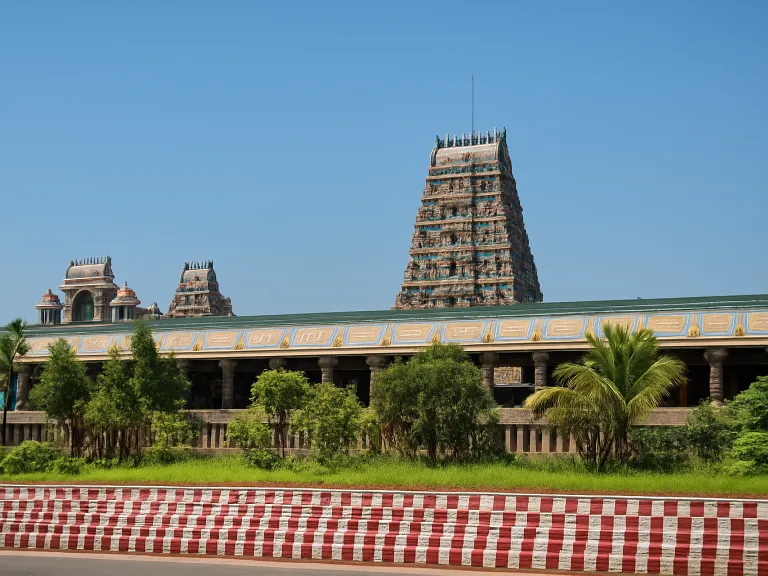
Kamakshi Amman Temple at Mangadu follows the broad South Indian temple layout used in many Tamil Amman shrines, with a gopuram entrance, enclosed prakaras, mandapas for worshippers, and sanctum areas devoted to the goddess and associated forms. The present temple fabric reflects renovation and active maintenance, rather than a single datable royal building phase. Its plan is organised to manage regular worship as well as the heavy flow of devotees during Fridays, Tuesdays, Sundays, and festival periods.
The principal worship focus is Sri Kamakshi Amman, with the Tapas Kamakshi form and the Sri Chakra holding special ritual importance. The presence of the Sri Chakra gives the shrine a distinctive sacred geometry within its ritual layout. Devotees circumambulate the sanctum areas and offer prayers through the established queue system. The goddess is presented with the ornamentation, alankaram, lamps, flowers, and kumkum-based worship characteristic of Tamil Shakti temples.
Architecturally, the temple is valued less for dated sculptural inscriptions and more for its functional sacred arrangement and ritual symbolism. The gopuram and mandapas announce its Dravidian temple identity, while the inner areas concentrate attention on the goddess’s grace and the memory of her tapas. The temple’s built environment has adapted to an urban pilgrimage setting, providing access for large numbers of devotees while retaining the essential features of an Amman shrine centred on darshan, archana, circumambulation, Sri Chakra worship, and festival processions.
✨
Temple Highlights
✨
Tapas Kamakshi tradition
The temple is closely associated with Goddess Parvati performing severe penance at Mangadu before proceeding to Kanchipuram.
✨
Sri Chakra worship
The sacred Sri Chakra is a central feature of worship and is connected in temple tradition with Adi Shankaracharya.
✨
Major Chennai Shakti shrine
The temple is one of the most visited Amman temples in the Chennai region and attracts devotees throughout the year.
✨
Connection with Kanchipuram Kamakshi
Mangadu is ritually and mythologically linked with the Kamakshi tradition of Kanchipuram.
✨
Popular vow worship
Devotees undertake regular visits and offerings seeking blessings for marriage, family welfare, prosperity, and peace.
🙏
Spiritual Benefits
Blessings for marriage and marital harmony
Removal of obstacles in family life
Peace of mind and emotional strength
Prosperity and household welfare
Blessings for children and family growth
Protection through the grace of the Divine Mother
Spiritual focus through Sri Chakra worship
🎉
Major Festivals
🎉
Navaratri
Navaratri is one of the most important Devi festivals, marked by special worship, alankaram, and large gatherings of devotees.
🎉
Aadi Fridays
Fridays in the Tamil month of Aadi are especially sacred for Amman worship and draw many devotees to the temple.
🎉
Aadi Pooram
Aadi Pooram is an important festival for the goddess and is celebrated with special devotion in Amman temples.
🎉
Pournami worship
Full-moon days are significant for Devi and Sri Chakra worship, and many devotees visit the temple on these days.
🎉
Thai Fridays
Fridays in the Tamil month of Thai are observed with special devotion to the goddess.
🪔
Special Poojas
🪔
Sri Chakra Pooja
Worship of the sacred Sri Chakra is a defining feature of the temple’s ritual importance.
🪔
Kumkum Archana
Devotees offer kumkum archana to Sri Kamakshi Amman seeking blessings for welfare, marriage, prosperity, and protection.
🪔
Six-week worship vow
A well-known devotional practice at Mangadu involves visiting the temple for six consecutive weeks and offering prayers to Kamakshi Amman.
🪔
Pournami Pooja
Special worship on full-moon days is significant for devotees of the goddess and Sri Chakra.
🪔
Friday Amman worship
Fridays are especially important for Amman worship, with many devotees offering flowers, lamps, and archana.
🚗
How to Reach
🛣️
By Road
Mangadu is accessible by road from Chennai through Porur, Poonamallee, Kundrathur, and nearby suburbs. City buses, taxis, and app-based cabs are commonly used.
🚆
By Rail
The temple is not directly on a railway line. Visitors can reach nearby Chennai suburban railway stations and continue by road to Mangadu.
✈️
By Air
The nearest major airport is Chennai International Airport, from where Mangadu can be reached by road.
💡
Visitor Tips
Verify current temple timings before travelling, especially on festival days.
Expect larger crowds on Tuesdays, Fridays, Sundays, full-moon days, Aadi Fridays, and during Navaratri.
Use public transport, taxis, or app-based cabs from Chennai, as Mangadu is within the urban road network.
Dress modestly and be prepared to follow the queue system during peak hours.
Keep footwear only at the designated area outside the temple.
Carry only essential belongings, as the temple can be crowded on special days.
If undertaking a vow or special worship, confirm the procedure at the temple counter before beginning.

 WhatsApp Us