🛕About Temple
Kampaheswarar Temple at Thirubuvanam, near Kumbakonam in Tamil Nadu, is a major Chola-period Shiva temple dedicated to Lord Kampaheswarar. The presiding deity is Shiva worshipped in linga form, and the goddess is Dharmasamvardhini, also known in Tamil as Aram Valartha Nayaki. The temple stands in the fertile Kaveri delta, a region renowned for its dense concentration of medieval Chola temples, inscriptions, ritual centres, and sacred settlements.
The temple is especially associated with the later Chola ruler Kulothunga Chola III, whose inscriptions and royal titles connect the shrine with the name Tribhuvanam. It is one of the most important surviving examples of late Chola temple architecture, showing the continuity of the monumental tradition seen at Thanjavur, Gangaikonda Cholapuram, and Darasuram, while also displaying its own sculptural and ritual identity.
A distinctive feature of the temple is the celebrated shrine of Sarabeshwarar, a fierce form of Shiva connected with the mythology of pacifying Narasimha. Devotees visit Kampaheswarar for worship of Shiva, Dharmasamvardhini, and Sarabeshwarar, and the temple remains an important sacred destination on the Kumbakonam-Mayiladuthurai route. Its historical value, elegant vimana, inscriptions, and sculptural programme make it significant both as a living temple and as a monument of Chola art.
ℹ️Temple Information
🛕
Presiding Deity
Kampaheswarar
👸
Goddess
Dharmasamvardhini
⭐
Temple Type
Shiva temple, Chola-period temple, Dravidian temple, Living Hindu temple
📅
Built Period
Late 12th to early 13th century CE
Need Help Planning your visit to
Arulmigu Kampaheswarar Temple?
Our travel experts can help you with transportation,
darshan timings, nearby sightseeing and complete temple tour planning.
⭐Temple Significance
Kampaheswarar Temple is significant as a major late Chola royal temple built by Kulothunga Chola III, as a living Shiva temple, and as one of the most important shrines for Sarabeshwarar worship in Tamil Nadu. It preserves the architectural refinement of the later Chola period and forms an important part of the sacred and historical landscape of the Kaveri delta.
📜History
Kampaheswarar Temple was built during the reign of Kulothunga Chola III, one of the last powerful rulers of the imperial Chola line. He ruled in the late twelfth and early thirteenth centuries, and the temple is generally dated to this period. The shrine is historically connected with his title Tribhuvanavira, and the place name Thirubuvanam preserves that royal association. In inscriptions, the temple is linked with the name Tribhuvanaviresvaram.
The construction of the temple belongs to the later phase of Chola temple building, after the great royal foundations at Thanjavur and Gangaikonda Cholapuram and after the Airavatesvara Temple at Darasuram. By this period, Chola architecture had developed a refined decorative style with richly carved surfaces, elegant proportions, and a strong emphasis on both royal devotion and temple ritual. Kampaheswarar Temple reflects that mature tradition rather than the massive scale of the earlier Brihadisvara model.
Inscriptions from the Chola period and later records document the temple as an endowed religious institution. Such inscriptions commonly record gifts of land, lamps, offerings, and arrangements for worship, showing that the temple functioned as a ritual, economic, and social centre. The temple continued to be revered after the Chola age and remains an active Shiva temple. Historically, its importance lies in being a well-preserved royal Chola foundation of the Kulothunga III period and a key monument for understanding the final great phase of Chola sacred architecture.
🕉️Mythology
The name Kampaheswarar is explained in local sacred tradition through the Tamil and Sanskrit idea of kampam, meaning trembling, fear, or agitation. The Lord is worshipped as the form of Shiva who removes inner trembling and grants steadiness to devotees. Mythological accounts associated with the temple describe Shiva as the compassionate deity who frees worshippers from fear, distress, and the effects of sin when they surrender at this shrine.
Another important mythological association of the temple is the presence of Sarabeshwarar. In Shaiva mythology, after Vishnu manifested as Narasimha to destroy Hiranyakashipu, the fierce energy of Narasimha required pacification for cosmic balance to be restored. Shiva manifested as Sarabha, a powerful composite form, and subdued or calmed the ferocity of Narasimha. The Sarabeshwarar shrine at Thirubuvanam is one of the most renowned in Tamil Nadu, and many devotees specifically visit the temple for this form of Shiva.
The goddess Dharmasamvardhini, known in Tamil as Aram Valartha Nayaki, represents the nurturing and protection of dharma. Her name means the one who fosters righteousness. In devotional understanding, worship at the temple brings courage, moral clarity, relief from fear, and protection from hostile forces. These beliefs belong to the temple’s sacred mythology and living worship tradition, while the historical construction of the temple belongs to the documented Chola period under Kulothunga Chola III.
🏛Architecture
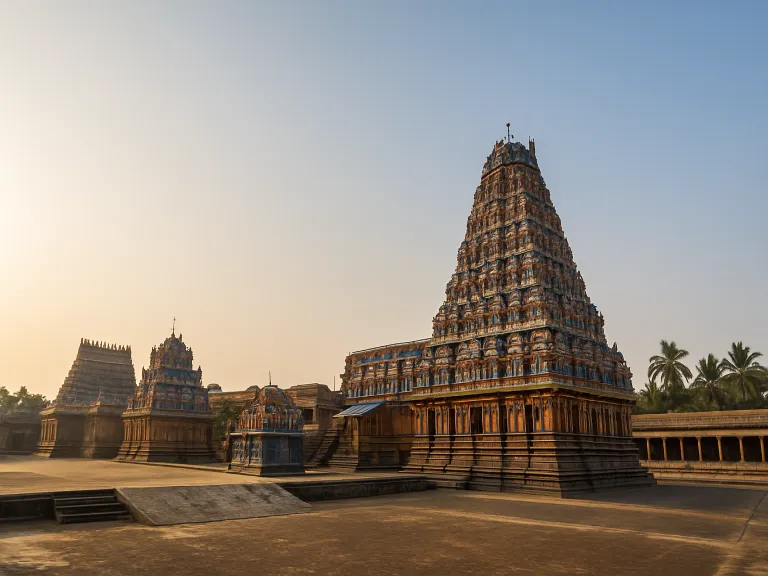
Kampaheswarar Temple is an outstanding example of late Chola Dravidian architecture. The temple follows the established South Indian Shiva temple plan, with a sanctum for the main linga, an ardhamandapa, mahamandapa, circumambulatory spaces, subsidiary shrines, enclosure walls, and gateway structures. The architectural composition is axial and ceremonial, directing the devotee from the entrance through successive sacred spaces toward the sanctum of Kampaheswarar.
The most important architectural feature is the stone vimana over the sanctum. It rises in diminishing tiers and reflects the refined proportions of later Chola design. Unlike the monumental severity of the Brihadisvara Temple at Thanjavur, Kampaheswarar Temple shows a more ornate and sculptural treatment, closer in spirit to the temple at Darasuram. The surfaces include carved niches, pilasters, miniature shrines, and iconographic panels that demonstrate the skill of Chola sculptors in balancing structure and ornament.
The temple is also noted for the Sarabeshwarar shrine, which has strong sculptural and devotional importance. The mandapas and wall niches contain images connected with Shaiva worship, guardian figures, and deities of the wider Hindu pantheon. The overall design shows the mature Chola ability to combine royal patronage, sacred geometry, stone engineering, and detailed iconography. As a monument, it represents the late flowering of Chola temple art in the Kaveri delta and remains one of the region’s most important historic temples.
✨
Temple Highlights
✨
Late Chola royal foundation
The temple was built by Kulothunga Chola III and is historically associated with his title Tribhuvanavira, making it an important monument of the later Chola period.
✨
Shrine of Kampaheswarar
The main deity is Shiva as Kampaheswarar, worshipped in linga form and associated in sacred tradition with the removal of fear and trembling.
✨
Dharmasamvardhini Amman
The goddess is Dharmasamvardhini, also known as Aram Valartha Nayaki, a name connected with the nurturing of dharma and righteousness.
✨
Famous Sarabeshwarar shrine
The temple is widely known for Sarabeshwarar, the fierce form of Shiva connected with the mythology of pacifying Narasimha.
✨
Refined Chola architecture
The temple displays the mature architectural vocabulary of the later Chola period, including a well-proportioned vimana, sculptural niches, and mandapas.
✨
Kaveri delta heritage location
Situated near Kumbakonam, Thirubuvanam belongs to one of South India’s richest temple regions, surrounded by major Chola and medieval sacred sites.
🙏
Spiritual Benefits
Devotees worship Kampaheswarar for relief from fear and mental agitation.
Devotees seek courage, steadiness, and inner peace through Shiva worship at this temple.
Sarabeshwarar worship is associated with protection from hostile forces and intense difficulties.
Worship of Dharmasamvardhini is associated with righteous living and moral clarity.
Prayers at the temple are offered for removal of distress and restoration of confidence.
Shaiva devotees visit the temple for spiritual merit and connection with Chola-era sacred heritage.
🎉
Major Festivals
🎉
Maha Shivaratri
A major festival for Shiva worship, observed with special prayers and night worship in Shiva temples including Kampaheswarar Temple.
🎉
Pradosham
The twice-monthly Pradosham observance is important in Shaiva temples and is associated with worship of Shiva and Nandi.
🎉
Aippasi Annabhishekam
Annabhishekam during the Tamil month of Aippasi is an important Shiva temple observance in Tamil Nadu, involving ceremonial offering of cooked rice to the Shiva linga.
🪔
Special Poojas
🪔
Sarabeshwarar worship
Special worship to Sarabeshwarar is an important devotional practice at the temple because the shrine is one of its best-known features.
🪔
Pradosha pooja
Pradosha worship is performed for Lord Shiva during the sacred twilight period on Trayodashi, an important observance in Shaiva temples.
🪔
Abhishekam to Kampaheswarar
Ritual bathing of the Shiva linga with sacred substances is a central form of worship offered to Kampaheswarar.
🪔
Archana to Dharmasamvardhini
Devotees offer archana to the goddess Dharmasamvardhini, seeking blessings connected with dharma, wellbeing, and family welfare.
🚗
How to Reach
🛣️
By Road
Thirubuvanam is on the Kumbakonam-Mayiladuthurai route and can be reached by road from Kumbakonam, Thiruvidaimarudur, and Mayiladuthurai by bus, taxi, or private vehicle.
🚆
By Rail
The nearest major railway access is Kumbakonam railway station. Thiruvidaimarudur railway station is also near Thirubuvanam on the local rail route.
✈️
By Air
The nearest major airport is Tiruchirappalli International Airport, from where travellers can reach Thirubuvanam by road via Thanjavur or Kumbakonam.
💡
Visitor Tips
Confirm the current opening hours with the temple or local sources before travelling.
Dress modestly and follow the customs observed inside the temple premises.
Ask the temple authorities before taking photographs, especially near shrines and ritual areas.
Plan extra time for the Sarabeshwarar shrine, which is one of the temple’s major attractions.
Carry small cash for offerings or archana, as digital payment availability can vary.
Combine the visit with nearby temples around Kumbakonam, Darasuram, and Thiruvidaimarudur if time permits.
Visit during the cooler parts of the day to avoid the strong afternoon heat of the Kaveri delta.
Maintain silence and avoid obstructing worshippers during puja and circumambulation.

 WhatsApp Us