🛕About Temple
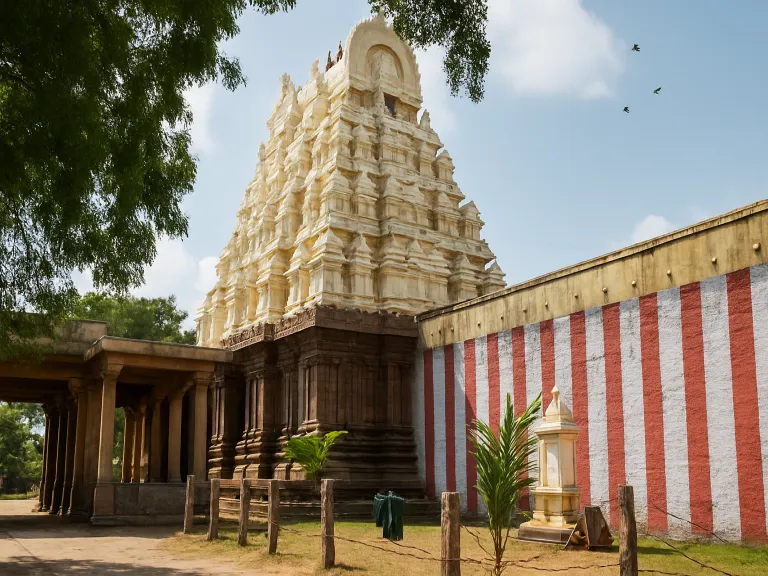
Kannayiranathar Temple at Kurumanakudi, also written Kurumaanakkudi or Kurumanakkudi, is a Shiva temple in Mayiladuthurai district of Tamil Nadu. The presiding deity is Shiva worshipped as Kannayiranathar, a name connected with the idea of “a thousand eyes”. The shrine belongs to the sacred Saiva landscape of the Kaveri delta, where many temples are celebrated in the early Tamil devotional hymns.
The temple is recognized as a Tevaram Paadal Petra Sthalam, meaning that it is one of the Shiva temples praised in the canonical Tevaram hymns of the Nayanmar saints. Kurumanakudi is associated in temple tradition with Indra’s worship of Shiva and with the transformation of the marks caused by a sage’s curse into eyes. This legend gives the deity’s name a distinctive theological and poetic identity.
The goddess of the temple is known as Muruguvalarkodhai Nayaki. The temple is primarily significant for Saiva worship, Tevaram heritage and its Indra-related sthala-purana. It is not widely documented as a large royal monument; its importance rests instead on liturgical memory, sacred geography and continued local worship. Historical details such as the original builder, consecration date, Agamic affiliation and specific administrative history are not securely established in widely available temple records, so they are best left unstated rather than assumed.
ℹ️Temple Information
🛕
Presiding Deity
Kannayiranathar
👸
Goddess
Muruguvalarkodhai Nayaki
⭐
Temple Type
Shiva temple, Tevaram Paadal Petra Sthalam, Tamil Saiva temple
📅
Built Period
At least 7th century CE, as the shrine is attested through the Tevaram tradition
Need Help Planning your visit to
Arulmigu Kannayiranathar Temple?
Our travel experts can help you with transportation,
darshan timings, nearby sightseeing and complete temple tour planning.
⭐Temple Significance
Kannayiranathar Temple is significant as a Tevaram Paadal Petra Sthalam dedicated to Shiva and as the shrine connected with the Indra legend in which the marks of a curse were transformed into a thousand eyes by Shiva’s grace.
📜History
The historically secure importance of Kannayiranathar Temple comes from its place in the Tevaram tradition. The Tevaram hymns, composed by the early medieval Tamil Saiva saints, preserve the names of many Shiva shrines that were already active places of worship during the 7th century CE. Kurumanakudi’s inclusion among the Paadal Petra Sthalams establishes that the shrine had religious importance by that period.
The temple is associated with the Chola-country group of Tevaram shrines in the Kaveri delta region. The Kaveri basin was a major centre of Tamil Saivism, temple liturgy, devotional poetry and later stone temple patronage. However, the specific original patron or builder of the Kurumanakudi temple is not confirmed in widely established historical summaries. For this reason, assigning the temple to a named king or a precise construction phase would not be reliable.
The present temple should be understood as a living Saiva shrine whose antiquity is documented through devotional literature rather than through a single surviving foundation record. Its history is therefore anchored in the early medieval Bhakti movement, the preservation of Tevaram recitation and the continuity of Shiva worship in village temple settings. Later repairs, renovations and local maintenance may have shaped the structure over time, but such phases require inscriptional or departmental confirmation before they can be described as historical fact.
🕉️Mythology
The temple mythology of Kurumanakudi centres on Indra, the king of the devas. In the sthala-purana connected with the shrine, Indra incurred the curse of Sage Gautama after the episode involving Ahalya. The curse caused humiliating marks to appear on Indra’s body. Seeking release from the sin and its visible consequence, Indra came to this sacred place and worshipped Shiva with devotion.
Shiva’s grace at Kurumanakudi transformed the marks into eyes. Because Indra became associated with a thousand eyes through this act of divine compassion, the Lord of the temple came to be known as Kannayiranathar, meaning the Lord connected with a thousand eyes. The story gives the temple a strong association with repentance, forgiveness and the purifying power of Shiva worship.
This narrative belongs to the mythological and devotional tradition of the temple and should be understood separately from political or architectural history. Its theological message is clear: even a serious moral lapse can be overcome through sincere worship, humility and divine grace. The goddess Muruguvalarkodhai Nayaki represents the compassionate presence of Shakti alongside Shiva. Devotees approach the shrine with prayers for purification, removal of karmic burden and restoration of dignity after error or suffering.
🏛Architecture
Kannayiranathar Temple follows the broad pattern of Tamil Saiva temple architecture, with the sanctum dedicated to Shiva in linga form and a separate shrine for the goddess Muruguvalarkodhai Nayaki. The temple functions as a ritual space centred on darshan of the moolavar, circumambulation and daily worship. Publicly established descriptions emphasize its identity as a sacred Tevaram shrine more than its monumental scale.
The architectural value of the temple lies in its role as a traditional village Saiva shrine in the Kaveri delta. Such temples are organized around the garbhagriha, mandapa spaces used for worship and festival processions, and subsidiary shrines for associated deities. Without a verified architectural survey, details such as the exact number of prakaras, tower tiers, sculptural programme or dated construction phases should not be stated as fixed facts.
The temple’s architectural setting supports the core experience of Tamil Shiva worship: approach, darshan, circumambulation, offering and participation in ritual. The shrine’s fame comes not from an extensively documented royal inscriptional record but from its sacred name, Tevaram status and Indra mythology. Any detailed study of its masonry, inscriptions, iconography or renovation history should rely on direct temple records or archaeological documentation.
✨
Temple Highlights
✨
Tevaram Paadal Petra Sthalam
The temple is counted among the Shiva shrines praised in the Tevaram hymns, giving it an important place in Tamil Saiva devotional tradition.
✨
Kannayiranathar Deity
Shiva is worshipped here as Kannayiranathar, a name linked with the temple mythology of Indra and the thousand eyes.
✨
Indra Sthala-Purana
The temple tradition connects the shrine with Indra’s worship of Shiva for relief from the curse of Sage Gautama.
✨
Kaveri Delta Saiva Heritage
Kurumanakudi belongs to the sacred temple geography of the Mayiladuthurai and Sirkazhi region, an area rich in ancient Shiva shrines.
🙏
Spiritual Benefits
Devotees worship Shiva here for purification from past mistakes.
The Indra legend inspires prayers for forgiveness and moral renewal.
Worship is associated with seeking relief from karmic burden.
Devotees pray for restoration of dignity after hardship or blame.
The shrine is visited for the grace of Shiva and Shakti together.
Tevaram-related worship is valued for deepening Saiva devotion.
Prayers at the temple are associated with humility, repentance and inner clarity.
🎉
Major Festivals
🎉
Maha Shivaratri
Maha Shivaratri is the principal pan-Indian festival dedicated to Shiva. Devotees visiting the temple for this occasion should confirm the local schedule in advance.
🎉
Pradosham
Pradosham is an important recurring period for Shiva worship. Local pooja timings and arrangements should be verified directly with the temple.
🪔
Special Poojas
🪔
Abhishekam to Kannayiranathar
Abhishekam is a standard form of Shiva worship performed to the linga. Specific booking procedures and timings should be confirmed locally.
🪔
Archana to Muruguvalarkodhai Nayaki
Devotees may offer prayers to the goddess as part of regular worship. Specific local practice should be confirmed at the temple.
🪔
Pradosha Pooja
Pradosha worship is associated with Shiva temples. Visitors should confirm whether special arrangements are available on the chosen date.
🚗
How to Reach
🛣️
By Road
Kurumanakudi is in Mayiladuthurai district and can be approached by local roads from the Sirkazhi, Mayiladuthurai and Vaitheeswaran Koil region.
🚆
By Rail
Vaitheeswaran Koil and Sirkazhi are railway stations in the region. Visitors should confirm the most convenient railhead and arrange local transport to Kurumanakudi.
✈️
By Air
Visitors generally use larger airports serving central or northern Tamil Nadu and continue by road or rail to the Mayiladuthurai district region.
💡
Visitor Tips
Confirm current opening hours locally before travelling, as published timings may vary for smaller temples.
Carry modest clothing suitable for temple worship.
Avoid photography inside sanctum areas unless explicit permission is given by temple authorities.
Carry small cash for offerings, archana or local transport where digital payment may not be available.
Plan transport in advance if travelling by rail, as the final approach may require local road transport.
Combine the visit with nearby Tevaram shrines in the Sirkazhi and Mayiladuthurai region if time permits.
Maintain silence and follow the instructions of temple priests or caretakers during worship.

 WhatsApp Us