🛕About Temple
Kannayiranathar Temple at Thirukarayil, also written as Tirukkarayil, is a revered Shiva temple in the Tiruvarur region of Tamil Nadu. The presiding deity is Kannayiranathar, worshipped in the form of a Shiva lingam, and the goddess is Kailasanayaki. The shrine belongs to the sacred devotional geography of the Cauvery delta, an area especially associated with ancient Tamil Saiva worship, Tevaram hymns, and Chola-period temple culture.
The temple is widely known as one of the Paadal Petra Sthalams, the Shiva temples praised in the Tevaram hymns of the Nayanmar saints. This places Thirukarayil among the most important canonical Shiva shrines of Tamil Saivism. The name Kannayiranathar is connected with the deity as the lord associated with a thousand eyes, a theme preserved in the temple's sacred tradition and mythology.
Thirukarayil is also counted among the Saptha Vidanga Sthalams, the seven sacred temples associated with forms of Thyagaraja and distinct modes of divine dance. In this temple, the Thyagaraja form is associated with Adi Vidangar and the dance known as Kukkuta Natanam. The temple is therefore significant not only as a shrine of the main Shiva lingam, but also as part of the wider Thyagaraja worship tradition centered in the Tiruvarur region. Its importance rests on scripture, mythology, and its place in the living Saiva temple network of Tamil Nadu.
ℹ️Temple Information
🛕
Presiding Deity
Kannayiranathar
⭐
Temple Type
Shiva temple, Paadal Petra Sthalam, Saptha Vidanga Sthalam
📅
Built Period
At least 7th century CE, as the temple is included in the Tevaram Paadal Petra Sthalam tradition.
Need Help Planning your visit to
Arulmigu Kannayiranathar Temple?
Our travel experts can help you with transportation,
darshan timings, nearby sightseeing and complete temple tour planning.
⭐Temple Significance
Kannayiranathar Temple is significant as a Tevaram Paadal Petra Sthalam and as one of the Saptha Vidanga Sthalams associated with the Thyagaraja form of Shiva. Its sacred identity is linked with the Indra mythology of the thousand eyes and with Adi Vidangar's Kukkuta Natanam.
📜History
The documented historical importance of Kannayiranathar Temple begins with its presence in the Tevaram tradition. The Tevaram hymns were composed by the early medieval Tamil Saiva saints, and temples praised in them are known as Paadal Petra Sthalams. Since Thirukarayil is included in this canon, the shrine was already an established place of Shiva worship by the 7th century CE, the period associated with the principal Tevaram saints.
The original builder of the temple is not established in widely available historical records. Like many ancient temples in the Cauvery delta, the shrine would have received attention across different periods, but a specific foundation inscription or named royal founder is not securely documented for general reference. For this reason, the temple's earliest verifiable historical marker is its Tevaram association rather than a dated construction record.
The temple's later religious identity is strengthened by its inclusion among the Saptha Vidanga Sthalams. This group is associated with the Thyagaraja form of Shiva and the sacred legend of King Muchukunda, a story also connected with Tiruvarur and other temples of the region. While the legend belongs to sacred tradition, the Saptha Vidanga grouping has long shaped the ritual and cultural identity of these temples. Kannayiranathar Temple therefore occupies a historically important position within Tamil Saiva worship, combining Tevaram sanctity, regional temple culture, and the Thyagaraja tradition of the Tiruvarur area.
🕉️Mythology
The central mythology of Kannayiranathar Temple is connected with Indra and the meaning of the deity's name. In the sacred tradition of the temple, Indra worshipped Shiva at Thirukarayil after receiving the marks of a curse. Through Shiva's grace, the marks became eyes, and the lord came to be worshipped as Kannayiranathar, the lord connected with a thousand eyes. This myth explains the temple name and links the shrine with divine forgiveness and transformation.
Another important tradition links Thirukarayil with the Saptha Vidanga legend. In this cycle of stories, King Muchukunda received divine forms of Thyagaraja associated with Indra and installed them in seven sacred places. These temples are collectively known as the Saptha Vidanga Sthalams. At Thirukarayil, the Thyagaraja form is known as Adi Vidangar, and the associated dance is Kukkuta Natanam, the cock-like dance.
These myths belong to the sacred narrative world of Tamil Saivism and are not presented as political history. Their importance lies in how they explain worship, names, ritual identity, and the temple's relationship to other shrines of the Tiruvarur region. The Indra legend presents Shiva as the compassionate lord who removes the burden of wrongdoing, while the Saptha Vidanga tradition places Thirukarayil in a celebrated network of temples where Shiva is adored not only as a lingam but also through the mysterious dancing form of Thyagaraja.
🏛Architecture
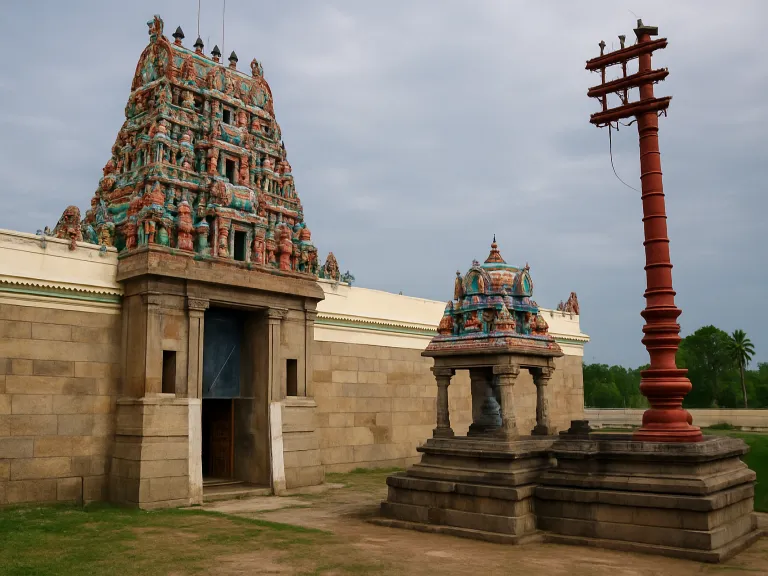
Kannayiranathar Temple follows the broad pattern of Tamil Dravidian Shiva temple architecture found in the Cauvery delta. The sacred center of the temple is the garbhagriha, where Kannayiranathar is worshipped as a Shiva lingam. The goddess Kailasanayaki has her own place of worship within the temple complex, reflecting the standard Saiva arrangement in which Shiva and Shakti are both honored as central divine presences.
The temple is important architecturally because it preserves the layout and ritual logic of an old Tamil Shiva shrine rather than because of a single widely published monumentality or dated royal construction. The complex includes spaces for circumambulation, subsidiary worship, and festival movement. As a Saptha Vidanga Sthalam, it is also associated with the Thyagaraja form called Adi Vidangar, making the temple's ritual architecture significant for both fixed worship of the lingam and processional worship of the festival deity.
Specific measurements, construction phases, sculptural programs, and inscriptional details are not consistently documented in general historical sources. Therefore, the most reliable description is that the temple represents the Dravidian Saiva temple tradition of the Tiruvarur region, with sanctums for the presiding Shiva and goddess and an important place in the Thyagaraja worship network. Its architecture should be understood together with its liturgical identity: a temple meant for daily puja, circumambulation, hymn recitation, festival worship, and the continuation of the Tevaram and Saptha Vidanga traditions.
✨
Temple Highlights
✨
Paadal Petra Sthalam
The temple is one of the Shiva shrines praised in the Tevaram canon, giving it a recognized place among the sacred temples of Tamil Saivism.
✨
Saptha Vidanga Sthalam
Thirukarayil is counted among the seven Saptha Vidanga temples associated with special forms of Thyagaraja.
✨
Adi Vidangar
The Thyagaraja form associated with this temple is known as Adi Vidangar.
✨
Kukkuta Natanam
The Saptha Vidanga dance linked with Thirukarayil is Kukkuta Natanam, a sacred dance tradition connected with the Thyagaraja form.
✨
Indra Mythology
The name Kannayiranathar is connected with the sacred story of Indra and the transformation of curse marks into a thousand eyes through Shiva's grace.
🙏
Spiritual Benefits
Devotees worship Shiva here for grace and inner purification.
The Indra mythology is associated with relief from the burden of past wrongdoing.
The temple is visited for blessings of Kannayiranathar and Kailasanayaki.
Worship at this Paadal Petra Sthalam is valued by devotees of the Tevaram tradition.
The Saptha Vidanga association is considered spiritually important for devotees of Thyagaraja.
Prayers here are connected with humility, repentance, and divine compassion.
Circumambulation and worship at the shrine are undertaken as acts of Saiva devotion.
🎉
Major Festivals
🎉
Maha Shivaratri
Maha Shivaratri is the major pan-Indian festival dedicated to Shiva. Visitors should confirm the temple's current observance schedule before planning a trip.
🎉
Arudra Darshan
Arudra Darshan is associated with the worship of Shiva as the cosmic dancer and is especially relevant to temples connected with dance traditions. Local arrangements should be confirmed with the temple.
🪔
Special Poojas
🪔
Pradosham
Pradosham is an important recurring period of worship for Shiva. Visitors should confirm local puja timings directly with the temple.
🪔
Abhishekam to Kannayiranathar
Abhishekam is a central form of Shiva worship performed to the lingam. Specific booking procedures and timings should be verified with the temple authorities.
🚗
How to Reach
🛣️
By Road
Thirukarayil can be reached by road from towns in the Tiruvarur region using local buses, taxis, or private vehicles.
🚆
By Rail
Tiruvarur Junction is the major railway access point for the region. Local road transport is required from the railway station to Thirukarayil.
✈️
By Air
The nearest major airport commonly used for the Tiruvarur region is Tiruchirappalli International Airport, followed by onward travel by road or rail.
💡
Visitor Tips
Confirm current opening hours directly with the temple or local contacts before visiting.
Wear modest clothing suitable for a traditional Tamil Nadu temple.
Check photography rules on arrival, especially near sanctums and ritual areas.
Carry drinking water when travelling through smaller towns and villages in the Cauvery delta.
Plan transport in advance, as local connectivity can vary by time of day.
If visiting multiple Saptha Vidanga temples, allow enough time for travel between towns.
Maintain silence and follow local temple customs during puja and circumambulation.

 WhatsApp Us