🛕About Temple
Kannudaya Nayaki Amman Temple, also widely known as Kannathal Temple, is a Shakti shrine at Nattarasankottai in Sivaganga district of Tamil Nadu. The temple is dedicated to Goddess Kannudaya Nayaki Amman, whose name is understood as the goddess with gracious eyes or the goddess who grants sight. It is one of the best-known Amman shrines in the Chettinad region and is closely associated with the devotional life of Nattarasankottai and nearby towns such as Sivaganga and Karaikudi.
The temple is primarily a goddess temple, and devotees approach the Amman as a protective mother. The name Kannudaya Nayaki has made the shrine especially meaningful to devotees who pray for eye health, clarity of vision, removal of fear, family welfare, and protection from misfortune. The temple is also part of the larger sacred landscape of Chettinad, where village goddesses, Siva temples, Murugan shrines, and Vinayaka temples form an interconnected pilgrimage circuit.
Nattarasankottai itself is a culturally significant settlement and is also known for its association with the Tamil poet Kambar, whose memorial is located in the town. The temple's current public identity is rooted in local worship, community patronage, and continuing Amman devotion rather than in a securely documented royal foundation. For visitors, the shrine represents both a living place of worship and an important example of Tamil Nadu's regional goddess tradition.
ℹ️Temple Information
🛕
Presiding Deity
Kannudaya Nayaki Amman
👸
Goddess
Kannudaya Nayaki Amman
Need Help Planning your visit to
Arulmigu Kannudaya Nayaki Amman Temple?
Our travel experts can help you with transportation,
darshan timings, nearby sightseeing and complete temple tour planning.
⭐Temple Significance
Kannudaya Nayaki Amman Temple is significant as a prominent Shakti shrine of Nattarasankottai and the Chettinad region. Devotees especially associate the goddess with eyesight, protection, maternal grace, family welfare, and removal of distress. The temple is also important for its continuing role in local Amman worship and community religious life.
📜History
The widely available historical record for Kannudaya Nayaki Amman Temple does not provide a securely verifiable founder, construction year, ruling dynasty, or inscriptional sequence. Unlike several major Chola, Pandya, or Nayak temples that have published inscriptions identifying royal donors and building phases, this shrine is chiefly known through local worship, regional accounts, and the continuing religious life of Nattarasankottai. For this reason, the temple cannot be accurately assigned to a specific dynasty or dated to a precise century using well-established public historical evidence.
The temple's history is closely connected with Nattarasankottai, a settlement in the Chettinad region of present-day Sivaganga district. Chettinad towns are known for strong community patronage of temples, festivals, endowments, and devotional institutions. Kannudaya Nayaki Amman Temple has been sustained within this environment as an important Amman shrine serving local devotees and pilgrims from the Sivaganga-Karaikudi region. Its fame rests on the goddess's identity as Kannathal or Kannudaya Nayaki, the compassionate mother whose glance protects devotees.
The temple should therefore be understood as a living regional shrine whose historical importance lies in continuity of worship and community reverence rather than in a clearly documented royal origin. It is not historically safe to attribute the temple to the Cholas, Pandyas, Nayaks, Marathas, or any other dynasty without firm inscriptional or archival evidence. Any detailed reconstruction of its building phases would require temple records, inscriptions, renovation documents, or verified archaeological study.
🕉️Mythology
The mythology of Kannudaya Nayaki Amman Temple belongs to the oral and devotional tradition of Nattarasankottai. The goddess is worshipped as Kannudaya Nayaki, a name connected with eyes, sight, and the compassionate gaze of the Divine Mother. Local tradition presents the Amman as a powerful guardian goddess who watches over devotees and the settlement. In this devotional understanding, her eyes are not merely physical features but symbols of awareness, protection, and grace.
Devotees associate the shrine with prayers for clear sight, relief from eye-related suffering, and the removal of inner darkness. In Tamil goddess worship, the glance of the Amman is considered a form of blessing, and Kannudaya Nayaki's name gives this symbolism a central place in the temple's identity. The goddess is approached as a mother who sees the distress of devotees and responds with protection, courage, and healing. Such beliefs form the spiritual memory of the shrine, even where historical documentation is limited.
The mythological identity of the temple should be distinguished from verifiable history. The stories surrounding the goddess are expressions of faith transmitted through worship, festival participation, family devotion, and local narration. They do not establish a historical founder or a datable construction event. Their importance lies in explaining why the Amman is revered with such intensity and why the shrine continues to attract devotees seeking divine protection, eyesight-related blessings, and maternal grace.
🏛Architecture
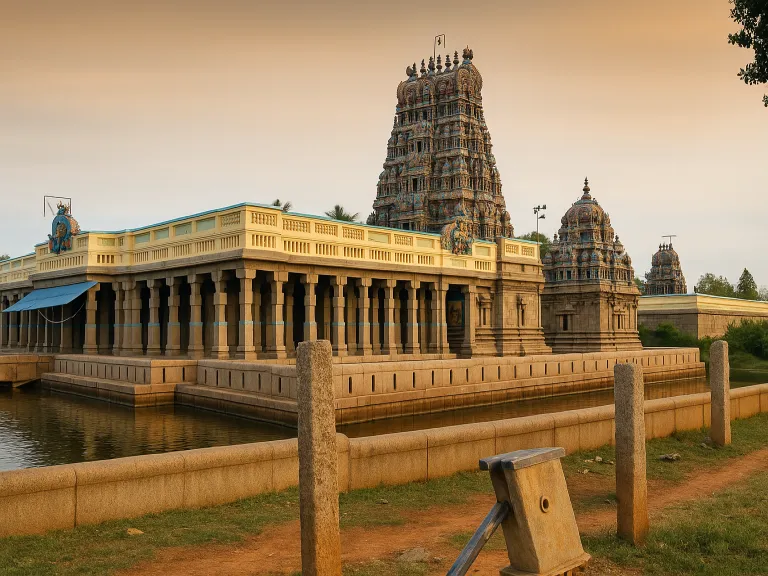
Kannudaya Nayaki Amman Temple follows the general South Indian Dravidian temple idiom used in many Tamil Nadu goddess shrines. The sacred focus is the sanctum of Goddess Kannudaya Nayaki Amman, approached through temple spaces used for worship, offerings, circumambulation, and festival movement. As an Amman temple, the architecture is organized around direct devotional access to the goddess rather than around a large royal temple complex with extensive inscriptional mandapas.
The temple's architectural identity is best understood as that of a living regional shrine shaped by worship and later maintenance. Tamil Amman temples commonly include a sanctum, entrance structure, mandapa spaces, prakara circulation, subsidiary shrines, and festival arrangements for processional worship. Kannudaya Nayaki Amman Temple belongs to this broader tradition, with its built form serving daily puja, alankaram, archana, festival gatherings, and community participation. Its visual emphasis is on the powerful presence of the goddess and her protective role in the town.
No widely established architectural study is available that securely identifies the original architect, exact construction phase, dated inscriptional additions, or dynastic building program of this temple. Therefore, it should not be described as a Chola, Pandya, or Nayak architectural monument unless supported by temple records or epigraphic evidence. Its architectural significance lies in its function as an active Shakti shrine of Chettinad, where the built environment supports goddess worship, local identity, and the devotional experience of Kannudaya Nayaki Amman.
✨
Temple Highlights
✨
Shrine of Kannudaya Nayaki Amman
The principal deity is Goddess Kannudaya Nayaki Amman, also called Kannathal, worshipped as a protective mother goddess.
✨
Association with eyesight prayers
The name Kannudaya Nayaki is connected with eyes and sight, and devotees pray to the goddess for clear vision and divine grace.
✨
Located in Nattarasankottai
The temple stands in Nattarasankottai, a culturally important town in Sivaganga district within the Chettinad region.
✨
Chettinad devotional setting
The temple forms part of the wider Chettinad sacred landscape, which includes many important Amman, Siva, Murugan, Vishnu, and Vinayaka shrines.
✨
Living regional Shakti temple
The shrine is valued for continuing worship, local participation, and the devotional relationship between the goddess and her devotees.
🙏
Spiritual Benefits
Prayers for eye health and clear vision
Blessings for protection from fear and misfortune
Devotion for family welfare and domestic harmony
Seeking courage, confidence, and emotional strength
Prayers for removal of obstacles and distress
Receiving the protective grace of the Divine Mother
Spiritual focus through Amman worship and circumambulation
🎉
Major Festivals
🎉
Navaratri
Navaratri is an important period of goddess worship, with devotees offering prayers to the Divine Mother. Visitors should confirm the temple's current festival schedule locally.
🎉
Aadi Fridays
Aadi Fridays are sacred to Amman worship across Tamil Nadu, and devotees visit goddess temples for special prayers during this month. Current arrangements should be checked with the temple.
🪔
Special Poojas
🪔
Kumkum Archana
Kumkum archana is a common form of worship offered to Amman, seeking the goddess's blessings for welfare, protection, and prosperity.
🪔
Abhishekam and Alankaram
Ritual bathing and decoration of the goddess are central elements of Amman worship. Visitors should confirm availability and timings at the temple.
🪔
Deepa Worship
Offering lamps before the goddess is a common devotional act associated with clarity, protection, and divine grace.
🚗
How to Reach
🛣️
By Road
Nattarasankottai is accessible by road from Sivaganga and Karaikudi. Local buses, taxis, and private vehicles connect the town with nearby Chettinad and Sivaganga destinations.
🚆
By Rail
Nattarasankottai has rail access in the Sivaganga-Karaikudi region. Sivaganga and Karaikudi railway stations are also practical railheads for visitors.
✈️
By Air
The nearest major airport is Madurai Airport, from where visitors can travel by road through Sivaganga district to Nattarasankottai.
💡
Visitor Tips
Confirm current temple timings locally before planning the visit.
Dress modestly and respectfully when entering the temple premises.
Check with temple authorities before taking photographs, especially near the sanctum.
Carry small cash for offerings or archana if you plan to participate in worship.
Festival days may be crowded, so arrive early if visiting during special worship periods.
Nattarasankottai can be combined with nearby Chettinad pilgrimage sites such as Karaikudi, Pillayarpatti, and Kundrakudi.
Use local transport from Sivaganga or Karaikudi if public bus timings are not convenient.
Maintain silence and follow the instructions of temple staff during puja.

 WhatsApp Us