🛕About Temple
Karpaka Vinayaka Temple at Pillayarpatti is one of Tamil Nadu’s best-known shrines of Ganesha and is located in Sivaganga district, near Karaikudi in the Chettinad region. The temple is famous for its rock-cut image of Karpaka Vinayakar, also called Desi Vinayaga Pillaiyar in inscriptions. The deity is carved directly on the living rock of the cave shrine and is especially noted for the right-turned trunk, two arms, and large seated form.
Although the temple is popularly known as a Vinayaka shrine, it is also an important Shaiva temple complex. The cave contains rock-cut forms associated with Shiva worship, and the expanded temple includes shrines for Shiva, Amman, and other deities. The name Karpaka Vinayakar connects the deity with the sacred wish-fulfilling Karpaka tree, expressing the devotional understanding of Ganesha as the remover of obstacles and giver of auspicious beginnings.
Pillayarpatti has remained a major pilgrimage centre for devotees from Tamil Nadu and beyond, especially during Vinayaka Chaturthi and monthly Chaturthi observances. The temple is also valued for its antiquity, inscriptions, and connection with early rock-cut architecture in the Pandya region. Its setting within Chettinad makes it part of a wider sacred and cultural landscape that includes old Nagarathar temples, heritage settlements, and historic pilgrimage routes.
ℹ️Temple Information
🛕
Presiding Deity
Karpaka Vinayakar
👸
Goddess
Vadamalar Mangai Amman
⭐
Temple Type
Rock-cut temple, Ganesha temple, Shaiva temple, Historic temple
📅
Built Period
Early phase approximately 5th to 7th century CE; later structural additions over subsequent centuries.
🏛
Dynasty
Early Pandya period for the rock-cut core; later additions belong to later periods of regional patronage.
Need Help Planning your visit to
Karpaka Vinayaka Temple?
Our travel experts can help you with transportation,
darshan timings, nearby sightseeing and complete temple tour planning.
⭐Temple Significance
Karpaka Vinayaka Temple is significant as an ancient rock-cut Ganesha shrine with inscriptions, a rare large two-armed Valampuri Vinayaka image, and a long continuity of worship in the Chettinad region. It is also a major pilgrimage centre for Vinayaka Chaturthi and Chaturthi worship.
📜History
Karpaka Vinayaka Temple is historically important because its earliest core is a rock-cut cave shrine, a form of architecture strongly associated with early medieval South India. The cave and its sculptures are generally placed within the early Pandya period, with the oldest phase often assigned to around the 5th to 7th century CE on the basis of style and inscriptions. The shrine is therefore counted among the ancient rock-cut temples of Tamil Nadu.
The temple preserves inscriptions that record the old name Desi Vinayaga Pillaiyar for the presiding Ganesha. An inscription associated with the sculptor Ekkattur Koon Peruparanan is widely noted in accounts of the temple’s history. These inscriptions help distinguish the historical layer of the shrine from later devotional traditions. They also show that Pillayarpatti was part of an active religious landscape in which cave shrines, Shiva worship, and Ganesha worship developed together.
Over time, the original cave shrine was enlarged with structural additions, mandapas, outer enclosures, and subsidiary shrines. The temple’s later history is closely associated with the Nagarathar community of Chettinad, who have been important patrons and custodians of many temples in the region. Today, the temple combines an ancient rock-cut sanctum with later built architecture, allowing visitors to see both the early Pandya artistic layer and the continuing religious life of the shrine.
🕉️Mythology
In the sacred imagination of devotees, Karpaka Vinayakar is understood as Ganesha in the form of the Karpaka tree, the celestial tree that grants worthy wishes. This meaning gives the temple its devotional identity: worshippers approach the deity before beginning new ventures, studies, marriages, travel, business, and other important life events. The mythology surrounding the shrine therefore centres on Ganesha as the remover of obstacles and the giver of auspicious success.
The right-turned trunk of the deity is especially revered in local tradition. Valampuri Vinayaka forms are treated with great sanctity in Tamil worship because the rightward trunk is associated with intense spiritual power and strict ritual purity. At Pillayarpatti, this feature is combined with the unusual two-armed form of the deity, making the image distinct from many later iconographic forms of Ganesha that commonly show four arms.
Another devotional theme connected with the temple is the close relationship between Ganesha and Shiva. The temple complex includes important Shaiva elements, and the icon of Karpaka Vinayakar is revered within that wider Shaiva sacred environment. In local religious understanding, worship at Pillayarpatti harmonises the blessings of Ganesha, Shiva, and the Mother Goddess. These mythological meanings belong to the living worship tradition of the temple and are distinct from the historical evidence of its rock-cut origin and inscriptions.
🏛Architecture
The architectural core of Karpaka Vinayaka Temple is its rock-cut cave, excavated into a hillock and preserving one of the most celebrated early images of Ganesha in Tamil Nadu. The image of Karpaka Vinayakar is carved in relief on the rock face rather than installed as a separate movable icon. This gives the sanctum a distinctive character: the deity, sanctum, and natural rock are visually and ritually integrated.
The presiding image is notable for its large seated form, two arms, and right-turned trunk. These features distinguish it from many later Ganesha icons. The cave also contains Shaiva elements, including rock-cut forms associated with Shiva worship, indicating that the earliest sacred space was part of a broader Shaiva context. Inscriptions in the temple are important architectural and historical markers because they help date and identify the early religious use of the site.
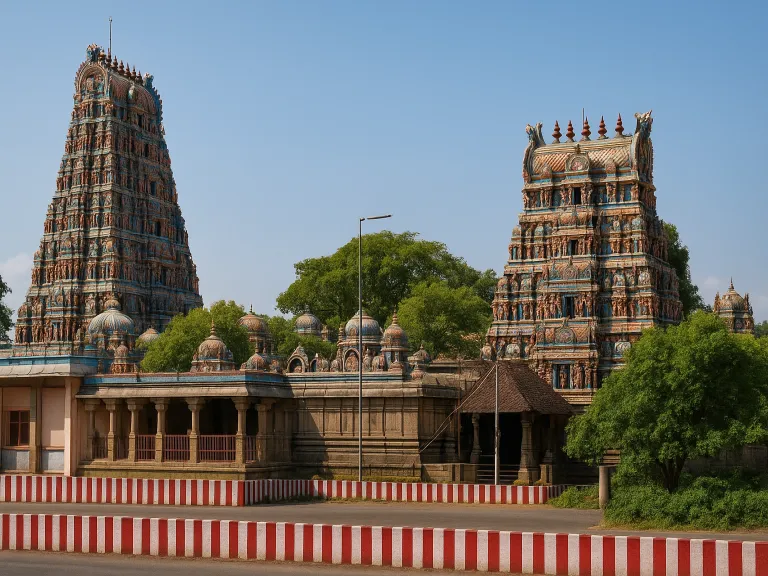
The present temple is not limited to the cave alone. Later structural additions created mandapas, circumambulatory spaces, outer shrines, and entrance features suited to a living South Indian temple. These additions reflect continued patronage and ritual use over many centuries. The result is a layered monument: an ancient rock-cut sanctum at the centre, surrounded by later masonry work that supports festivals, processions, and daily worship. This combination of cave architecture and expanded temple planning is one of the main reasons Pillayarpatti is valued by both devotees and students of Tamil temple architecture.
✨
Temple Highlights
✨
Rock-cut Karpaka Vinayakar
The presiding Ganesha is carved directly on the rock of the cave shrine and is the temple’s most distinctive sacred and artistic feature.
✨
Valampuri trunk
The deity’s trunk turns to the right, a form highly revered in Tamil Ganesha worship.
✨
Two-armed Ganesha form
Unlike many later Ganesha images with four arms, Karpaka Vinayakar is shown with two arms, adding to the icon’s rarity.
✨
Ancient inscriptions
The temple contains inscriptions that preserve early names and historical information connected with the shrine.
✨
Shaiva temple complex
The temple includes shrines and sacred elements connected with Shiva and Amman worship, not only Ganesha worship.
✨
Chettinad pilgrimage setting
Pillayarpatti lies in the Chettinad region, close to several historic temples and heritage settlements.
🙏
Spiritual Benefits
Devotees worship Karpaka Vinayakar for removal of obstacles.
Devotees seek blessings before beginning new ventures.
Students pray for clarity, learning, and success in studies.
Families pray for auspicious beginnings and harmony.
Business owners and professionals seek blessings for ethical prosperity.
Devotees observe Chaturthi worship for discipline and spiritual focus.
Pilgrims seek the combined blessings of Ganesha, Shiva, and Amman.
🎉
Major Festivals
🎉
Vinayaka Chaturthi
The principal festival of the temple, celebrated with special worship for Karpaka Vinayakar and large numbers of devotees.
🎉
Monthly Chaturthi worship
Chaturthi days are important for Ganesha worship, and devotees visit the temple for special prayers on these days.
🎉
Sankatahara Chaturthi
Sankatahara Chaturthi is observed by devotees of Ganesha for relief from difficulties and removal of obstacles.
🪔
Special Poojas
🪔
Ganapathi Homam
A fire ritual dedicated to Ganesha, performed for auspicious beginnings and removal of obstacles.
🪔
Abhishekam to Karpaka Vinayakar
Ritual bathing worship offered to the presiding deity as part of temple worship.
🪔
Chaturthi special pooja
Special worship associated with Chaturthi, an important lunar day for Ganesha devotees.
🚗
How to Reach
🛣️
By Road
Pillayarpatti is accessible by road from Karaikudi, Tiruppathur, and other towns in Sivaganga district. Buses and taxis are commonly used by pilgrims travelling through the Chettinad region.
🚆
By Rail
Karaikudi Junction is the nearest major railway station used by many visitors to reach Pillayarpatti by road.
✈️
By Air
Madurai Airport and Tiruchirappalli International Airport are practical airport options for reaching Pillayarpatti by onward road travel.
💡
Visitor Tips
Wear modest clothing suitable for a place of worship.
Expect larger crowds during Vinayaka Chaturthi and monthly Chaturthi days.
Use Karaikudi or Tiruppathur as convenient road access points.
Keep extra time if visiting other Chettinad temples on the same day.
Respect the sanctity of the cave shrine and follow instructions given by temple staff.
Check current temple timings before travel, as timings may change during festivals.
Avoid carrying large bags into crowded temple areas.

 WhatsApp Us