🛕About Temple
Kayarohanaswamy Temple at Nagapattinam in Tamil Nadu is an ancient Shaiva temple dedicated to Lord Shiva as Kayarohanaswamy, also called Kayarohaneswarar or Kayarohana Nathar. The temple stands within Nagapattinam town, a historic coastal centre on the Coromandel coast. The presiding deity is worshipped in the form of a Shiva linga, and the divine consort is Goddess Neelayadakshi Amman, a highly revered form of Parvati whose name means the blue-eyed goddess.
The temple is one of the Devara Paadal Petra Sthalams, the Shiva shrines celebrated in the Tamil Tevaram hymns of the Nayanmar saints. Its sacred identity is linked with the devotional geography of the Chola country, especially the shrines south of the River Kaveri. Nagapattinam’s long association with maritime trade, religious patronage, and temple culture gives this shrine an important place among the coastal temples of Tamil Nadu.
Kayarohanaswamy Temple is also associated with the Saptha Vidanga tradition, in which seven sacred temples are connected with distinct forms of Tyagaraja and specific ritual dance forms of Shiva. At Nagapattinam, the Tyagaraja form is known as Sundara Vidangar. The temple is visited for worship of Kayarohanaswamy, Neelayadakshi Amman, and Sundara Vidangar, and for its connection with Tevaram, Shaiva bhakti, and the sacred legends of Sage Pundarika.
ℹ️Temple Information
🛕
Presiding Deity
Kayarohanaswamy
👸
Goddess
Neelayadakshi Amman
⭐
Temple Type
Shiva temple, Devara Paadal Petra Sthalam, Saptha Vidanga Sthalam, Ancient Dravidian temple
📅
Built Period
Documented in the 7th century CE through Tevaram hymns; the present structural temple reflects medieval Chola-period development with later additions.
🏛
Dynasty
Chola period, with later additions under subsequent regional patrons
Need Help Planning your visit to
Arulmigu Kayarohanaswamy Temple?
Our travel experts can help you with transportation,
darshan timings, nearby sightseeing and complete temple tour planning.
⭐Temple Significance
Kayarohanaswamy Temple is significant as a Devara Paadal Petra Sthalam, a historic Shaiva shrine praised by the Nayanmar saints, and as one of the Saptha Vidanga temples where Shiva is worshipped in the Tyagaraja form as Sundara Vidangar. The temple is also renowned for Goddess Neelayadakshi Amman and for the mythology of Sage Pundarika attaining divine union with Shiva.
📜History
The antiquity of Kayarohanaswamy Temple is established by its praise in the Tevaram hymns of the Tamil Shaiva saints. The shrine was known to the devotional world by the 7th century CE, placing it among the early sacred temples of the Tamil Shaiva canon. The hymns connect the temple with Tirunagai, the ancient sacred name associated with Nagapattinam, and show that the site was already an active place of Shiva worship during the early medieval period.
Nagapattinam rose to prominence as an important port during the Pallava and Chola periods, and it continued to flourish under the Cholas as a religious and commercial centre. The present temple complex reflects the growth of medieval Tamil temple institutions, with stone architecture, subsidiary shrines, mandapas, and ritual spaces typical of Chola-region Shaiva temples. Inscriptions and later structural additions at many temples in Nagapattinam district show the long continuity of patronage from Chola and post-Chola rulers, local chiefs, merchants, and devotees.
The temple’s historical significance also comes from its place in the Paadal Petra Sthalam tradition and its connection with the Saptha Vidanga group of temples. These traditions preserved the temple’s ritual status through centuries of worship. While the original founder is not historically documented, the shrine’s presence in the Tevaram corpus and its later architectural development make it one of the important ancient Shiva temples of the Cauvery delta and coastal Tamil Nadu.
🕉️Mythology
The central mythology of Kayarohanaswamy Temple is connected with Sage Pundarika. In the temple tradition, the sage performed intense worship of Lord Shiva at this sacred place and sought liberation. Shiva granted him the supreme blessing by taking the sage’s body into himself. The name Kayarohana is explained through this legend: kaya means body, and arohana refers to rising, ascending, or being taken up. The deity is therefore worshipped as Kayarohanaswamy, the Lord who accepted the devotee into divine union.
Nagapattinam is also linked with serpent-related sacred memory through its old name forms such as Naga-pattinam. Local sacred traditions associate the region with worship by divine beings and nagas. The temple’s identity as a coastal Shaiva kshetra gives the mythology a distinctive character, combining the themes of penance, divine grace, release from embodiment, and Shiva’s compassion toward the devotee.
The shrine is further connected with the Saptha Vidanga legend. In this tradition, King Muchukunda received sacred forms of Tyagaraja associated with Shiva’s subtle dance and installed them in seven temples. At Nagapattinam, the Tyagaraja form is worshipped as Sundara Vidangar. This mythology links Kayarohanaswamy Temple with the larger ritual network of Tiruvarur and the other Vidanga shrines, where Shiva’s dance is expressed through unique local forms.
🏛Architecture
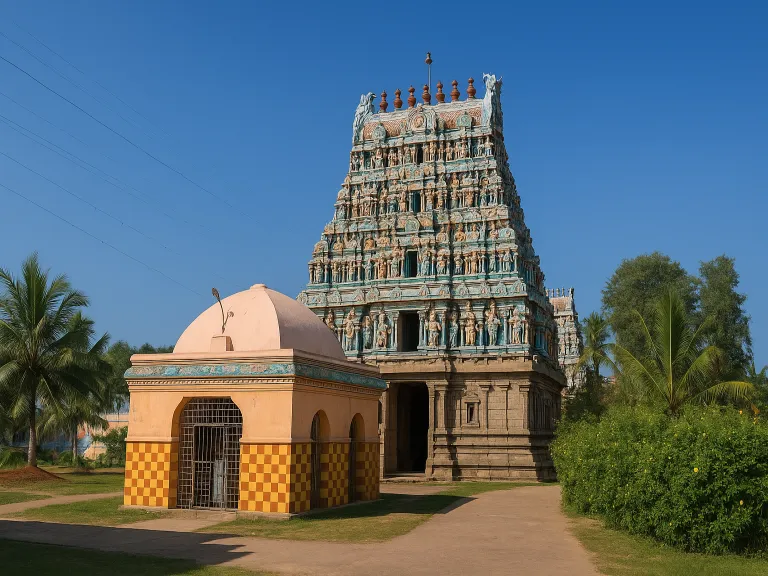
Kayarohanaswamy Temple follows the Dravidian temple idiom of Tamil Nadu, with a walled sacred complex, entrance towers, prakaras, mandapas, and separate shrines for the principal deities. The sanctum enshrines Kayarohanaswamy as a Shiva linga, while Goddess Neelayadakshi Amman has an important shrine within the complex. The layout reflects the mature form of a Tamil Shaiva temple, where the principal sanctum is complemented by shrines for the goddess, Ganesha, Subrahmanya, Chandikeswarar, Bhairava, Navagrahas, and other deities commonly worshipped in Shaiva temples.
A major architectural and ritual feature is the presence of the Tyagaraja shrine associated with Sundara Vidangar, connecting the temple to the Saptha Vidanga tradition. The mandapas provide space for daily worship, festival processions, recitation, and gathering of devotees. Sculptural elements and iconographic forms in the temple follow the conventional Shaiva repertoire of the region, including forms of Shiva, Parvati, Nandi, the Nayanmars, and guardian deities.
The temple’s architecture is not merely structural; it organizes sacred movement. Devotees circumambulate the prakaras, worship Kayarohanaswamy and Neelayadakshi, and receive darshan of the associated shrines. As with many ancient temples of the Cauvery delta, the visible complex represents layers of construction, repair, and patronage over time rather than a single building phase. Its historical value lies in this continuity of worship and in the integration of Tevaram sanctity, goddess worship, and the Vidanga tradition within one sacred enclosure.
🌳
Sacred Features
💧 Temple Tank
Pundarika Theertham
The sacred water source is associated with the temple’s mythology of Sage Pundarika and his worship of Lord Shiva.
✨
Temple Highlights
✨
Devara Paadal Petra Sthalam
The temple is one of the sacred Shiva shrines praised in the Tevaram hymns of the Tamil Shaiva Nayanmar saints.
✨
Kayarohanaswamy
Lord Shiva is worshipped here as Kayarohanaswamy, a name connected with the legend of granting liberation to Sage Pundarika.
✨
Neelayadakshi Amman Shrine
The goddess of the temple is Neelayadakshi Amman, a revered form of Parvati and one of the most important goddess shrines in Nagapattinam.
✨
Saptha Vidanga Connection
The temple is associated with the Saptha Vidanga tradition, and the Tyagaraja form here is known as Sundara Vidangar.
✨
Historic Coastal Temple
Located in Nagapattinam, an ancient port town, the temple reflects the religious importance of the coastal Chola region.
🙏
Spiritual Benefits
Devotees worship Kayarohanaswamy for Shiva’s grace and spiritual upliftment.
The temple is associated with the idea of liberation through the legend of Sage Pundarika.
Worship of Neelayadakshi Amman is sought for compassion, protection, and maternal blessings.
Devotees visit the shrine to experience the sanctity of a Tevaram Paadal Petra Sthalam.
The Saptha Vidanga association is valued by devotees of Tyagaraja and Shiva’s sacred dance.
Pradosham worship is considered spiritually important for devotees of Lord Shiva.
Maha Shivaratri worship at the temple is regarded as especially meritorious by Shiva devotees.
🎉
Major Festivals
🎉
Maha Shivaratri
A major annual festival for Lord Shiva, observed with special worship and night-long devotion in Shaiva temples.
🎉
Pradosham
The fortnightly Pradosham worship dedicated to Lord Shiva and Nandi is an important observance for devotees.
🎉
Aadi Pooram
A festival associated with Goddess worship, observed in temples where the goddess shrine has major ritual importance.
🎉
Navaratri
The nine-night festival dedicated to the goddess is an important period of worship for Neelayadakshi Amman.
🎉
Arudra Darshan
A significant Shaiva festival connected with Shiva’s cosmic dance and worship of Nataraja.
🪔
Special Poojas
🪔
Abhishekam to Kayarohanaswamy
Ritual bathing and worship of the presiding Shiva linga are central to the temple’s daily and festival worship.
🪔
Neelayadakshi Amman Pooja
Special worship is offered to Goddess Neelayadakshi Amman by devotees seeking the blessings of the divine mother.
🪔
Pradosha Pooja
Special worship of Lord Shiva and Nandi is performed during Pradosham, an important observance in Shaiva temples.
🪔
Maha Shivaratri Pooja
Special worship is offered to Lord Shiva during Maha Shivaratri, one of the most important Shaiva festivals.
🪔
Tyagaraja Worship
The temple’s Saptha Vidanga association gives special importance to the worship of Sundara Vidangar, the Tyagaraja form of Shiva.
🚗
How to Reach
🛣️
By Road
Nagapattinam is connected by road with Tiruvarur, Thanjavur, Mayiladuthurai, Karaikal, and Vedaranyam. The temple is within Nagapattinam town and can be reached by local transport.
🚆
By Rail
Nagapattinam Junction is the nearest major railway station and provides access to the town. Local transport is available from the station to the temple.
✈️
By Air
The nearest major airport is Tiruchirappalli International Airport. From there, Nagapattinam can be reached by road or rail via the Cauvery delta region.
💡
Visitor Tips
Confirm the current opening hours with the temple before visiting, as timings may change on festival days.
Wear modest clothing appropriate for temple worship.
Leave footwear only in the designated area outside the temple.
Ask temple staff before taking photographs, especially inside the temple complex.
Visit early in the morning or in the evening for a calmer darshan experience.
Allow time to worship both Kayarohanaswamy and Neelayadakshi Amman.
Nagapattinam can be humid; carry drinking water when travelling in the town.
Festival days may draw larger crowds, so plan travel and parking accordingly.

 WhatsApp Us