🛕About Temple
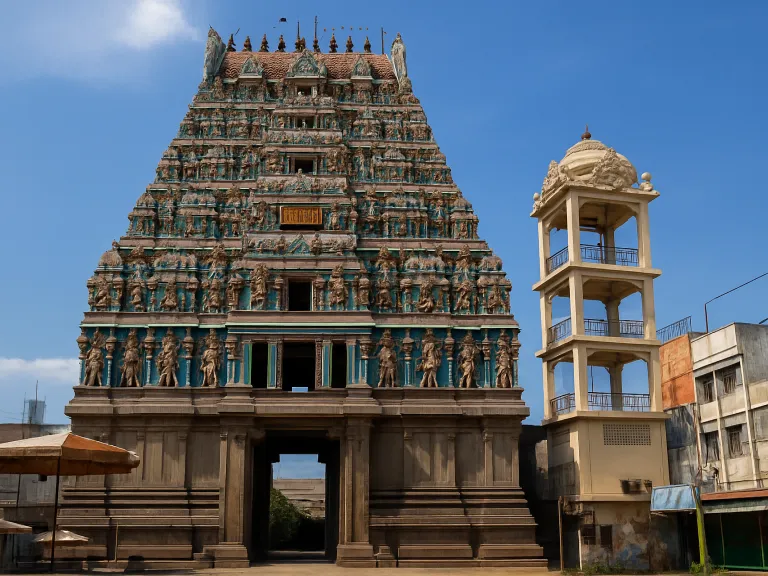
Kottai Mariamman Temple is a prominent Hindu shrine in Salem, Tamil Nadu, dedicated to Goddess Mariamman, the widely venerated Amman deity associated with protection, healing, rain, and the welfare of communities. The temple stands in the old fort quarter of Salem, and the word "Kottai" means fort in Tamil. Because of its location and long-standing civic devotion, the goddess is closely identified with Salem city and is worshipped by many devotees as a guardian mother of the region.
The temple is especially important in the religious life of Salem during the Tamil month of Aadi, when Mariamman worship reaches its annual peak across Tamil Nadu. Devotees visit the shrine for darshan, vows, thanksgiving offerings, and prayers connected with family well-being, health, and community prosperity. The deity is approached as a compassionate but powerful form of Shakti, and worship commonly emphasizes turmeric, neem, flowers, lamps, and devotional offerings associated with Amman temples.
Reliable public information establishes the temple as one of Salem's best-known Amman shrines, but the exact founder, original construction date, and early inscriptional history are not clearly documented in widely available historical sources. For that reason, the temple is best understood through its living worship, its old association with Salem's fort area, and its continuing role as a major local devotional landmark rather than through a fully reconstructed dynastic history.
ℹ️Temple Information
🛕
Presiding Deity
Kottai Mariamman
👸
Goddess
Kottai Mariamman
⭐
Temple Type
Amman temple, Shakti temple, Urban Hindu temple
Need Help Planning your visit to
Arulmigu Kottai Mariamman Temple?
Our travel experts can help you with transportation,
darshan timings, nearby sightseeing and complete temple tour planning.
⭐Temple Significance
Kottai Mariamman Temple is one of the best-known Amman shrines of Salem and is closely associated with the old fort area of the city. The goddess is widely worshipped as a protective mother deity, and the temple is especially significant during the Tamil month of Aadi, when Mariamman worship is observed with great devotion.
📜History
The documented historical details of Kottai Mariamman Temple are limited when compared with large inscription-rich temples of Tamil Nadu. The most secure historical point is the temple's association with the old fort locality of Salem, reflected in the name "Kottai Mariamman." Salem's fort area was an important settlement zone in the town's historical development, and the temple became a significant religious landmark for residents of that quarter and for the wider city.
No widely accepted inscriptional record or published historical account clearly identifies the original builder, the exact century of consecration, or a single ruling dynasty responsible for the temple. The shrine's identity appears to have grown through continuous local worship rather than through a known royal foundation. This is common for many Amman shrines, which often developed as protective mother-goddess temples serving a town, market, fort, or village community.
The temple's historical importance lies in its continuity as a civic and devotional centre in Salem. It is strongly connected with public worship during the Aadi season and with the city's collective religious memory. While oral accounts may connect the goddess with protection of the old settlement, such narratives belong to devotional tradition rather than verifiable political history. Authentic historical presentation of this temple therefore requires caution: its fame, location, and living traditions are well established, but its foundation date, patronage, dynasty, Agamic affiliation, and early architectural phases are not firmly documented in accessible historical sources.
🕉️Mythology
In the mythology and devotional understanding of Tamil Nadu, Mariamman is a powerful mother goddess who protects communities from disease, drought, misfortune, and social distress. She is associated with rain, fertility, healing, and the cooling of feverish conditions. At Kottai Mariamman Temple in Salem, devotees approach the goddess as a protective Amman who watches over the city and responds to sincere vows, prayers, and thanksgiving offerings.
Local devotional tradition regards the goddess as a guardian presence connected with the old fort area. The title "Kottai Mariamman" gives the deity a distinct civic identity: she is not merely a general form of Mariamman, but the mother goddess of the fort quarter and, in popular devotion, one of the protective deities of Salem. Such traditions express the older Tamil religious idea that a settlement is protected by its presiding Amman, whose grace sustains health, rain, food, and social harmony.
Mariamman worship commonly uses symbols such as turmeric, neem leaves, flowers, lamps, and offerings made in fulfilment of vows. These devotional elements belong to the broader Shakti and village-goddess traditions of Tamil Nadu. The mythology of Kottai Mariamman should be understood as living religious memory rather than political history. It communicates the devotees' experience of the goddess as compassionate, fierce, healing, and protective, especially during the Aadi festival season when Amman worship is at its most intense.
🏛Architecture
Kottai Mariamman Temple represents the functional form of an urban Tamil Amman shrine rather than the large-scale monumental plan of major Chola or Pandya stone temples. Its architecture is centred on the sanctum of Goddess Mariamman, with spaces arranged for darshan, daily worship, festival decoration, and the movement of devotees. As in many Amman temples, the visual focus is the presence of the goddess, her ornamentation, and the ritual atmosphere created through lamps, flowers, turmeric, and seasonal decorations.
The temple is located in the old fort quarter of Salem, and its setting is an important part of its identity. The shrine is integrated into the urban fabric, serving local residents as well as devotees from other parts of the city. Publicly available historical material does not establish a single original construction phase, a known royal architect, or a dated inscriptional programme. Therefore, its present architectural character should be understood as the result of continued maintenance, renovation, and ritual use over time.
The architectural importance of the temple lies less in dynastic attribution and more in its role as a living worship space. It preserves the typical South Indian Amman-temple emphasis on a powerful sanctum, accessible worship, festival processions, and community participation. Without verified details on measurements, sculptural programmes, or dated rebuilding phases, it is not appropriate to assign a precise architectural period. The shrine's value is best described through its devotional layout, fort-area context, and continuing place in Salem's religious life.
✨
Temple Highlights
✨
Guardian Amman of Salem's fort area
The temple's name connects the goddess with the old fort locality of Salem, giving the shrine a distinct civic and devotional identity.
✨
Major Mariamman shrine in Salem
Kottai Mariamman is among the city's most recognised Amman deities and is worshipped by devotees seeking protection, healing, and family welfare.
✨
Aadi festival devotion
The temple is especially associated with worship during the Tamil month of Aadi, a major season for Amman temples throughout Tamil Nadu.
✨
Living urban shrine
The temple continues to function as an active city temple where daily devotion, vows, offerings, and community worship remain central.
🙏
Spiritual Benefits
Devotees pray for protection from illness and misfortune.
Devotees seek blessings for family welfare and peace.
Worshippers offer prayers for health and recovery.
Devotees seek the grace of the goddess for prosperity and stability.
Prayers are offered for fulfilment of vows.
Devotees worship for courage, emotional strength, and divine protection.
The Aadi season is considered especially sacred for receiving the blessings of Mariamman.
🎉
Major Festivals
🎉
Aadi Festival
The Tamil month of Aadi is the principal devotional season for Mariamman worship. Kottai Mariamman Temple receives special attention from devotees during this period, with worship focused on the goddess's protective and healing grace.
🎉
Navaratri
Navaratri is a major Hindu festival dedicated to the Divine Mother. As a temple of Amman, the shrine is part of the wider Shakti devotional tradition observed during this season.
🪔
Special Poojas
🪔
Abhishekam
Ritual bathing of the goddess is a common form of worship in Amman temples and is performed as part of devotional service to the deity.
🪔
Archana
Archana is a name-recitation offering made to the goddess, commonly performed by devotees seeking blessings.
🪔
Alankaram
The adornment of the goddess with flowers, garments, and ornaments is an important devotional practice in Amman worship.
🚗
How to Reach
🛣️
By Road
Salem is well connected by road within Tamil Nadu. The temple is in the city and can be reached by local buses, taxis, and auto-rickshaws from major points in Salem.
🚆
By Rail
Salem Junction is the main railway station serving the city. From the station, local transport can be used to reach the old fort area where the temple is located.
✈️
By Air
Salem Airport serves the region. Travellers can also use larger airports in nearby major cities and continue to Salem by road or rail.
💡
Visitor Tips
Check the current temple timings locally before planning a visit.
Expect larger crowds during the Tamil month of Aadi and on Fridays.
Wear modest clothing suitable for temple worship.
Keep footwear only in designated areas outside the shrine.
Carry offerings only if they are permitted by the temple at the time of visit.
Follow queue arrangements and instructions issued by temple staff during festivals.
Visitors using public transport can reach Salem city first and then proceed to the old fort area by local transport.

 WhatsApp Us