🛕About Temple
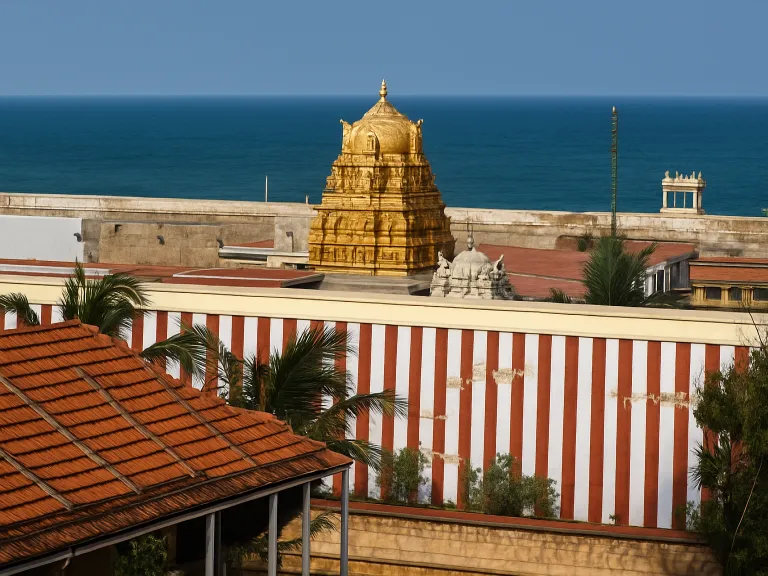
Kumari Amman Temple, also known as Kanyakumari Bhagavathy Amman Temple, is a celebrated shrine of the Goddess at Kanyakumari, the southernmost tip of mainland India. The temple stands close to the meeting point of the Arabian Sea, the Bay of Bengal, and the Indian Ocean, making it one of the most distinctive coastal pilgrimage sites in South India. The presiding deity is worshipped as Devi Kanyakumari, the virgin form of Parvati, represented as a young goddess dedicated to austerity and divine protection.
The shrine is an important center of Shakti worship and has long been associated with the sacred geography of Kanyakumari. Devotees visit the temple for darshan of the Goddess, for prayers connected with courage, purity, protection, and the removal of obstacles. The image of the Goddess, adorned with a famous nose ornament, is among the most recognized features of the temple. The temple’s location beside the sea also connects worship with ritual bathing and ancestral rites performed on the nearby shore.
Kumari Amman Temple is part of the wider pilgrimage circuit of Kanyakumari, which includes sacred bathing places, coastal shrines, and historic religious landmarks. The temple attracts devotees throughout the year and sees especially large gatherings during Navaratri and other Devi festivals. Its enduring importance comes from the union of mythology, devotion, landscape, and continuous worship centered on the youthful and powerful form of the Mother Goddess.
ℹ️Temple Information
🛕
Presiding Deity
Devi Kanyakumari
⭐
Temple Type
Shakti temple, Devi temple, Coastal pilgrimage temple, Hindu temple
Need Help Planning your visit to
Kumari Amman Temple?
Our travel experts can help you with transportation,
darshan timings, nearby sightseeing and complete temple tour planning.
⭐Temple Significance
Kumari Amman Temple is one of the most revered Devi shrines in South India and is closely associated with the sacred southern endpoint of India. The Goddess is worshipped as the virgin form of Parvati, embodying purity, tapas, protection, and divine power. The temple is significant for Shakti worship, coastal pilgrimage, and the sacred geography of Kanyakumari, where devotees combine temple worship with visits to the nearby seashore and other holy sites.
📜History
The early foundation date and original builder of Kumari Amman Temple are not securely documented in a way that can be assigned to a single ruler or dynasty. The shrine is widely recognized as an ancient place of worship associated with Kanyakumari, a region known in early Tamil cultural memory and later religious literature. Its antiquity is supported by the long-standing sacred status of the site, but the available historical record does not allow a precise construction year to be stated with certainty.
Kanyakumari occupied an important coastal position in the far south of the Indian peninsula and came under the influence of different South Indian powers over many centuries. The temple’s present built form reflects successive phases of maintenance, renovation, and patronage rather than a single founding event. The Pandyas, the rulers of Venad and Travancore, and later temple administrations are associated with the broader religious life of the region, but a definitive attribution of the temple’s original construction to one dynasty is not established.
In historical practice, Kumari Amman Temple developed as a major Devi shrine serving both local worshippers and pilgrims from across India. Its importance grew with Kanyakumari’s status as a sacred southern endpoint and as a place where sea worship, Shakti devotion, and pilgrimage converged. The temple continues under organized religious administration, preserving rituals dedicated to Devi Kanyakumari while retaining features of an ancient coastal shrine shaped by centuries of devotion and regional history.
🕉️Mythology
The central mythology of Kumari Amman Temple describes the Goddess as Kanya Kumari, the virgin form of Parvati. In the sacred narrative, the Goddess performs intense austerities at the southern tip of the land to unite with Shiva. Her vow of virginity and tapas gives the shrine its name and identity. The Goddess is also connected with the protection of the world from evil forces, and her youthful form is revered as both gentle and fierce.
A well-known temple legend connects the Goddess with the destruction of the demon Banasura. According to the mythological account, Banasura could be defeated only by a virgin goddess. Devi Kanyakumari, remaining unmarried, destroys him and restores divine order. This story explains why the deity is worshipped as a powerful maiden and why the temple emphasizes purity, discipline, and spiritual strength. The legend belongs to the sacred narrative tradition of the temple and is distinct from datable historical events.
Another local myth relates that the Goddess’s planned marriage to Shiva did not take place, leaving her eternally as Kanya Kumari. Offerings and symbolic references to rice and grains in local lore are connected with the interrupted wedding narrative. The confluence of the seas, the presence of the Goddess in austerity, and the victory over Banasura together form the mythic foundation of the temple. These narratives continue to shape devotional practice and the spiritual meaning of pilgrimage to Kanyakumari.
🏛Architecture
Kumari Amman Temple follows the broad features of South Indian temple architecture adapted to a compact coastal site. The complex is enclosed and entered through temple gateways leading toward the sanctum of the Goddess. The shrine is oriented around the sanctum, where Devi Kanyakumari is worshipped in standing form. The temple’s built character emphasizes the sanctum and ritual spaces rather than monumental height, reflecting the sacred importance of the deity and the site.
The icon of the Goddess is one of the temple’s most significant artistic and devotional features. She is represented as a youthful maiden, richly adorned during worship, and the nose ornament associated with the deity is especially famous among devotees. The temple layout includes spaces for circumambulation and worship, with subsidiary sacred areas connected with the Devi tradition. The proximity of the sea gives the temple a unique setting, combining Dravidian temple elements with the powerful visual presence of the ocean.
The temple has undergone repairs and renewals over time, so its present architecture cannot be assigned to one single period. Its materials, enclosed plan, sanctum-centered worship, and ritual circulation reflect the continuing South Indian temple tradition. Unlike large imperial temple complexes built around towering gopurams and extensive prakaras, Kumari Amman Temple is notable for its sacred location, living worship, and the powerful image of the Goddess. Its architectural importance lies in the integration of shrine, coast, pilgrimage movement, and Devi worship.
✨
Temple Highlights
✨
Sacred southern coastal location
The temple stands at Kanyakumari, close to the meeting point of the Arabian Sea, the Bay of Bengal, and the Indian Ocean, giving the shrine a unique place in Indian pilgrimage geography.
✨
Virgin form of the Goddess
The presiding deity is worshipped as Devi Kanyakumari, the youthful and unmarried form of Parvati associated with austerity, purity, and protection.
✨
Important Shakti shrine
The temple is a major center of Devi worship and is revered by devotees who seek the blessings of the Mother Goddess.
✨
Famous nose ornament of the deity
The image of the Goddess is especially known for the brilliant nose ornament worn during worship, a distinctive feature associated with the temple’s devotional identity.
✨
Navaratri celebrations
Navaratri is among the most important festival periods at the temple, with special worship dedicated to the Goddess.
🙏
Spiritual Benefits
Blessings of the Mother Goddess for protection and courage
Prayers for purity of mind and disciplined living
Devotional strength to overcome obstacles
Grace for inner peace and emotional stability
Prayers for the welfare of family and community
Support for spiritual focus and austerity
Blessings connected with righteous victory over negative forces
🎉
Major Festivals
🎉
Navaratri
Navaratri is a major festival period for the worship of Devi Kanyakumari, with special rituals and large numbers of devotees visiting the temple.
🎉
Vaikasi Festival
The Vaikasi festival, observed in the Tamil month of Vaikasi, is associated with special worship and celebrations for the Goddess.
🎉
Kalabham Festival
Kalabham is an important temple observance connected with special offerings and worship of the Goddess.
🎉
Aadi Amavasai
Aadi Amavasai draws devotees to Kanyakumari for worship and ancestral rites on the seashore, along with visits to the temple.
🪔
Special Poojas
🪔
Abhishekam
Ritual bathing of the deity is performed as part of temple worship according to the temple schedule.
🪔
Archana
Devotees offer archana in the name of the Goddess, seeking her blessings.
🪔
Deeparadhana
Deeparadhana is the offering of lamps to the Goddess and is an important part of daily worship.
🪔
Navaratri special worship
Special poojas and devotional observances are performed during Navaratri in honor of Devi Kanyakumari.
🚗
How to Reach
🛣️
By Road
Kanyakumari is well connected by road with Nagercoil, Tirunelveli, Madurai, and Thiruvananthapuram. Local buses, taxis, and auto-rickshaws are available within the town to reach the temple area.
🚆
By Rail
Kanyakumari Railway Station is the nearest railhead and connects the town with major destinations in Tamil Nadu, Kerala, and other parts of India.
✈️
By Air
The nearest major airport is Thiruvananthapuram International Airport in Kerala. From the airport, Kanyakumari can be reached by road or rail.
💡
Visitor Tips
Check the current temple timings before visiting, as schedules can change on festival days.
Dress modestly and follow the instructions displayed by the temple administration.
Photography and mobile phone use may be restricted inside the temple; follow the posted rules.
Expect larger crowds during Navaratri, weekends, public holidays, and peak tourist seasons.
The temple is close to the seashore, so plan enough time for both darshan and movement through the crowded town area.
Remove footwear only at the designated place before entering the temple.
Use official counters or temple-authorized arrangements for offerings and darshan services.
Respect queue systems and local worship practices inside the temple.

 WhatsApp Us