🛕About Temple
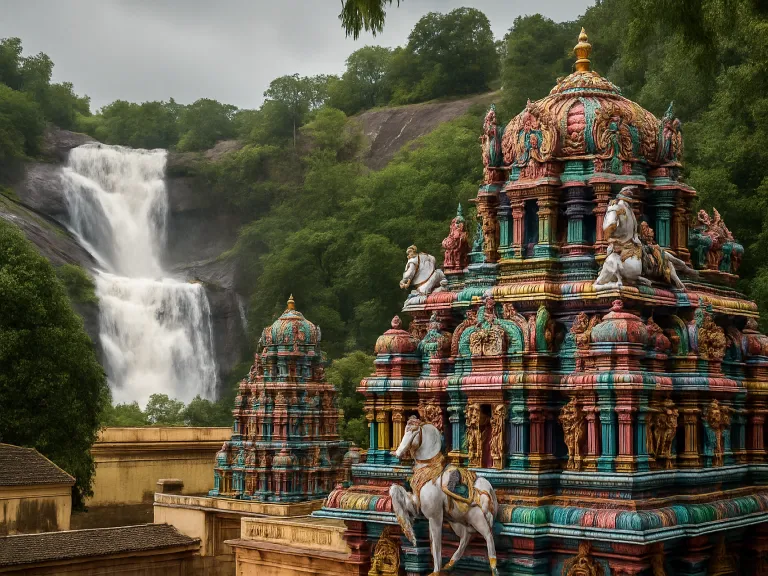
Kutralanathar Temple, also known as Thirukutralam Kutralanathar Temple, is an ancient Shiva temple at Courtallam in Tenkasi district, Tamil Nadu. The temple stands close to the famous Courtallam waterfalls in the Western Ghats, making it one of the best-known sacred sites of the old Pandya region. The presiding deity is Lord Shiva worshipped as Kutralanathar, and the goddess is Kuzhalvaimozhi Amman.
The temple is celebrated in Tamil Saiva literature and is counted among the Paadal Petra Sthalams, the Shiva shrines praised in the Tevaram hymns. It is also associated with the Pancha Sabhas, the five sacred halls connected with the cosmic dance of Lord Nataraja. At Courtallam, the sacred dance hall is known as Chitra Sabha, a shrine noted for its painted panels and its distinct identity within the Nataraja tradition.
Kutralanathar Temple is closely linked with the religious landscape of Courtallam, where the natural waterfalls, mountain streams, and sacred legends form an important part of worship. Devotees visit the temple after bathing at Courtallam falls, especially during the monsoon and festival seasons. The temple remains an important center of Tamil Shaiva devotion, combining Tevaram heritage, Agastya mythology, Nataraja worship, and the sacred geography of the Western Ghats.
ℹ️Temple Information
🛕
Presiding Deity
Kutralanathar
👸
Goddess
Kuzhalvaimozhi Amman
⭐
Temple Type
Shiva temple, Paadal Petra Sthalam, Pancha Sabha Sthalam, Nataraja-related temple, Ancient Tamil temple
📅
Built Period
Documented from the 7th century CE through Tevaram hymns; the present temple complex developed through later medieval phases.
🏛
Dynasty
Pandya region; later additions and renovations occurred under subsequent South Indian patrons.
Need Help Planning your visit to
Arulmigu Kutralanathar Temple?
Our travel experts can help you with transportation,
darshan timings, nearby sightseeing and complete temple tour planning.
⭐Temple Significance
Kutralanathar Temple is significant as a Tevaram Paadal Petra Sthalam, a major Shiva shrine of the old Pandya country, and the location of Chitra Sabha, one of the five sacred Nataraja sabhas. Its association with Sage Agastya, the Courtallam waterfalls, and Tamil Saiva devotional literature gives the temple lasting religious and cultural importance.
📜History
Kutralanathar Temple is historically important because it is mentioned in the Tevaram hymns of the early medieval Tamil Saiva saints. The shrine is therefore documented at least from the 7th century CE, when the devotional movement of the Nayanmars gave literary prominence to major Shiva temples across the Tamil country. In the Saiva canonical tradition, the temple is known as Thirukutralam.
Courtallam belonged to the ancient Pandya region, and the temple’s development is connected with the religious and political culture of the Pandyas. Like many major temples in southern Tamil Nadu, the present complex reflects growth over several centuries rather than the work of a single founder. Stone structures, mandapas, prakara arrangements, and subsidiary shrines indicate successive phases of renovation and patronage. Later rulers and local patrons also contributed to the maintenance and embellishment of the shrine.
The temple’s enduring historical significance comes from its position in Tamil Saiva worship and its association with Chitra Sabha, one of the five Nataraja sabhas. While Chidambaram is the foremost center of Nataraja worship, Courtallam preserves a distinct regional expression through its painted dance hall. The temple continues to be revered both as a Tevaram shrine and as a sacred destination within the wider pilgrimage circuit of Tirunelveli and Tenkasi districts.
🕉️Mythology
The principal mythology of Kutralanathar Temple is connected with Sage Agastya. In the sacred narrative, the wedding of Lord Shiva and Goddess Parvati at Mount Kailasa drew gods, sages, and celestial beings to the north, causing the earth to tilt. Shiva instructed Agastya to travel south to balance the earth and granted him the divine vision of the wedding from the southern land.
At Courtallam, Agastya is associated with the transformation of an earlier Vishnu shrine into a Shiva shrine. The mythology narrates that Agastya came to the temple, assumed the form of a Vaishnava devotee, and worshipped the deity. Through his spiritual power, the form was changed into a Shiva linga, which came to be worshipped as Kutralanathar. This legend is central to the religious identity of the temple and is preserved in local temple tradition.
The temple is also linked with Lord Nataraja through Chitra Sabha, the painted hall of dance. In the Pancha Sabha tradition, Shiva’s cosmic dance is manifested in five sacred halls across Tamil Nadu, and Courtallam is the Chitra Sabha. The natural setting of waterfalls and forests strengthens the temple’s mythic atmosphere, presenting Courtallam as a sacred landscape where Shiva, Agastya, and the divine dance are brought together.
🏛Architecture
Kutralanathar Temple follows the traditional layout of a Tamil Shiva temple, with the sanctum of Kutralanathar as the ritual center and separate shrines for Kuzhalvaimozhi Amman and other deities. The temple includes prakaras, mandapas, gopuram entrances, and sculptural elements typical of medieval temples in the Pandya region. The temple is also known for its distinctive plan, which is commonly described in temple tradition as resembling a conch.
The sanctum houses Lord Shiva in linga form, and the goddess shrine forms an important part of the complex. The temple’s stone architecture is supported by pillared halls and subsidiary shrines used for daily worship, festival processions, and special observances. The complex is set against the natural background of Courtallam, where the Western Ghats and waterfalls form an integral visual and spiritual context.
A major architectural and artistic highlight is Chitra Sabha, the sacred hall associated with Lord Nataraja. It stands apart from the main sanctum area and is renowned for its painted surfaces depicting Shaiva themes, divine forms, and sacred narratives. Unlike large stone dance halls, Chitra Sabha is especially valued for its mural tradition and its role as one of the five sabhas of Nataraja. This gives Kutralanathar Temple a distinctive place in the architectural and ritual heritage of Tamil Nadu.
🌳
Sacred Features
🌳 Temple Tree
Kurumpala tree
The Kurumpala tree is associated with the sacred identity of Thirukutralam and with the name Kurumpalanathar used for Lord Shiva at this shrine.
✨
Temple Highlights
✨
Paadal Petra Sthalam
The temple is praised in the Tevaram hymns and is counted among the sacred Shiva shrines of Tamil Saiva tradition.
✨
Chitra Sabha
Courtallam is one of the Pancha Sabhas of Lord Nataraja, with Chitra Sabha representing the painted hall of the divine dance.
✨
Association with Sage Agastya
The temple’s mythology connects it with Sage Agastya and the sacred transformation of the shrine into the worship of Kutralanathar.
✨
Courtallam Waterfalls Setting
The temple stands close to the famous Courtallam waterfalls, linking worship with the sacred natural landscape of the Western Ghats.
✨
Kuzhalvaimozhi Amman Shrine
The goddess shrine is an important part of the temple complex and is revered along with Lord Kutralanathar.
🙏
Spiritual Benefits
Worship of Lord Shiva as Kutralanathar for divine grace and protection
Darshan of Chitra Sabha Nataraja for devotion to Shiva’s cosmic dance
Prayer to Kuzhalvaimozhi Amman for motherly blessings
Spiritual purification associated with worship after bathing at Courtallam waterfalls
Connection with the Tevaram tradition of Tamil Saiva saints
Meditative experience in a sacred landscape of hills, streams, and temple worship
Seeking inner balance through the Agastya legend associated with the shrine
🎉
Major Festivals
🎉
Maha Shivaratri
Maha Shivaratri is observed with special worship dedicated to Lord Shiva.
🎉
Margazhi Tiruvathirai
Tiruvathirai is associated with Lord Nataraja and is significant for worship connected with Chitra Sabha.
🎉
Pradosham
Pradosham worship is observed for Lord Shiva and Nandi on the prescribed lunar days.
🪔
Special Poojas
🪔
Abhishekam to Kutralanathar
Ritual bathing and worship of the Shiva linga are central forms of worship at the temple.
🪔
Pradosha Pooja
Special worship of Lord Shiva is performed during Pradosham, an important observance in Shaiva temples.
🪔
Nataraja Worship at Chitra Sabha
Worship connected with Lord Nataraja is especially significant because Courtallam is one of the Pancha Sabha sites.
🪔
Amman Pooja
Devotees worship Kuzhalvaimozhi Amman for the blessings of the divine mother.
🚗
How to Reach
🛣️
By Road
Courtallam is well connected by road from Tenkasi and Tirunelveli. Buses, taxis, and local transport are available from Tenkasi to the temple area.
🚆
By Rail
Tenkasi Junction is the nearest major railway station and has rail connections to cities in Tamil Nadu and Kerala.
✈️
By Air
The nearest airports commonly used by visitors are Tuticorin Airport and Thiruvananthapuram International Airport, followed by road travel to Courtallam.
💡
Visitor Tips
Visit early in the morning or evening for a calmer darshan experience.
Courtallam is crowded during the waterfall season, especially on weekends and holidays.
Carry simple footwear that can be removed easily before entering the temple.
Dress modestly and respectfully for temple worship.
If visiting the waterfalls before darshan, plan enough time to change into dry clothes.
Check current temple timings locally before travel, as schedules may change on festival days.
Chitra Sabha is an important part of the pilgrimage and should be included in the visit.
Tenkasi is the main nearby transport hub for rail and road connections.

 WhatsApp Us