🛕About Temple
Kutram Porutha Nathar Temple at Karuppariyalur, also identified with Thalaignayiru in the Mayiladuthurai region of Tamil Nadu, is an ancient Shiva temple celebrated in the Tamil Saiva canon. The presiding deity is Lord Shiva as Kutram Porutha Nathar, a name meaning the Lord who forgives offences or faults. The goddess is worshipped as Kolvalai Nayaki. The temple belongs to the sacred landscape of the Cauvery delta, where many early Saiva shrines are connected with the devotional hymns of the Nayanmars.
The temple is counted among the Paadal Petra Sthalams, the Shiva temples praised in the Tevaram hymns. This status gives the shrine a special place in Tamil Saiva worship, because Paadal Petra Sthalams are not merely local temples but canonical places of pilgrimage. The association with Karuppariyalur and the alternate name Thalaignayiru also connects the shrine with local sacred geography and with traditions involving Surya, the Sun.
Devotees visit the temple mainly for worship of Lord Shiva as the compassionate forgiver of faults. The identity of the deity emphasizes repentance, humility and divine grace. Unlike larger urban temples, Karuppariyalur is known as a heritage shrine whose importance rests on Tevaram sanctity, ancient worship and local religious memory. Verifiable details about exact construction patronage, early builders and full inscriptional history are limited, so the temple is best understood through its canonical Saiva significance and its continuing role as a living Shiva shrine.
ℹ️Temple Information
🛕
Presiding Deity
Kutram Porutha Nathar
👸
Goddess
Kolvalai Nayaki
⭐
Temple Type
Shiva temple, Paadal Petra Sthalam, Tevaram shrine, Ancient Tamil Saiva temple
📅
Built Period
In existence by the 7th century CE, as attested by its association with the Tevaram hymns.
Need Help Planning your visit to
Arulmigu Kutram Porutha Nathar Temple?
Our travel experts can help you with transportation,
darshan timings, nearby sightseeing and complete temple tour planning.
⭐Temple Significance
Kutram Porutha Nathar Temple is significant as a Paadal Petra Sthalam praised in the Tamil Saiva devotional canon. It is revered for Lord Shiva’s aspect as the forgiver of faults and for its association with Karuppariyalur, also known as Thalaignayiru. The shrine preserves an early Saiva sacred identity from the Bhakti period and remains important to devotees seeking grace, forgiveness and peace of mind.
📜History
The most secure historical marker for Kutram Porutha Nathar Temple is its inclusion in the Tevaram tradition. The shrine was in existence by the 7th century CE, because it is associated with the hymns of the early Saiva saint Tirugnanasambandar. Temples praised in the Tevaram later came to be collectively revered as Paadal Petra Sthalams, and Karuppariyalur holds that canonical status. This places the temple within the formative period of Tamil Bhakti, when devotional poetry, temple worship and regional sacred geography became closely linked.
The temple stands in the Cauvery delta region, an area that became one of the strongest centres of Saiva temple culture. Many shrines in this region received attention during the Pallava, Chola and later periods, but for this specific temple the name of an original builder is not securely established in widely available historical records. The present temple represents a living continuation of an ancient sacred site rather than a monument whose construction can be assigned with certainty to a single ruler or donor.
The historical importance of the temple therefore rests on documented religious continuity rather than on a clearly dated foundation inscription. Its identity as Karuppariyalur in the Tevaram corpus preserves an early place-name, while the modern association with Thalaignayiru reflects later and local usage. The temple’s continued worship of Shiva as Kutram Porutha Nathar and the goddess as Kolvalai Nayaki demonstrates the survival of a sacred tradition that has remained meaningful from the Bhakti period to the present.
🕉️Mythology
The mythology of Kutram Porutha Nathar Temple is centred on the compassionate aspect of Lord Shiva. The name Kutram Porutha Nathar means the Lord who forgave faults, and local Saiva tradition explains the shrine as a place where divine grace removes the burden of wrongdoing when a devotee approaches Shiva with sincerity. This theme is consistent with the temple’s Sanskrit-associated name Aparadha Kshameswarar, meaning the Lord who pardons offences.
The place-name Thalaignayiru is connected in local tradition with Surya, the Sun. In Tamil, Gnayiru denotes the Sun or Sunday, and the shrine is associated with worship offered to Shiva by Surya. This association gives the temple a distinct identity among the Saiva shrines of the region, although it is not one of the canonical Navagraha temples of the Kumbakonam circuit. The Surya-related tradition is part of the temple’s sacred narrative rather than a dynastic or historical claim.
Another important devotional idea attached to the temple is that Shiva’s forgiveness is greater than human error. Devotees therefore approach Kutram Porutha Nathar for relief from guilt, mistakes, family burdens and mental distress. The mythology does not function as political history; it expresses the temple’s theological message. Karuppariyalur is remembered as a shrine where the Lord accepts prayer, forgives offences and grants the devotee a renewed path of dharma.
🏛Architecture
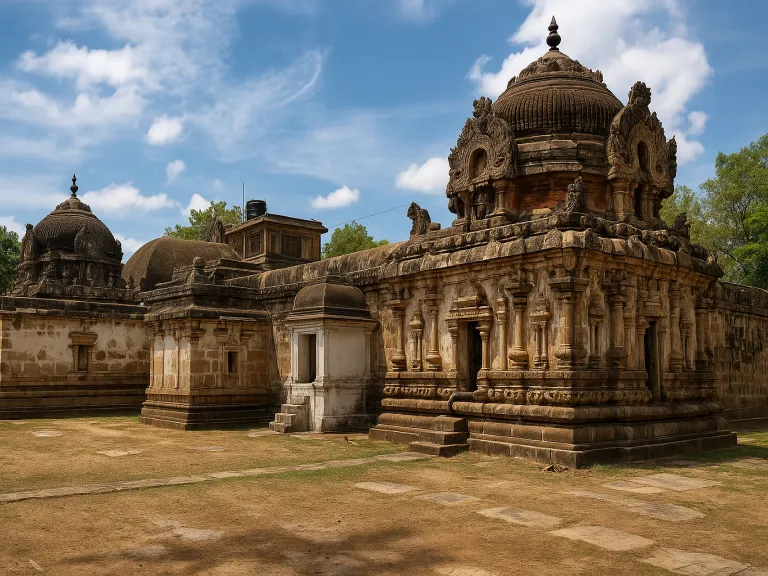
Kutram Porutha Nathar Temple follows the essential pattern of a Tamil Saiva temple, with the sanctum dedicated to Lord Shiva in the form of a lingam and a separate shrine for the goddess Kolvalai Nayaki. The temple is part of the Dravidian architectural and ritual tradition of the Cauvery delta, where the sanctum, mandapa, circumambulatory space and subsidiary shrines together support daily worship and festival observance. Exact measurements and construction phases are not consistently available in widely documented sources.
The architectural importance of the shrine lies less in monumental scale and more in its continuity as a Tevaram site. Paadal Petra Sthalams often preserve layers of construction, renovation and local patronage across centuries. At Karuppariyalur, the sacred core is the shrine of Kutram Porutha Nathar, whose identity gives the temple its distinctive theological character. The goddess shrine, temple precinct and icons used in worship form part of the living Saiva layout rather than a museum-like archaeological complex.
As with many ancient temples of the Mayiladuthurai and Sirkazhi region, the temple reflects a functional sacred architecture designed for darshan, circumambulation, abhishekam and recitation of hymns. The layout supports the devotional experience described by the Tevaram tradition: entering the temple, worshipping the lingam, honouring the goddess and moving through the precinct in reverence. Published historical information does not securely identify a single architect, builder or original structural phase.
✨
Temple Highlights
✨
Paadal Petra Sthalam
The temple is counted among the Shiva shrines praised in the Tevaram hymns and is therefore part of the canonical Tamil Saiva pilgrimage tradition.
✨
Lord Kutram Porutha Nathar
The presiding deity’s name means the Lord who forgives faults, making the temple especially associated with repentance, forgiveness and divine grace.
✨
Karuppariyalur and Thalaignayiru identity
The shrine is known by the ancient name Karuppariyalur and is also associated with the place-name Thalaignayiru in local sacred geography.
✨
Association with Tirugnanasambandar
The temple is linked with the early Saiva Bhakti tradition through the hymns of Tirugnanasambandar.
✨
Goddess Kolvalai Nayaki
The divine consort is worshipped as Kolvalai Nayaki, completing the temple’s Saiva worship tradition.
✨
Surya-related tradition
Local tradition connects the place-name Thalaignayiru with Surya, giving the shrine a distinctive identity among nearby Saiva temples.
🙏
Spiritual Benefits
Seeking forgiveness for mistakes and offences
Relief from guilt and mental burden through Shiva worship
Cultivating humility and repentance
Praying for peace of mind
Seeking divine grace for family harmony
Strengthening devotion to Lord Shiva
Participating in the sacred tradition of Tevaram worship
🎉
Major Festivals
🎉
Maha Shivaratri
Maha Shivaratri is the principal annual night of worship for Lord Shiva and is observed in Shiva temples with special devotion.
🎉
Pradosham
Pradosham is a regular sacred period for Shiva worship, observed twice a lunar month with special reverence to Lord Shiva and Nandi.
🎉
Margazhi Thiruvathirai
Thiruvathirai in the Tamil month of Margazhi is an important Shaiva observance connected with Lord Shiva.
🪔
Special Poojas
🪔
Abhishekam to Kutram Porutha Nathar
Abhishekam to the Shiva lingam is an important form of worship at the temple.
🪔
Pradosham worship
Devotees worship Lord Shiva during Pradosham for grace, removal of burdens and spiritual merit.
🪔
Archana to Kolvalai Nayaki
Devotees offer archana to the goddess Kolvalai Nayaki for blessings and family welfare.
🚗
How to Reach
🛣️
By Road
Karuppariyalur or Thalaignayiru can be reached by road from towns in the Mayiladuthurai and Sirkazhi region. Local buses, taxis and private vehicles are commonly used for visiting smaller temples in this area.
🚆
By Rail
The Mayiladuthurai and Sirkazhi railway stations serve the region. Travellers should confirm the most convenient station and onward road connection before visiting.
✈️
By Air
The nearest major airports used by travellers to the Cauvery delta region include Tiruchirappalli and Chennai, followed by onward travel by rail or road.
💡
Visitor Tips
Confirm current opening hours with local sources before travelling.
Plan road travel in advance, as the temple is in a smaller settlement rather than a large city centre.
Wear modest clothing suitable for a traditional Tamil Nadu temple.
Carry cash for offerings, as digital payment options may not always be available in small temples.
Avoid relying on photography unless permission is clearly given by temple authorities.
Visit nearby Tevaram shrines in the Mayiladuthurai and Sirkazhi region if time permits.
Maintain silence and follow local worship customs inside the temple precinct.

 WhatsApp Us