🛕About Temple
Lakshmipureeswarar Temple at Thirunindriyur is an ancient Shiva temple near Mayiladuthurai in the Cauvery delta of Tamil Nadu. The presiding deity is Lord Shiva worshipped as Lakshmipureeswarar, also known in temple lists as Mahalakshmeeswarar, and the goddess is Ulaganayaki. The temple is revered as a Tevaram Paadal Petra Sthalam, meaning it is one of the Shiva shrines celebrated in the canonical Tamil Saiva hymns of the early medieval period.
Thirunindriyur belongs to the sacred geography of Chola Nadu, especially the group of shrines on and around the northern bank region of the Kaveri system. Its importance comes not from monumental scale alone, but from its presence in the devotional memory of Tamil Shaivism. The temple connects liturgical worship, local sthala-purana traditions, and the continuing pilgrimage route that links Mayiladuthurai, Sirkazhi, Vaitheeswaran Koil, Thiruppunkur and other celebrated Saiva temples.
The name Lakshmipureeswarar reflects the temple’s close association with Goddess Lakshmi in local mythology. Devotees visit the shrine for darshan of Shiva and Ulaganayaki, for Tevaram-related pilgrimage, and for worship connected with prosperity, auspiciousness and spiritual steadiness. As with many old temples in this region, the temple’s identity rests on a blend of ancient Tamil hymnal reference, Chola-period temple culture, and living daily worship maintained by the local community.
ℹ️Temple Information
🛕
Presiding Deity
Lakshmipureeswarar
⭐
Temple Type
Shiva temple, Tevaram Paadal Petra Sthalam, Chola Nadu temple
📅
Built Period
Existed by the 7th century CE as a Tevaram shrine; the extant stone temple is associated with the medieval Chola period.
Need Help Planning your visit to
Arulmigu Lakshmipureeswarar Temple?
Our travel experts can help you with transportation,
darshan timings, nearby sightseeing and complete temple tour planning.
⭐Temple Significance
Lakshmipureeswarar Temple is significant as a Tevaram Paadal Petra Sthalam of Chola Nadu, associated with the hymnal tradition of Tamil Shaivism and with the local mythology of Goddess Lakshmi worshipping Lord Shiva.
📜History
The historical importance of Lakshmipureeswarar Temple is anchored in the Tevaram tradition. Thirunindriyur is counted among the Paadal Petra Sthalams, the Shiva temples praised in the Tamil hymns of the Nayanmar saints. This establishes the shrine as a place of worship known by the 7th century CE, when the Saiva bhakti movement was shaping the religious landscape of Tamil Nadu through hymns, pilgrimage and temple-centered devotion.
The temple stands in the old Chola country, a region where numerous earlier shrines were enlarged or rebuilt in stone under Chola patronage. The existing temple belongs to the architectural and ritual world of medieval Tamil Shaiva temples. While the original foundation cannot be assigned to a named historical builder from widely established evidence, the temple’s survival as a Tevaram shrine reflects the long continuity of worship from the early medieval period into the Chola, later medieval and modern periods.
Historically, Thirunindriyur formed part of the dense network of Kaveri delta temples that received patronage, ritual endowments and local support across centuries. The temple’s continued recognition in Paadal Petra Sthalam lists helped preserve its sacred status even when larger nearby temples attracted greater public attention. Its history is therefore best understood through the Tevaram canon, Chola-region temple culture, and the uninterrupted place of Shiva worship in the Mayiladuthurai area.
🕉️Mythology
The principal mythology of Lakshmipureeswarar Temple centers on Goddess Lakshmi. In the local sthala-purana tradition, Lakshmi worshipped Lord Shiva at Thirunindriyur and received divine grace. This association gives the deity the name Lakshmipureeswarar, or Mahalakshmeeswarar, identifying Shiva as the Lord worshipped in a sacred place connected with Lakshmi. The myth explains why a Shiva temple carries a name so closely linked with the goddess of prosperity.
This legend is devotional rather than historical. It expresses a theological idea common in Tamil temple tradition: even the great deities of the Hindu pantheon worship Shiva and receive his grace. At Thirunindriyur, Lakshmi’s worship is understood as affirming that prosperity, auspiciousness and worldly wellbeing are most complete when joined with spiritual surrender. The presence of Ulaganayaki as the goddess of the temple deepens this theme by presenting the divine feminine as guardian of the world and companion of Shiva.
For devotees, the Lakshmi association makes the temple a place for prayers related to welfare, family prosperity, peace and removal of misfortune. The mythology does not replace the temple’s historical identity as a Tevaram shrine; rather, it complements it. The hymnal sanctity of the temple and the Lakshmi-centered legend together define Thirunindriyur as a Saiva kshetra where devotion, grace and auspicious living are closely linked.
🏛Architecture
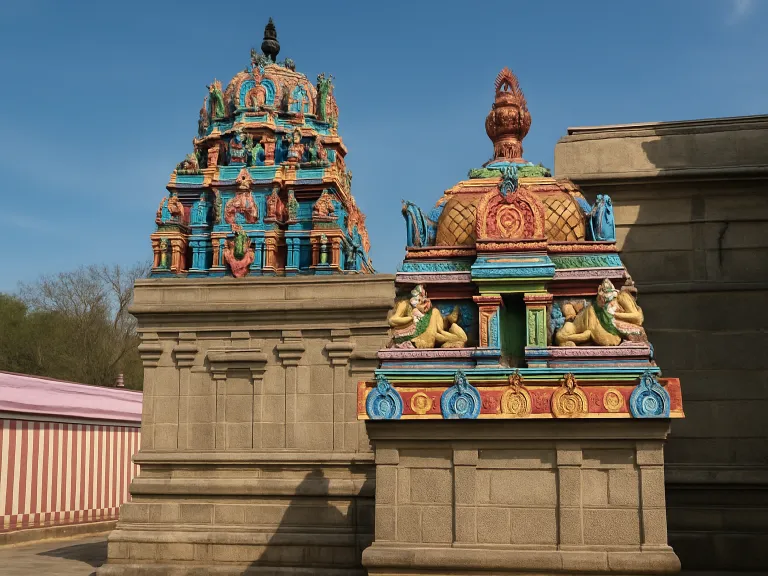
Lakshmipureeswarar Temple follows the Dravidian Saiva temple pattern characteristic of the Cauvery delta. The sacred focus of the complex is the garbhagriha housing the Shiva linga of Lakshmipureeswarar. In keeping with Tamil temple planning, the sanctum is approached through successive ritual spaces that guide the devotee from the outer court toward the innermost shrine. The arrangement emphasizes darshan of the linga, circumambulation, and participation in daily worship.
The temple’s built form reflects the medieval Tamil tradition in which stone sanctums, mandapas and prakaras became the durable framework for older sacred sites. The goddess shrine for Ulaganayaki forms an essential part of the complex, allowing devotees to worship Shiva and the divine mother within the same sacred enclosure. The architectural experience is typical of older Paadal Petra Sthalams in the region: compact, ritual-centered and closely tied to the practical needs of daily puja rather than purely monumental display.
The temple is part of the Chola-country architectural landscape, where many shrines preserve layers of construction, repair and later additions. Its importance lies in the continuity of sacred use: the sanctum, mandapas, circumambulatory spaces and subsidiary worship areas together sustain the temple’s liturgical life. Rather than presenting a single uniform construction phase, the visible temple expresses the long history of Tamil Saiva worship in a living village shrine.
✨
Temple Highlights
✨
Tevaram Paadal Petra Sthalam
The temple is one of the Shiva shrines celebrated in the Tamil Saiva canon and is included in the sacred pilgrimage geography of Chola Nadu.
✨
Lakshmi-associated Shiva shrine
The presiding deity is worshipped as Lakshmipureeswarar or Mahalakshmeeswarar, reflecting the local mythology of Goddess Lakshmi worshipping Shiva here.
✨
Ancient Cauvery delta temple
Thirunindriyur belongs to the dense cluster of historic Shiva temples around Mayiladuthurai, Sirkazhi and the Kaveri delta.
✨
Goddess Ulaganayaki shrine
The temple includes worship of the goddess Ulaganayaki, the consort of Lakshmipureeswarar, as an integral part of the temple’s Saiva tradition.
🙏
Spiritual Benefits
Seeking the grace of Lord Shiva through worship at a Tevaram shrine
Prayers for prosperity and auspiciousness connected with the Lakshmi mythology of the temple
Worship for family welfare and peace through darshan of Ulaganayaki
Devotional merit through remembrance and recitation of Tamil Saiva hymns
Inner steadiness and surrender through circumambulation and Shiva worship
🎉
Major Festivals
🎉
Maha Shivaratri
A major festival for Lord Shiva, observed with special worship at Shiva temples.
🎉
Pradosham
Fortnightly Shiva worship observed during the pradosha period, especially important in Saiva temples.
🎉
Arudra Darshan
A significant Saiva festival associated with Lord Shiva, especially in the Tamil month of Margazhi.
🎉
Karthigai Deepam
A Tamil festival of lamps observed in many Shiva temples.
🪔
Special Poojas
🪔
Abhishekam to Lakshmipureeswarar
Ritual bathing and worship of the Shiva linga performed as part of Saiva temple worship.
🪔
Pradosha Pooja
Special worship of Lord Shiva during the pradosha period on the 13th lunar day.
🪔
Archana for Ulaganayaki
Name-recitation worship offered to the goddess Ulaganayaki by devotees.
🚗
How to Reach
🛣️
By Road
Thirunindriyur is accessible by road from Mayiladuthurai and lies within the temple-rich Mayiladuthurai-Sirkazhi region.
🚆
By Rail
Mayiladuthurai Junction is the nearest major railway station with regular rail connectivity to towns and cities in Tamil Nadu.
✈️
By Air
The nearest major airport commonly used by pilgrims to the Mayiladuthurai region is Tiruchirappalli International Airport.
💡
Visitor Tips
Confirm current temple timings with local sources before travelling.
Plan the visit along with nearby Mayiladuthurai and Sirkazhi region temples if undertaking a Tevaram pilgrimage.
Wear modest clothing suitable for a traditional Hindu temple.
Carry some cash for offerings, archana or local transport, as digital payment options may vary.
Avoid visiting during peak midday heat, especially in summer.
Respect shrine customs and follow instructions given by temple staff or priests.
Check locally before taking photographs inside or near the sanctum area.

 WhatsApp Us