🛕About Temple
Maha Prathyankaradevi Temple at Ayyavadi, also written as Ayyavadi Sri Maha Pratyangira Devi Temple, is a noted Goddess shrine near Kumbakonam in Thanjavur district, Tamil Nadu. The temple is dedicated to Sri Maha Pratyangira Devi, a fierce protective manifestation of the Divine Mother, commonly represented with a lion-like face and a powerful form associated with the destruction of evil forces. The shrine is situated in the sacred Kumbakonam temple belt, close to well-known temples such as Uppiliappan Koil and Thirunageswaram.
The temple is especially known for worship connected with protection, removal of fear, relief from hostile influences, and spiritual courage. Devotees visit the shrine throughout the year, with special importance attached to Amavasya worship and the Nikumbala Yagam, a fire ritual associated with Pratyangira Devi. The ritual identity of the temple has made Ayyavadi one of the most prominent Pratyangira Devi shrines in Tamil Nadu.
Unlike many large Chola-period temples in the Kumbakonam region, the public historical record of this temple does not clearly identify a single royal builder, foundation inscription, or datable construction phase. Its significance is preserved mainly through living worship, local sacred tradition, and the continuing popularity of Pratyangira Devi worship. The temple remains an active place of devotion rather than a monument known primarily for royal inscriptions or sculptural chronology.
ℹ️Temple Information
🛕
Presiding Deity
Sri Maha Pratyangira Devi
👸
Goddess
Sri Maha Pratyangira Devi
⭐
Temple Type
Amman Temple
Need Help Planning your visit to
Maha Prathyankaradevi Temple?
Our travel experts can help you with transportation,
darshan timings, nearby sightseeing and complete temple tour planning.
⭐Temple Significance
The temple is significant as one of the best-known shrines of Sri Maha Pratyangira Devi in Tamil Nadu, especially for Amavasya worship and the Nikumbala Yagam performed for protection, removal of fear, and relief from negative influences.
📜History
The documented historical details of Maha Prathyankaradevi Temple at Ayyavadi are limited when compared with the major inscription-rich temples of the Kumbakonam region. No widely accepted historical record identifies the original builder, exact foundation year, or a specific ruling dynasty responsible for the shrine. Because of this, the temple’s early history cannot be stated with certainty. Its present importance rests on its continuous ritual life and its recognition as a major center of Pratyangira Devi worship.
Ayyavadi lies in a region that has been sacred to Hindu worship for many centuries, surrounded by temples associated with Shaiva, Vaishnava, and Navagraha traditions. The presence of the temple in this dense sacred geography has contributed to its visibility among pilgrims visiting Kumbakonam, Thirunageswaram, Uppiliappan Koil, and other nearby shrines. Over time, the temple became particularly identified with rites seeking divine protection, especially through fire worship offered to Sri Maha Pratyangira Devi.
In recent generations, the temple has become widely known because of the Nikumbala Yagam and Amavasya worship performed for the Goddess. These practices draw large numbers of devotees and have shaped the temple’s public identity. While mythology and local tradition connect Ayyavadi with epic and puranic themes, those accounts belong to the sacred narrative of the shrine rather than verified political history. The available historical position is therefore best stated cautiously: the shrine is an established living temple of Pratyangira Devi with no securely published foundation date, builder, or dynastic attribution.
🕉️Mythology
In the sacred tradition of Ayyavadi, Sri Maha Pratyangira Devi is worshipped as a fierce and compassionate form of the Divine Mother who protects devotees from destructive forces. Pratyangira is associated in Hindu tradition with immense shakti, the power to neutralize evil, and the ability to calm intense destructive energies. Her lion-faced form connects her with the protective and awe-inspiring aspect of the Goddess, and devotees approach her for courage, protection, and release from fear.
The temple is closely associated in local tradition with the Nikumbala Yagam. In epic lore, the name Nikumbala is connected with powerful fire rituals performed to obtain victory and invincibility. Ayyavadi’s worship tradition links the Goddess with the power that prevents misuse of such forces and restores dharma. The Amavasya homam performed at the temple, especially the offering of red chillies into the sacred fire, is understood by devotees as a ritual act seeking the destruction of negativity and the protection of righteous life.
The place-name Ayyavadi is also connected in local tradition with the expression Aivar Padi, meaning the place of the five. This is commonly associated with the Pandavas of the Mahabharata, who are remembered in the sacred geography of the region. These accounts are part of the temple’s living mythology and devotional memory. They should be understood separately from verifiable history, because no widely accepted inscriptional or chronological evidence establishes these epic associations as historical events.
🏛Architecture
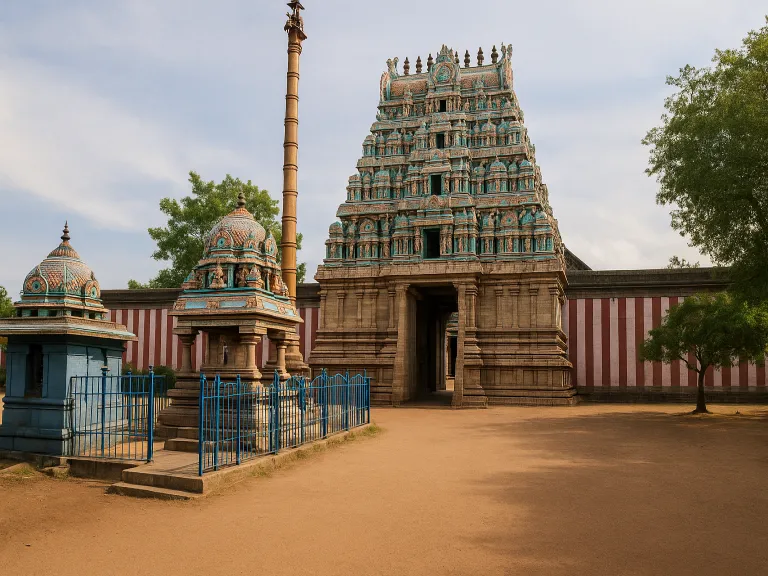
Maha Prathyankaradevi Temple at Ayyavadi follows the general pattern of a functional Tamil Hindu temple, with a sanctum-centered layout designed primarily for worship rather than monumental scale. The architectural emphasis is on the presence of the deity, daily puja, and ritual movement of devotees. The temple is not chiefly known for large inscriptional walls or elaborate royal sculpture programs; its importance is devotional and ritual, centered on the worship of Sri Maha Pratyangira Devi.
The iconography of the Goddess is the strongest architectural and visual focus of the temple. Sri Maha Pratyangira Devi is worshipped in a fierce protective form, commonly understood as lion-faced and powerful, embodying the energy that destroys evil and safeguards devotees. The shrine arrangement supports direct darshan of the Goddess, and the ritual areas associated with homam and special worship are important to the temple’s identity. The sacred fire ritual is not merely an auxiliary practice but one of the defining devotional experiences of Ayyavadi.
Publicly available historical material does not provide a securely documented construction sequence, original plan, or dynastic architectural classification for the temple. For this reason, details such as the original builder, exact age of the masonry, and formal Agamic plan should not be asserted without inscriptional or temple-authorized evidence. The temple is best described as an active Tamil Nadu Goddess shrine whose architectural value lies in its sanctum, ritual focus, and living worship tradition rather than in a verified royal construction history.
✨
Temple Highlights
✨
Sri Maha Pratyangira Devi Shrine
The temple is dedicated to Sri Maha Pratyangira Devi, a fierce protective form of the Divine Mother worshipped for courage, protection, and removal of negative forces.
✨
Nikumbala Yagam
The temple is widely known for the Nikumbala Yagam, a fire ritual associated with Pratyangira Devi worship and spiritual protection.
✨
Amavasya Worship
New moon days attract many devotees, especially for homam and special worship connected with relief from fear and hostile influences.
✨
Kumbakonam Temple Belt
Ayyavadi is located near several important temples, making it part of a major pilgrimage circuit in the Thanjavur and Kumbakonam region.
🙏
Spiritual Benefits
Protection from negative influences
Relief from fear and anxiety
Courage to face difficult situations
Removal of obstacles caused by hostility
Strengthening of spiritual confidence
Blessings for peace and stability
Support for overcoming inner negativity
🎉
Major Festivals
🎉
Amavasya Worship
New moon days are the most prominent recurring worship occasions at the temple, drawing devotees for special prayers and homam to Sri Maha Pratyangira Devi.
🎉
Navaratri
Navaratri is an important period for Goddess worship, with devotees offering prayers to the Divine Mother in her protective and compassionate forms.
🪔
Special Poojas
🪔
Nikumbala Yagam
A major fire ritual associated with Sri Maha Pratyangira Devi, performed for divine protection and removal of harmful influences.
🪔
Amavasya Homam
Special homam performed on new moon days, closely associated with the temple’s devotional identity and attended by large numbers of devotees.
🪔
Pratyangira Devi Archana
Devotional offering of names and prayers to Sri Maha Pratyangira Devi for protection, courage, and spiritual strength.
🚗
How to Reach
🛣️
By Road
Ayyavadi is accessible by road from Kumbakonam and is close to Thirunageswaram and Uppiliappan Koil. Local buses, taxis, and autorickshaws are commonly used from Kumbakonam.
🚆
By Rail
Kumbakonam Railway Station is the main railhead for pilgrims visiting Ayyavadi. Local road transport is available from the station.
✈️
By Air
The nearest major airport is Tiruchirappalli International Airport. From there, travellers can reach Kumbakonam and Ayyavadi by road or rail.
💡
Visitor Tips
Expect large crowds on Amavasya days because of special worship and homam.
Plan extra time for darshan during new moon days and festival periods.
Wear modest clothing suitable for a Tamil Nadu temple visit.
Check current temple timings locally before travelling, especially on special ritual days.
Combine the visit with nearby Kumbakonam-region temples if planning a pilgrimage route.
Follow temple instructions during homam and special pooja arrangements.
Avoid carrying unnecessary valuables during crowded worship days.

 WhatsApp Us