🛕About Temple
Punnainallur Mariamman Kovil is a celebrated Shakti temple at Punnainallur, a village on the eastern side of Thanjavur in Tamil Nadu. The temple is dedicated to Mariamman, the mother goddess worshipped in Tamil Nadu as a guardian deity associated with health, protection and communal well-being. Because of its location close to Thanjavur, it is an important pilgrimage stop for devotees visiting the historic temple city.
The shrine is especially known for its presiding image, which is not a conventional stone icon. The moolavar of Punnainallur Mariamman is associated with an anthill and is worshipped with great care because the image is formed from earth. This feature gives the temple a distinct identity among Mariamman shrines. Devotees visit the temple to pray for relief from illnesses, especially diseases connected in Tamil religious culture with heat, fever, skin eruptions and the eyes.
Punnainallur Mariamman Kovil is closely connected with the Thanjavur Maratha period. The temple’s foundation is linked with Venkoji, also known as Ekoji I, the founder of the Thanjavur Maratha line. Later Maratha rulers of Thanjavur are remembered for patronage and additions. The temple remains a living place of worship where daily puja, festival worship and votive offerings continue to draw devotees from Thanjavur district and other parts of Tamil Nadu.
ℹ️Temple Information
🛕
Presiding Deity
Punnainallur Mariamman
👸
Goddess
Punnainallur Mariamman
📅
Built Period
17th century CE
🏛
Dynasty
Thanjavur Maratha dynasty
Need Help Planning your visit to
Shri Mariamman Kovil?
Our travel experts can help you with transportation,
darshan timings, nearby sightseeing and complete temple tour planning.
⭐Temple Significance
Punnainallur Mariamman Kovil is significant as a major Mariamman shrine of the Thanjavur region, historically linked with the Thanjavur Maratha rulers and ritually distinguished by its anthill-associated moolavar. The temple is an important place of prayer for health, protection and fulfillment of vows, especially in the devotional context of Tamil goddess worship.
📜History
The history of Punnainallur Mariamman Kovil is connected with the rise of Maratha rule in Thanjavur during the seventeenth century. Venkoji, also known as Ekoji I, established Maratha authority in Thanjavur and is associated with the founding of this shrine. Temple accounts connect his discovery of the goddess at Punnainallur with the creation of the sanctum and organized worship at the site.
The place name Punnainallur is associated with an earlier grove-like setting, and the goddess is linked with an anthill found there. The earliest phase of the temple is therefore remembered as a sacred spot formalized under royal patronage. The Maratha rulers of Thanjavur, who inherited and adapted the older Tamil religious landscape of the region, supported temples of Shiva, Vishnu and the goddess. Punnainallur Mariamman became one of the important Shakti shrines under this courtly and regional devotional setting.
Later Thanjavur Maratha rulers, including members of the line after Venkoji, are associated in temple tradition with improvements, gifts and structural additions. The temple grew from a discovered sacred image into a built shrine with a gopuram, enclosure, mandapas and festival arrangements. While the temple is ancient in living tradition, its historically documented identity is most strongly tied to the Thanjavur Maratha period, especially the seventeenth century foundation and subsequent royal patronage.
🕉️Mythology
The temple’s mythology centers on the goddess revealing herself at Punnainallur. In local tradition, Venkoji, the Maratha ruler of Thanjavur, had a divine indication that the goddess was present in a grove at Punnainallur. When the place was searched, an anthill was found, and the form of Mariamman was identified there. The king then arranged for worship and the establishment of the shrine.
The anthill origin is central to the temple’s sacred character. Mariamman is worshipped here as a self-manifesting mother goddess whose form emerged from the earth rather than being carved as an ordinary icon. This belief explains the special ritual care given to the moolavar. The main image is not bathed with regular abhishekam, because it is associated with earth and anthill material. Instead, worship is performed in a manner that preserves the sanctity and physical form of the deity.
Another local devotional tradition connects the goddess with healing, especially the removal of eye ailments and diseases associated with heat and eruptions. Such beliefs are part of the wider Mariamman worship of Tamil Nadu, where the goddess is invoked as both a fierce protector and compassionate healer. Devotees approach Punnainallur Mariamman with vows, prayers and thanksgiving, seeing her as a mother who protects families, children, villages and communities from disease and distress.
🏛Architecture
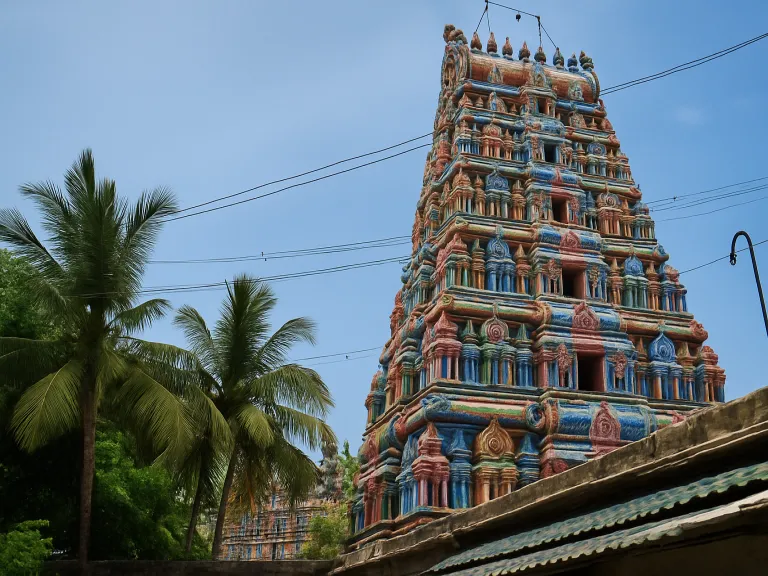
Punnainallur Mariamman Kovil follows the broad Tamil temple layout adapted for a goddess shrine. The complex has an entrance gopuram, enclosed prakaras, a sanctum for the presiding goddess and mandapas used for worship and festival movement. Its present built form reflects the growth of a Maratha-period shrine within the established architectural language of the Thanjavur region, where royal patronage often supported Tamil-style temple structures.
The most distinctive architectural and ritual feature is the sanctum of the moolavar. The presiding image of Mariamman is associated with an anthill and is not treated as a stone icon. This affects the way the sanctum is maintained and the way ritual is conducted. Regular bathing of the main image is avoided, and protective applications are used as part of temple practice. This makes the shrine’s ritual architecture inseparable from the material nature of the deity.
The temple’s public spaces support large numbers of devotees during Aadi Fridays, annual festivals and other goddess worship occasions. Mandapas and circumambulatory passages allow devotees to move around the sanctum, make offerings and participate in festival worship. The gopuram and enclosed precincts give the temple the appearance of a classical Tamil Amman shrine, while the sanctum preserves the local sacred memory of the anthill manifestation that defines Punnainallur Mariamman.
✨
Temple Highlights
✨
Anthill-associated moolavar
The presiding image of Punnainallur Mariamman is associated with an anthill and earth, making the shrine ritually distinctive among Amman temples.
✨
Thanjavur Maratha connection
The temple’s foundation is linked with Venkoji, also known as Ekoji I, the founder of the Thanjavur Maratha line.
✨
Health-related devotion
Devotees worship Mariamman here for protection and relief from ailments, especially those connected in Tamil devotional culture with fever, skin eruptions and the eyes.
✨
Important Thanjavur-region Shakti shrine
The temple is one of the best-known goddess shrines near Thanjavur and is visited along with the city’s major sacred sites.
✨
Special ritual care for the deity
Because the main image is associated with earth rather than stone, the moolavar is worshipped with protective practices instead of regular abhishekam.
🙏
Spiritual Benefits
Prayers for relief from fever-related suffering and illness
Prayers for relief from skin eruptions and heat-related ailments associated with Mariamman worship
Prayers for eye-related ailments in local devotional tradition
Protection of family and household well-being
Fulfillment of vows made to the goddess
Mental strength during illness and distress
Thanksgiving worship after recovery or resolution of difficulties
🎉
Major Festivals
🎉
Aadi Fridays
Fridays in the Tamil month of Aadi are important for Amman worship, and Punnainallur Mariamman receives large numbers of devotees during this period.
🎉
Navaratri
Navaratri is observed as a major goddess festival, with special worship to Mariamman as a form of Shakti.
🎉
Annual Mariamman festival
The temple conducts annual festival worship for the goddess, drawing devotees from Thanjavur and surrounding areas.
🪔
Special Poojas
🪔
Thailakappu for the moolavar
The main image, being associated with earth and an anthill, receives protective ritual applications rather than regular abhishekam.
🪔
Special Friday worship
Fridays are important for Amman worship, and devotees offer prayers to Punnainallur Mariamman for health, protection and fulfillment of vows.
🪔
Festival alankaram
During major goddess festivals, the deity is worshipped with special decoration and puja.
🚗
How to Reach
🛣️
By Road
Punnainallur is on the road network near Thanjavur and can be reached by local buses, taxis and private vehicles from Thanjavur city.
🚆
By Rail
The nearest major railway station is Thanjavur Junction. From there, visitors can travel by road to Punnainallur.
✈️
By Air
The nearest airport is Tiruchirappalli International Airport. From the airport, visitors can reach Thanjavur and continue by road to Punnainallur.
💡
Visitor Tips
Check current temple timings with the temple or local sources before travelling.
Expect larger crowds on Fridays, Aadi Fridays, festival days and public holidays.
Plan extra time if visiting during Aadi month or annual festival periods.
Wear modest clothing suitable for a place of worship.
Follow local queue arrangements and instructions given by temple staff.
Avoid touching sanctum structures or ritual objects unless permitted.
Combine the visit with major Thanjavur temples if time allows.
Carry drinking water during summer, as the Thanjavur region can be very hot.

 WhatsApp Us