🛕About Temple
Samayapuram Mariamman Temple is one of the most visited Shakti shrines in Tamil Nadu and is located at Samayapuram, north of Tiruchirappalli. The presiding goddess, Arulmigu Mariamman, is worshipped as a powerful form of the Mother Goddess associated with protection, rain, fertility, health, and community welfare. The temple is especially important to devotees from the Cauvery delta, central Tamil Nadu, and many parts of South India.
The shrine is known for its intense devotional atmosphere and for the large number of vows and thanksgiving offerings made by worshippers. Mariamman worship in Tamil Nadu is closely connected with village protection, seasonal renewal, and relief from epidemic diseases. At Samayapuram, these themes are expressed through festivals, flower offerings, maavilakku worship, and personal vows performed by families and individuals.
A distinctive feature of the temple is the nature of the main image. The moolavar of Mariamman is not a conventional hard-stone idol; it is understood to be made of a mixture that includes clay and sacred substances. Because of this, ritual bathing is not performed on the main image. Abhishekam is instead performed to the utsava image. The temple is administered under the Hindu Religious and Charitable Endowments Department of Tamil Nadu and remains a major pilgrimage centre near Tiruchirappalli.
ℹ️Temple Information
🛕
Presiding Deity
Arulmigu Mariamman
👸
Goddess
Arulmigu Mariamman
⭐
Temple Type
Shakti temple, Mariamman temple, Amman temple, Hindu temple
📅
Built Period
18th century CE
Need Help Planning your visit to
Mariamman Temple?
Our travel experts can help you with transportation,
darshan timings, nearby sightseeing and complete temple tour planning.
⭐Temple Significance
Samayapuram Mariamman Temple is one of the foremost Mariamman shrines in Tamil Nadu and a major centre of Shakti worship near Tiruchirappalli. The temple is significant for its powerful living tradition of vows, healing prayers, flower offerings, and public festivals. It is especially noted for the non-stone main image of the goddess and for the practice of performing abhishekam to the utsava murti rather than to the moolavar.
📜History
The documented history of Samayapuram Mariamman Temple is generally placed in the early modern period, with the present temple associated with Vijayaraya Chakkaravarthi in the eighteenth century. The temple stands near Samayapuram, close to the historically important region of Kannanur. Kannanur is known in South Indian history as a medieval settlement connected with shifting political centres in the Tiruchirappalli region, although the present Mariamman temple’s established history belongs to a later period.
Temple accounts and local historical tradition connect the image of Mariamman with earlier worship at Srirangam and with movement through the Kannanur area before its installation at Samayapuram. These narratives are important to the temple’s identity, but they belong partly to sacred tradition rather than verifiable political history. What can be safely stated is that by the eighteenth century the shrine had emerged as a recognised centre of Amman worship in the Tiruchirappalli region.
Over time, Samayapuram became one of Tamil Nadu’s most prominent Mariamman temples. Its growth was supported by continuous public devotion, major seasonal festivals, and its accessible location on the Tiruchirappalli-Chennai route. The temple’s popularity increased during the modern period, and it now draws large crowds throughout the year, especially during Poochoriyal, Chithirai festival days, Aadi Fridays, and other Devi worship occasions. The temple is today managed by the Tamil Nadu HR&CE Department.
🕉️Mythology
The mythology of Samayapuram Mariamman is centred on the goddess as a fierce yet compassionate mother who protects devotees from disease, misfortune, drought, and fear. In local sacred tradition, Mariamman is not only a village guardian deity but also a universal form of Shakti. Devotees approach her as a mother who accepts simple offerings and responds to prayers made with sincerity.
A well-known temple tradition links the goddess with Srirangam. According to this tradition, the image was once connected with the sacred environment of Srirangam and was later moved because of the intense power associated with the goddess. The image is then associated with the Kannanur-Samayapuram region, where she came to be worshipped as Samayapuram Mariamman. This account belongs to temple lore and is preserved as part of the sacred memory of the shrine.
The goddess is also associated in popular devotion with healing, especially relief from illnesses historically feared by rural communities, including fevers and pox-related diseases. Devotees offer maavilakku, flowers, salt, pepper, and other vow offerings as acts of prayer and thanksgiving. The annual Poochoriyal festival, in which flowers are offered in great abundance, expresses the idea of cooling and honouring the powerful goddess. These mythic and devotional themes remain central to the living worship of Samayapuram.
🏛Architecture
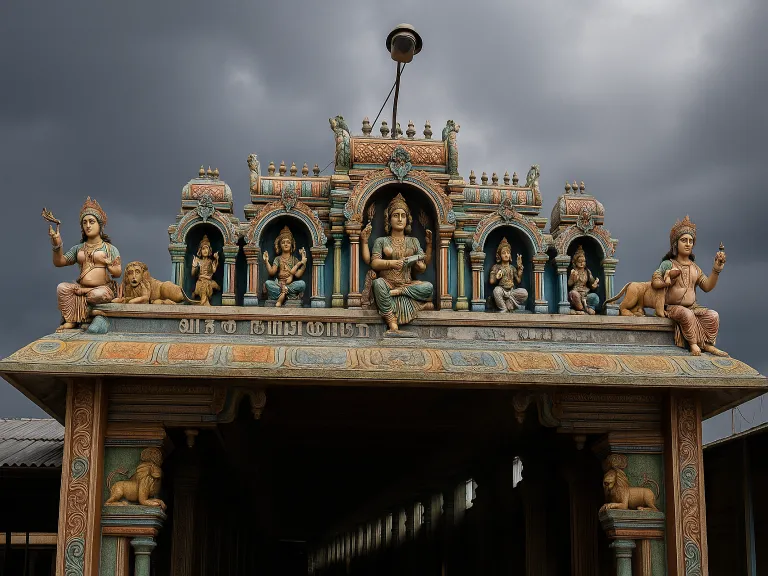
Samayapuram Mariamman Temple follows the functional layout of a Tamil Amman temple, with a sanctum for the presiding goddess, mandapas for worship and congregation, prakaram spaces for circumambulation, and gateway structures that organise the movement of devotees. The temple is built for large-scale public worship, and its spaces support steady queues, festival processions, and vow offerings. Its architectural identity is Dravidian in character, though the shrine is better known for devotional intensity than for a single monumental inscriptional phase.
The sanctum houses the main image of Mariamman, whose material composition makes the shrine ritually distinctive. The moolavar is not treated like a stone idol that receives regular abhishekam. Instead, the sacred image is preserved carefully, while ritual bathing is performed for the utsava image. This distinction influences the inner ritual arrangement and is one of the most important features of worship at the temple.
The temple complex includes mandapas and prakaram areas used during festivals such as Poochoriyal and the Chithirai chariot festival. The movement of the goddess in procession, the gathering of devotees with offerings, and the performance of special vows are all supported by the temple’s open and processional spaces. Like many major Tamil temples, Samayapuram has undergone maintenance, expansion, and administrative improvements over time to accommodate the growing number of pilgrims.
✨
Temple Highlights
✨
Renowned Shakti shrine
Samayapuram Mariamman Temple is among the most important Amman temples in Tamil Nadu and attracts devotees from across South India.
✨
Distinctive main image
The presiding image is not a conventional stone idol, and abhishekam is not performed to the moolavar. Ritual bathing is performed to the utsava image.
✨
Poochoriyal festival
The temple is famous for the flower-offering festival in which devotees offer large quantities of flowers to the goddess.
✨
Vow and thanksgiving worship
Offerings such as maavilakku, flowers, salt, pepper, and other devotional acts are associated with prayers and thanksgiving.
✨
Accessible pilgrimage location
The temple is located on the Tiruchirappalli-Chennai route and is easily reached from Tiruchirappalli city.
🙏
Spiritual Benefits
Prayer for protection from illness and fear
Prayer for family welfare and prosperity
Prayer for relief from difficulties and distress
Thanksgiving after fulfilment of vows
Prayer for rain, fertility, and agricultural wellbeing
Prayer for children and family harmony
Devotional purification through circumambulation and offerings
🎉
Major Festivals
🎉
Poochoriyal
A major flower-offering festival in which devotees offer large quantities of flowers to Mariamman. It is one of the most distinctive festivals of the temple.
🎉
Chithirai Festival
The annual Chithirai celebration includes special worship and festival events, including the temple car festival associated with the goddess.
🎉
Thai Poosam
Thai Poosam is observed with special worship for the goddess and draws devotees for prayer and offerings.
🎉
Navaratri
Navaratri is celebrated with Devi worship, decoration, and special devotional observances for the Mother Goddess.
🎉
Aadi Fridays
Fridays in the Tamil month of Aadi are important for Amman worship and attract large numbers of devotees to the temple.
🪔
Special Poojas
🪔
Maavilakku offering
Devotees offer maavilakku as a vow or thanksgiving prayer to Mariamman.
🪔
Archana
Archana is performed in the name of devotees as a personal form of worship to the goddess.
🪔
Abhishekam to utsava murti
Since abhishekam is not performed to the main image, ritual bathing is performed to the utsava image according to temple practice.
🪔
Flower offering
Flowers are offered to the goddess, especially during Poochoriyal and other auspicious worship occasions.
🪔
Pongal offering
Pongal is offered by devotees as part of prayer and thanksgiving to the goddess.
🚗
How to Reach
🛣️
By Road
Samayapuram is on the Tiruchirappalli-Chennai highway route and is well connected by buses, taxis, and private vehicles from Tiruchirappalli and nearby towns.
🚆
By Rail
The nearest major railway hub is Tiruchirappalli Junction. From there, devotees can travel by road to Samayapuram.
✈️
By Air
The nearest airport is Tiruchirappalli International Airport. Road transport is available from the airport to Samayapuram.
💡
Visitor Tips
Visit early in the day if you wish to avoid the heaviest crowds.
Expect large crowds on Fridays, Sundays, Aadi Fridays, and major festival days.
Carry only essential items while entering the temple premises.
Use official counters and temple-authorised services for offerings and darshan arrangements.
Wear modest clothing suitable for a crowded place of worship.
Check the current temple schedule before planning a festival-day visit.
Keep footwear only at designated places.
Follow queue arrangements and instructions issued by temple staff.

 WhatsApp Us