🛕About Temple
Marundeeswarar Temple at Tiruvanmiyur in Chennai is an ancient Shiva temple dedicated to Lord Marundeeswarar, a form of Shiva revered as the divine healer. The name comes from the Tamil word “marundu”, meaning medicine, and reflects the temple’s strong association with healing, medicinal knowledge, and prayers for relief from illness. The temple stands close to the coastal belt of south Chennai and remains one of the city’s most important historic Shaiva shrines.
The temple is counted among the 275 Paadal Petra Sthalams, the sacred Shiva temples praised in the Tevaram hymns of the Tamil Shaiva saints. Its presence in early medieval devotional literature shows that Tiruvanmiyur was already an established sacred place by the 7th century CE. The presiding deity is worshipped as Marundeeswarar, also known as Oushadheeswarar, while the goddess is Tripurasundari Amman.
Marundeeswarar Temple is valued both as a living place of worship and as a landmark of Chennai’s religious history. Devotees visit especially for health-related prayers, abhishekam, Pradosham worship, and major Shiva festivals. The shrine combines Tevaram sanctity, Chola-period heritage, local mythology connected with sage Agastya, and continuing daily ritual practice, making it a major spiritual destination in Tiruvanmiyur.
ℹ️Temple Information
🛕
Presiding Deity
Marundeeswarar
⭐
Temple Type
Shiva temple, Paadal Petra Sthalam, Ancient Tamil temple, Urban heritage temple
📅
Built Period
At least 7th century CE as a Tevaram shrine; substantial stone construction and inscriptions belong to the medieval Chola period, especially around the 11th century CE.
🏛
Dynasty
Pallava-period sacred landscape of Thondai Nadu; Chola-period architectural and inscriptional patronage; later additions under subsequent South Indian rulers.
Need Help Planning your visit to
Arulmigu Marundeeswarar Temple?
Our travel experts can help you with transportation,
darshan timings, nearby sightseeing and complete temple tour planning.
⭐Temple Significance
Marundeeswarar Temple is significant as a Paadal Petra Sthalam praised in the Tevaram hymns and as one of Chennai’s foremost ancient Shiva temples. It is especially revered for its association with Lord Shiva as the divine healer who granted medicinal knowledge to sage Agastya. Devotees worship here for health, relief from ailments, mental peace, and spiritual strength.
📜History
Marundeeswarar Temple is historically important because it is one of the Chennai-region Shiva temples praised in the Tevaram, the 7th-century Tamil devotional canon. The hymns of the Shaiva Nayanmars establish that the shrine existed as a sacred place during the early medieval period. Tiruvanmiyur is also linked with the name of sage Valmiki in local sacred geography, and the area’s older name is associated with that tradition.
The present temple shows the growth of a long-established shrine through successive periods of South Indian temple patronage. The site is connected with the Pallava period through its early sanctity in the Thondai region, while inscriptions and structural developments are associated with the Chola period. Chola rulers and local donors supported many Tevaram shrines by gifts of land, lamps, ritual provisions, and architectural additions, and Marundeeswarar Temple formed part of this wider sacred network.
Later additions and renovations continued under subsequent rulers and local religious institutions, including the Vijayanagara and Nayak periods that shaped many large temple complexes in Tamil Nadu. The temple has remained an active Shaiva place of worship into the modern period. Its historical value rests not on a single founding event, but on continuous worship documented through Tamil devotional tradition, inscriptions, architectural layers, and its enduring status as a Paadal Petra Sthalam in Chennai.
🕉️Mythology
The principal mythology of Marundeeswarar Temple is connected with Lord Shiva as the giver of medicine and healing wisdom. Temple tradition relates that sage Agastya worshipped Shiva at this sacred place and received knowledge of medicinal herbs and curative science. Because Shiva revealed the value of medicines here, the deity came to be worshipped as Marundeeswarar, the Lord of Medicine, and Oushadheeswarar, the Lord associated with healing remedies.
Another important local tradition connects the shrine with Kamadhenu, the divine cow. Kamadhenu is described as having worshipped the Shiva lingam with milk. Some temple accounts associate markings on the lingam with this act of devotion. These stories strengthen the temple’s identity as a place where natural abundance, healing, and divine grace meet. Devotees continue to pray here for recovery from disease, physical well-being, and mental strength.
Tiruvanmiyur also carries sacred associations with sage Valmiki. Local tradition links the place-name Tiruvanmiyur with Valmiki, who is revered in the broader temple lore of the area. These mythological strands are distinct from the temple’s documented history, but they are central to the way devotees understand the shrine. Together, the Agastya, Kamadhenu, and Valmiki traditions give Marundeeswarar Temple its devotional character as a place of wisdom, healing, and ancient sanctity.
🏛Architecture
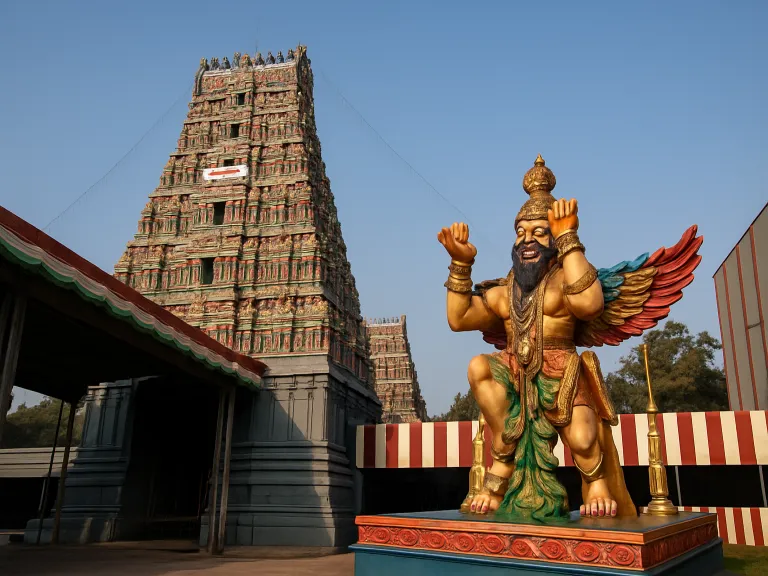
Marundeeswarar Temple follows the broad layout of a Tamil Shaiva temple complex, with gopurams, enclosed prakarams, shrines, mandapams, and ritual spaces arranged around the sanctum of Lord Marundeeswarar. The main shrine houses the Shiva lingam, and the goddess Tripurasundari Amman has a separate sanctum within the temple precinct. The complex reflects the architectural growth of a living temple that expanded across different historical periods.
A notable feature of the temple is its spacious enclosure and the presence of monumental entrance towers that mark its major approaches. The temple’s mandapams support daily worship, festival processions, and gatherings of devotees. As in many old Shaiva temples of Tamil Nadu, the subsidiary shrines include forms of Shiva, Ganesha, Murugan, Chandikeswara, and other deities connected with the Shaiva ritual order. The temple also preserves the sacred atmosphere of a Paadal Petra Sthalam through its liturgical and processional spaces.
The architectural character is not limited to one dynasty or one construction phase. The shrine’s early devotional importance belongs to the Tevaram period, while stone construction, inscriptions, and later mandapam and gateway additions reflect Chola and later South Indian temple-building traditions. The result is a layered complex where worship, mythology, and historical architecture coexist. Its location inside modern Chennai makes the temple especially significant as an ancient sacred monument within an urban setting.
🌳
Sacred Features
🌳 Temple Tree
Vanni tree
The Vanni tree is associated with the sacred lore of the temple and the shrine’s connection with medicinal knowledge and worship of Lord Marundeeswarar.
✨
Temple Highlights
✨
Paadal Petra Sthalam
The temple is one of the sacred Shiva shrines praised in the Tevaram hymns of the Tamil Shaiva saints, giving it high devotional importance in the Shaiva tradition.
✨
Lord of Medicine
The presiding deity Marundeeswarar is revered as Shiva in the form of the divine healer, associated with medicine, recovery, and the curing power of grace.
✨
Agastya Association
Temple mythology connects the shrine with sage Agastya, who is believed in local tradition to have received knowledge of medicinal herbs from Shiva here.
✨
Tripurasundari Amman Shrine
The goddess of the temple is Tripurasundari Amman, worshipped in a separate sanctum within the temple complex.
✨
Ancient Chennai Shrine
The temple is among the most important ancient temples within modern Chennai and remains a major landmark of Tiruvanmiyur.
✨
Chola-Period Heritage
The temple’s present form includes medieval structural and inscriptional layers connected with Chola-period patronage and later renovations.
🙏
Spiritual Benefits
Prayers for relief from illness and physical suffering
Seeking the grace of Lord Shiva as Marundeeswarar, the divine healer
Mental peace and emotional strength through Shiva worship
Spiritual purification through worship at a Tevaram Paadal Petra Sthalam
Blessings for general health and family well-being
Devotional connection with the Tamil Shaiva Nayanmar tradition
Inner strength through Pradosham and Shiva abhishekam worship
🎉
Major Festivals
🎉
Maha Shivaratri
The most important annual Shiva festival, marked by special worship, abhishekam, and extended devotion to Lord Marundeeswarar.
🎉
Pradosham
Observed twice every lunar month, Pradosham is a significant time for Shiva worship and draws devotees for special pujas.
🎉
Panguni Brahmotsavam
The annual Brahmotsavam of the temple is celebrated in the Tamil month of Panguni with processional worship and festival rituals.
🎉
Arudra Darshan
A major Shaiva festival connected with Lord Nataraja, observed in the Tamil month of Margazhi.
🎉
Annabhishekam
A sacred abhishekam to Lord Shiva performed during the Tamil month of Aippasi in many Shaiva temples, including important Shiva shrines such as Marundeeswarar Temple.
🎉
Navaratri
The nine-night festival includes special worship of the goddess Tripurasundari Amman.
🪔
Special Poojas
🪔
Pradosha Puja
Special worship to Lord Shiva performed during Pradosham, considered highly auspicious for devotees of Marundeeswarar.
🪔
Abhishekam to Marundeeswarar
Ritual bathing of the Shiva lingam with sacred substances as part of regular and special worship.
🪔
Maha Shivaratri Pujas
Night-long worship and special rituals dedicated to Lord Shiva on Maha Shivaratri.
🪔
Annabhishekam
A special offering in which the Shiva lingam is covered with cooked rice during the Aippasi observance.
🪔
Special Worship to Tripurasundari Amman
Devotees offer prayers to the goddess Tripurasundari Amman for auspiciousness, protection, and family well-being.
🚗
How to Reach
🛣️
By Road
The temple is in Tiruvanmiyur, Chennai, and is accessible by city buses, taxis, auto-rickshaws, and private vehicles from Adyar, Besant Nagar, Mylapore, Velachery, and other parts of Chennai.
🚆
By Rail
Tiruvanmiyur MRTS railway station is the nearest suburban rail access point. From the station, the temple can be reached by local transport.
✈️
By Air
The nearest airport is Chennai International Airport. From the airport, the temple can be reached by taxi or other city transport through the south Chennai road network.
💡
Visitor Tips
Check the current temple timings before visiting, especially on festival days.
Visit early in the morning or in the evening for a calmer darshan experience.
Expect larger crowds on Pradosham, Maha Shivaratri, and important festival days.
Use public transport such as MRTS, city buses, or taxis because the temple is in a busy urban area.
Wear modest clothing appropriate for a place of worship.
Leave footwear only in the designated area before entering the inner temple premises.
Confirm photography rules with temple authorities before taking pictures.
Plan extra time if visiting nearby Besant Nagar, Mylapore, or other Chennai temples on the same day.

 WhatsApp Us