🛕About Temple
Mayuranathaswami Temple at Mayiladuthurai in Tamil Nadu is a major Shiva temple of the Kaveri delta and one of the celebrated Tevaram Paadal Petra Sthalams. The presiding deity is Mayuranathar, a form of Shiva worshipped as a lingam, and the goddess is Abhayambikai, revered as the compassionate mother who grants fearlessness. The temple stands within the historic town of Mayiladuthurai, a place long associated with Saiva worship, river pilgrimage, and Tamil devotional literature.
The name Mayuranathar is connected with the Tamil word mayil, meaning peacock. The temple and the town preserve a strong sacred association with Parvati worshipping Shiva in the form of a peacock. Mayiladuthurai also became an important pilgrimage centre because of its connection with the Kaveri River, especially during the Tamil month of Aipasi, when devotees perform sacred bathing rites known as Thula Snanam.
The temple continues to function as an active place of worship with daily rituals for Shiva and Abhayambikai. Its importance lies not only in its antiquity but also in its place within Tamil Saiva tradition. Devotees visit for darshan of Mayuranathar, worship at the shrine of Abhayambikai, and participation in festivals linked with Shiva worship and the sacred Kaveri.
ℹ️Temple Information
🛕
Presiding Deity
Mayuranathaswami
⭐
Temple Type
Shiva temple, Paadal Petra Sthalam, Dravidian temple, Kaveri delta temple
📅
Built Period
The shrine is documented by the Tevaram tradition from at least the 7th century CE; major structural development belongs to the Chola period, broadly 10th-12th centuries CE.
🏛
Dynasty
Chola, with later contributions and renovations under subsequent South Indian ruling periods.
Need Help Planning your visit to
Mayuranathaswami Temple?
Our travel experts can help you with transportation,
darshan timings, nearby sightseeing and complete temple tour planning.
⭐Temple Significance
Mayuranathaswami Temple is significant as a Tevaram Paadal Petra Sthalam, a major Shiva shrine of the Kaveri delta, and the central sacred temple of Mayiladuthurai. It is closely associated with the mythology of Parvati worshipping Shiva in the form of a peacock and with the Kaveri Thula Snanam observance during the Tamil month of Aipasi.
📜History
Mayuranathaswami Temple is historically important because it is included in the Tevaram corpus, the early medieval Tamil Saiva hymns that identify the principal Shiva shrines of the Tamil region. This establishes the temple as a sacred site known by at least the 7th century CE, the period of the Nayanmar saints. Its inclusion among the Paadal Petra Sthalams marks it as one of the canonical temples of Tamil Shaivism.
The standing temple complex reflects the long architectural and religious history of the Kaveri delta. The region came under strong Chola influence, and many important Shiva temples were rebuilt or expanded in stone during the Chola period. Mayuranathaswami Temple is generally associated with this Chola temple-building tradition, while later periods also contributed to the maintenance, renovation, and expansion of the complex. The temple’s layered form is the result of continuous patronage rather than a single founding event.
Historically, Mayiladuthurai was known as Mayuram and functioned as a prominent religious town on the Kaveri. The temple’s reputation was strengthened by its connection with Tevaram worship, Kaveri pilgrimage, and local festivals. While mythology explains the sacred name of the deity and town, the historical record places the temple within the early medieval Saiva devotional movement and the wider temple culture of the Chola country.
🕉️Mythology
The principal mythology of Mayuranathaswami Temple explains the name of the deity and the town. In local Saiva tradition, Goddess Parvati assumed the form of a peacock and worshipped Shiva at this sacred place. The Tamil word mayil means peacock, and Shiva worshipped by the peacock came to be known as Mayuranathar. The place became Mayiladuthurai, understood as the sacred ford or place associated with the peacock.
The legend is also linked with the theme of divine reconciliation. Parvati’s worship in peacock form represents devotion, humility, and reunion with Shiva. Because the goddess is worshipped here as Abhayambikai, the mother who grants fearlessness, devotees connect the temple with protection, grace, and the removal of anxiety. This mythology is central to the religious identity of the temple and is reflected in the names of the deity and goddess.
Mayiladuthurai is also sacred because of its association with the Kaveri River. During the month of Aipasi, the Kaveri is ritually revered, and the Thula Snanam observance attracts devotees to the town. The sacred bathing tradition belongs to the larger religious landscape of Mayiladuthurai, while worship at Mayuranathaswami Temple forms an important part of the pilgrimage. These mythological and ritual associations continue to shape the temple’s devotional life.
🏛Architecture
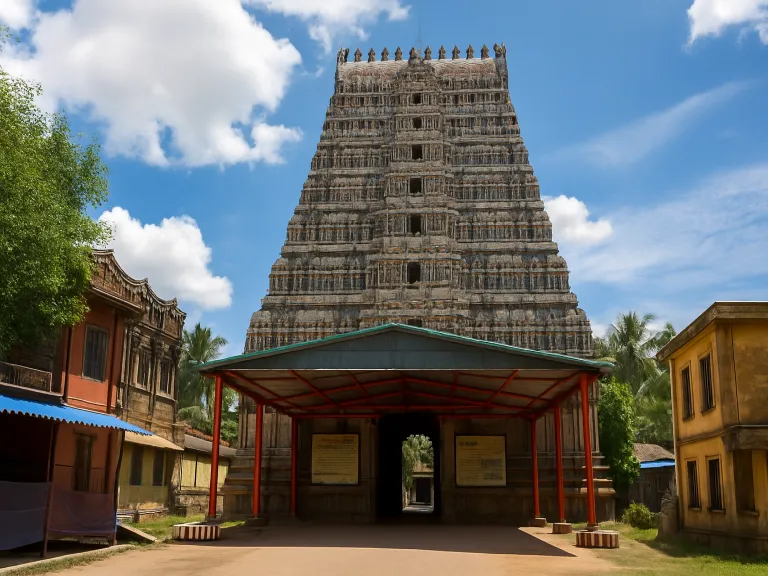
Mayuranathaswami Temple follows the Dravidian temple architectural tradition of Tamil Nadu. The complex is organized around the sanctum of Mayuranathar, where Shiva is worshipped in the form of a lingam. The temple includes entrance towers, circumambulatory corridors, mandapas, subsidiary shrines, and a separate shrine for Goddess Abhayambikai. The layout supports both individual darshan and processional worship during festivals.
The temple’s architecture reflects gradual development across different periods of South Indian temple history. The core sacred space preserves the axial arrangement typical of Shiva temples, with the sanctum, ardha mandapa, and larger halls aligned for ritual movement. The gopurams and stucco work display the visual language of Tamil temple architecture, while the stone portions of the complex show the durability and craftsmanship associated with the Chola country’s sacred sites.
Sculptural and ritual features are integral to the temple’s character. Images of Shiva, Parvati, Ganesha, Murugan, Nandi, and other deities appear within the sacred enclosure, creating a complete Saiva worship environment. The presence of a distinct shrine for Abhayambikai is especially important, as goddess worship is central to the temple’s identity. The architecture is best understood as a living sacred complex shaped by liturgy, processions, and centuries of devotion.
✨
Temple Highlights
✨
Tevaram Paadal Petra Sthalam
The temple is one of the canonical Shiva shrines praised in the Tamil Tevaram tradition, giving it an important place in Saiva devotional history.
✨
Mayuranathar as the presiding deity
Shiva is worshipped here as Mayuranathar, the Lord associated with the peacock mythology of Mayiladuthurai.
✨
Abhayambikai shrine
The goddess is worshipped as Abhayambikai, a form of Parvati revered by devotees as the giver of fearlessness and protection.
✨
Sacred Kaveri association
Mayiladuthurai is a major centre for Kaveri-related pilgrimage, especially during the Aipasi Thula Snanam season.
✨
Dravidian temple complex
The temple contains gopurams, mandapas, prakaras, subsidiary shrines, and a traditional Saiva ritual layout.
✨
Kaveri delta pilgrimage location
The temple is located in a region rich in ancient Shiva and Vishnu temples, making it an important stop for heritage and devotional travel.
🙏
Spiritual Benefits
Devotees seek the grace of Mayuranathar for spiritual clarity and devotion.
Worship of Abhayambikai is associated with relief from fear and anxiety.
Pilgrims pray for family welfare and protection.
Devotees seek blessings for harmony between husband and wife.
The temple is visited for Saiva worship connected with the Tevaram tradition.
Aipasi Kaveri worship is valued for purification and renewal.
Pradosha worship is considered spiritually significant by Shiva devotees.
🎉
Major Festivals
🎉
Aipasi Thula Snanam
A major Kaveri-related observance in Mayiladuthurai during the Tamil month of Aipasi. Devotees bathe in the Kaveri and worship at the town’s temples, including Mayuranathaswami Temple.
🎉
Maha Shivaratri
A principal Shiva festival observed with special worship, night-long devotion, and darshan of Mayuranathar.
🎉
Arudra Darshan
A major Shaiva festival associated with Shiva as Nataraja, observed in Tamil temples during the month of Margazhi.
🎉
Pradosham
A regular sacred observance for Shiva worship, performed on the thirteenth lunar day of each fortnight.
🎉
Navaratri
A festival period of goddess worship during which devotees offer special prayers to Abhayambikai.
🪔
Special Poojas
🪔
Abhishekam to Mayuranathar
Ritual bathing and worship of the Shiva lingam, performed as part of the temple’s Saiva worship tradition.
🪔
Pradosha Pooja
Special worship of Shiva during Pradosham, an important observance for devotees of Shiva.
🪔
Abhayambikai Pooja
Worship offered to Goddess Abhayambikai, especially by devotees seeking protection, grace, and relief from fear.
🪔
Maha Shivaratri Worship
Special worship associated with the annual Maha Shivaratri festival for Mayuranathar.
🚗
How to Reach
🛣️
By Road
Mayiladuthurai is well connected by road with Kumbakonam, Sirkazhi, Chidambaram, Thanjavur, and other towns of the Kaveri delta. Local buses, taxis, and autos are available within the town.
🚆
By Rail
Mayiladuthurai Junction is the nearest major railway station and has rail connections to Chennai, Tiruchirappalli, Thanjavur, Kumbakonam, and other destinations.
✈️
By Air
The nearest major airport is Tiruchirappalli International Airport. From there, Mayiladuthurai can be reached by road or rail.
💡
Visitor Tips
Check current opening hours with the temple before travelling, as timings can change on festival days.
Expect larger crowds during Aipasi Thula Snanam, Maha Shivaratri, and other major Shiva festivals.
Dress modestly and follow the directions of temple staff inside the shrine areas.
Photography rules may vary by area, so ask temple authorities before taking pictures.
Mayiladuthurai Junction is the most convenient railway access point for the temple.
Plan extra time if combining the visit with nearby Kaveri delta temples.
Footwear must be left outside the temple premises before entering the sacred areas.

 WhatsApp Us