🛕About Temple
Mundakakanni Amman Temple is a well-known Amman shrine in Mylapore, Chennai, dedicated to Sri Mundakakanni Amman, a form of the Divine Mother worshipped for protection, healing and maternal grace. The temple is located in one of Chennai’s oldest sacred neighbourhoods, close to the Mylapore temple circuit and the Mundakakanni Amman Koil MRTS railway station, which carries the name of the shrine.
The temple is strongly associated with local goddess worship in Tamil Nadu. Devotees approach Mundakakanni Amman as a powerful guardian deity who protects families, removes fear, and grants strength during illness and distress. The name is commonly understood in local usage as referring to the lotus-eyed goddess, combining the idea of a lotus with the compassionate gaze of Amman. The shrine attracts residents of Mylapore as well as visitors from other parts of Chennai, especially during the Tamil month of Aadi and during Navaratri.
Unlike large royal temples whose histories are preserved through dated inscriptions, Mundakakanni Amman Temple is known mainly through living worship, local memory and temple tradition. Its importance lies in continuous public devotion rather than in a documented dynastic foundation. The temple represents the enduring place of Amman worship within Chennai’s urban religious life, standing close to major Shiva and Vaishnava temples while retaining its own identity as a neighbourhood Shakti shrine.
ℹ️Temple Information
🛕
Presiding Deity
Sri Mundakakanni Amman
👸
Goddess
Sri Mundakakanni Amman
⭐
Temple Type
Amman temple, Shakti temple, Hindu temple, Urban neighbourhood temple
Need Help Planning your visit to
Arulmigu Mundakakanni Amman Temple?
Our travel experts can help you with transportation,
darshan timings, nearby sightseeing and complete temple tour planning.
⭐Temple Significance
Mundakakanni Amman Temple is significant as a prominent Shakti shrine in Mylapore and as a landmark of Chennai’s living Amman worship tradition. It is especially valued by devotees who seek the protective and healing grace of the Mother Goddess. The naming of the nearby MRTS station after the temple also reflects its importance in the local geography of Mylapore.
📜History
The recorded political history of Mundakakanni Amman Temple is limited, and no widely cited foundation inscription identifies a specific builder, dynasty or exact date of construction. Local temple accounts commonly describe the shrine as ancient, and the temple is often presented in Chennai devotional literature as a long-standing place of Amman worship in Mylapore. For this reason, the temple’s historical profile is best understood through its continuity of worship rather than through royal records.
Mylapore itself is one of Chennai’s oldest sacred settlements, known for its dense concentration of temples, mutts, tanks and religious streets. Within this setting, Mundakakanni Amman Temple developed as a popular local shrine dedicated to the Mother Goddess. Its identity belongs to the Tamil Amman tradition, in which the goddess is worshipped as a protector of the locality and as a source of relief from disease, hardship and fear. The survival of such shrines within the modern city shows how older forms of village and neighbourhood goddess worship were absorbed into Chennai’s expanding urban landscape.
In recent times, the temple has become even more visible because the nearby Chennai MRTS station is named Mundakakanni Amman Koil. This confirms the shrine’s status as an important landmark in Mylapore. While the temple does not have a fully documented dynastic chronology, its continuing festivals, daily worship and strong local patronage make it an important part of the religious heritage of Mylapore.
🕉️Mythology
Local tradition describes Mundakakanni Amman as a powerful manifestation of the Divine Mother who chose to reside in Mylapore for the welfare of devotees. The name Mundakakanni is explained in devotional usage as the lotus-eyed Mother, a goddess whose compassionate glance removes suffering. In this mythic understanding, the eye of the goddess is not merely physical beauty but divine awareness that watches over the devotee and the neighbourhood.
The temple’s traditions are connected with the wider Tamil understanding of Amman as both mother and guardian. Devotees worship her as one who protects children, safeguards households, removes fear, and grants courage during illness or personal crisis. Such beliefs are part of the living mythology of many ancient Amman shrines, where the goddess is approached directly, with offerings of flowers, turmeric, kumkum and lamps. At Mundakakanni Amman Temple, this motherly and protective aspect forms the centre of devotion.
The mythology of the shrine is therefore not a single epic narrative preserved in a pan-Indian text, but a local sacred memory expressed through ritual. The goddess is honoured as a self-powering presence of Shakti in Mylapore. During Aadi and Navaratri, devotees experience this mythology through worship, vows, offerings and collective celebration. These traditions keep the temple’s sacred story alive without depending on a dated royal legend or a single written source.
🏛Architecture
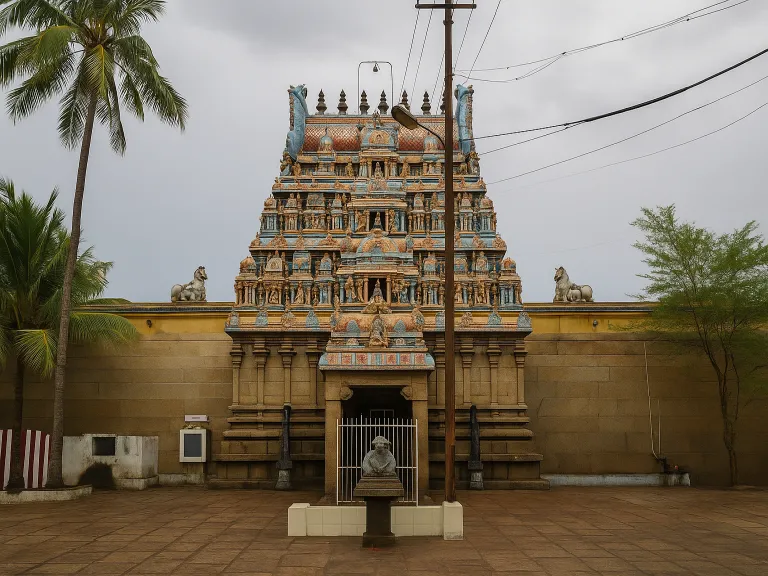
Mundakakanni Amman Temple is architecturally different from the large stone temples of Mylapore that are known for extensive inscriptions, towering gopurams and elaborate royal patronage. Its character is that of an intimate urban Amman shrine, where the sanctum, the goddess image and the ritual space are more important than monumental scale. The temple’s layout serves daily worship and festival gathering within the dense residential fabric of Mylapore.
A distinctive feature associated with the temple is its simple sacred setting for the presiding goddess, reflecting the Tamil Amman tradition in which the deity’s immediate presence is central. The shrine does not depend on a historically dated architectural programme. Instead, its visual identity is formed by the sanctum of Mundakakanni Amman, devotional lamps, flower garlands, kumkum, turmeric and the regular movement of devotees. The architecture supports direct darshan and close devotional contact, which is typical of many local goddess temples.
The temple should be understood as a living religious structure rather than as a museum of dynastic architecture. Additions, repairs and urban adaptations are part of its modern history, as with many neighbourhood shrines in Chennai. Its architectural value lies in preserving the atmosphere of an old Amman temple within a busy metropolitan area. The modest scale, active ritual use and close relationship with the surrounding streets make it an important example of Chennai’s continuing sacred urban landscape.
✨
Temple Highlights
✨
Prominent Mylapore Amman Shrine
The temple is one of the well-known goddess shrines in Mylapore, dedicated to Sri Mundakakanni Amman.
✨
Association with Local Shakti Worship
The temple preserves the Tamil tradition of worshipping Amman as a protective mother and guardian of the locality.
✨
MRTS Landmark
The nearby Mundakakanni Amman Koil MRTS station is named after the temple, making it an easily identifiable landmark in Chennai.
✨
Aadi Devotion
The Tamil month of Aadi is an important period for Amman worship, drawing many devotees for special prayers and offerings.
✨
Close to Mylapore Temple Circuit
The temple is situated near other important sacred sites of Mylapore, including Kapaleeswarar Temple and Madhava Perumal Temple.
🙏
Spiritual Benefits
Devotees seek the protective grace of Amman for family welfare.
Devotees pray for relief from fear, anxiety and distress.
Devotees worship the goddess for health and recovery from illness.
Devotees seek blessings for children and household prosperity.
Devotees pray for strength during difficult personal situations.
Devotees offer worship for removal of obstacles in daily life.
Devotees seek the motherly compassion of Shakti through kumkum and lamp offerings.
🎉
Major Festivals
🎉
Aadi Month Worship
The Tamil month of Aadi is one of the most important devotional periods for Amman temples. Devotees visit Mundakakanni Amman Temple for special prayers, offerings and vows during this month.
🎉
Aadi Fridays
Fridays in the month of Aadi are especially important for goddess worship, and the temple receives many devotees seeking the blessings of Amman.
🎉
Navaratri
Navaratri is celebrated in honour of the Divine Mother. Devotees worship Mundakakanni Amman with lamps, flowers, kumkum and special prayers during the festival period.
🪔
Special Poojas
🪔
Kumkum Archana
Devotees offer kumkum archana to Mundakakanni Amman as an expression of devotion to the Mother Goddess.
🪔
Abhishekam
Abhishekam is performed as part of goddess worship, using sacred offerings according to temple practice.
🪔
Lamp Offering
Lighting lamps before Amman is a common devotional act seeking protection, clarity and grace.
🚗
How to Reach
🛣️
By Road
The temple is located in Mylapore, Chennai, and can be reached by city buses, taxis, autorickshaws and private vehicles through the Mylapore road network.
🚆
By Rail
The nearest rail access is Mundakakanni Amman Koil MRTS station, which is close to the temple. Chennai local train and metro connections can be used with onward road travel where needed.
✈️
By Air
The nearest airport is Chennai International Airport. From the airport, visitors can reach Mylapore by taxi, app-based cab, suburban rail connections or metro with onward local transport.
💡
Visitor Tips
Confirm the current opening hours with the temple before visiting, as timings may change on festival days.
Visit during ordinary weekdays if you prefer a quieter darshan experience.
Expect larger crowds during Aadi Fridays and Navaratri.
Wear modest clothing appropriate for a Hindu place of worship.
The temple is easy to access by the Chennai MRTS through Mundakakanni Amman Koil station.
Carry flowers, turmeric or kumkum only if you intend to make offerings permitted by the temple.
Respect local worship practices and avoid disturbing devotees during rituals.

 WhatsApp Us