🛕About Temple
Naganathaswamy Temple at Keezhaperumpallam is a Shaiva temple in Mayiladuthurai district of Tamil Nadu, close to the historic coastal region of Poompuhar. The presiding deity is Lord Shiva worshipped as Naganathaswamy, and the goddess is Soundaranayaki. The temple is best known as the Ketu sthalam among the well-known Navagraha temples of the Cauvery delta, drawing devotees who worship Ketu Bhagavan along with Shiva.
Keezhaperumpallam forms part of the traditional Navagraha pilgrimage circuit that links nine temples associated with the planetary deities in and around Kumbakonam, Mayiladuthurai, Sirkazhi and Karaikal. Unlike a temple dedicated only to a planet, the main sanctum here is for Shiva, while Ketu is worshipped in a separate shrine within the temple complex. This reflects the common South Indian temple pattern in which planetary worship is placed within a Shaiva sacred framework.
The temple’s religious identity is rooted in the connection between Shiva, serpent worship and the mythology of Ketu. Devotees visit the temple for darshan of Naganathaswamy, Soundaranayaki and Ketu Bhagavan, especially for prayers connected with Ketu dosha and other astrological concerns. The temple remains an important stop for pilgrims visiting Thiruvenkadu, Poompuhar, Vaitheeswaran Koil and other ancient sacred places of the lower Cauvery region.
ℹ️Temple Information
🛕
Presiding Deity
Naganathaswamy
⭐
Temple Type
Shiva Temple, Navagraha Temple
📅
Built Period
Medieval Chola period, commonly placed around the 9th century CE
Need Help Planning your visit to
Sri Naganathaswamy Temple?
Our travel experts can help you with transportation,
darshan timings, nearby sightseeing and complete temple tour planning.
⭐Temple Significance
Naganathaswamy Temple is significant as the Ketu sthalam of the Tamil Nadu Navagraha temple circuit. It is a Shiva temple where Ketu Bhagavan is worshipped as the planetary deity associated with karmic transformation, detachment, serpent symbolism and spiritual insight. The temple is especially visited by devotees performing Ketu-related parihara worship.
📜History
Naganathaswamy Temple is generally associated with the medieval Chola period, when many stone temples and sacred sites in the Cauvery delta received royal and local patronage. Keezhaperumpallam lies in a region that was historically part of the Chola heartland, where Shaiva temple worship, agrarian settlements and pilgrimage networks developed strongly from the early medieval period onward. The temple’s placement in this cultural landscape links it to the long history of Chola-period religious activity in the lower Cauvery basin.
The exact individual founder of the temple is not securely documented in widely available historical sources. However, the temple is commonly described as an ancient Chola-period shrine, and its continued importance comes from both its Shaiva identity and its role as the Ketu temple in the Navagraha circuit. The Navagraha association became especially prominent in later pilgrimage practice, as devotees began visiting the nine planetary temples as a combined circuit.
Historically, Keezhaperumpallam’s significance is also tied to nearby sacred and cultural centres such as Poompuhar, Thiruvenkadu, Sirkazhi and Mayiladuthurai. These places preserve layers of Tamil religious memory, including Shaiva worship, temple festivals and pilgrimage routes. Naganathaswamy Temple continues this regional pattern as a living temple where the main worship is directed to Shiva, while the Ketu shrine gives the temple its distinctive place in Tamil Nadu’s Navagraha tradition.
🕉️Mythology
The mythology of Keezhaperumpallam is centred on Ketu and serpent worship. In Hindu mythology, Rahu and Ketu originate from the story of the churning of the ocean of milk. The asura Svarbhanu obtained amrita by sitting among the devas, but Vishnu, in the form of Mohini, cut him into two. The head became Rahu and the body became Ketu. Ketu is therefore represented in astrological and temple traditions as a shadow planet connected with karmic effects, detachment, spiritual insight and sudden change.
Local temple tradition connects Ketu with worship of Lord Shiva at Keezhaperumpallam. Ketu is understood to have worshipped Shiva here to receive grace and relief from the effects of his condition after the mythic episode of the amrita. Because Shiva is worshipped as Naganathaswamy, the Lord of serpents, the temple’s mythology also links the shrine with naga worship and the sacred symbolism of serpents in Shaiva tradition.
Another strand of the temple’s mythology relates to serpents seeking refuge and worshipping Shiva. This association explains the name Naganathaswamy and reinforces the temple’s place as a sacred site for prayers connected with Ketu, naga dosha and ancestral or karmic afflictions as understood in devotional practice. These narratives belong to the temple’s sacred tradition rather than political history, and they continue to shape the worship performed by devotees today.
🏛Architecture
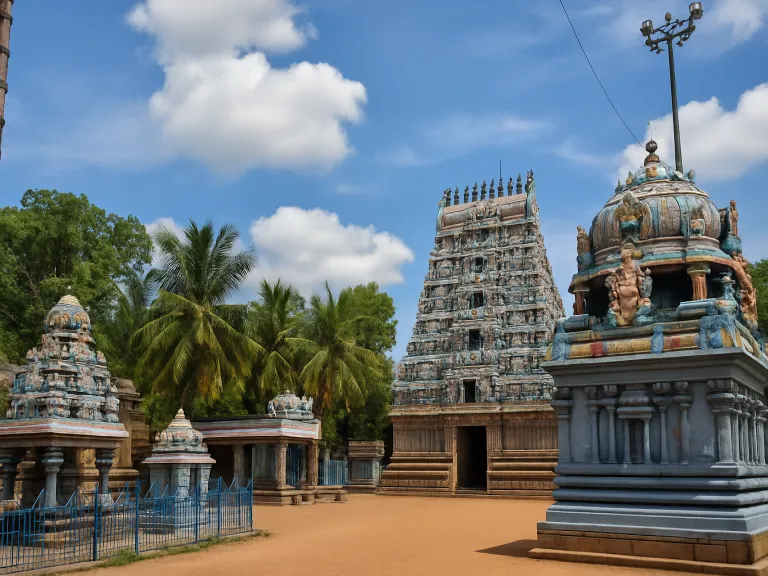
Naganathaswamy Temple follows the broad Dravidian temple pattern found in many Shaiva shrines of the Cauvery delta. The complex is organised around the sanctum of Lord Shiva as Naganathaswamy, with a shrine for Goddess Soundaranayaki and a separate shrine for Ketu Bhagavan. The temple’s built form is modest when compared with the large Chola imperial temples, but it preserves the essential layout of a South Indian Shiva temple with sanctum, worship halls, subsidiary shrines and an enclosed sacred precinct.
The main deity is worshipped in the form of a Shiva lingam. The Ketu shrine is the feature that gives the temple its wider pilgrimage identity, and the icon of Ketu is approached by devotees after worshipping the presiding Shiva and goddess. As in many Tamil Shaiva temples, the architectural experience is closely tied to the ritual sequence: entry into the temple, darshan of the main deity, worship of the goddess, and prayers at the planetary shrine.
The architecture expresses the temple’s devotional purpose rather than monumental scale. Stone elements, stucco work, mandapas and shrines combine in the regional temple style of the Tamil country. The temple’s value lies in its continuity as a living sacred site, its integration of Shaiva worship with Navagraha devotion, and its location within the ancient religious landscape of the lower Cauvery region.
✨
Temple Highlights
✨
Ketu Sthalam of the Navagraha Circuit
The temple is widely known as the sacred place associated with Ketu Bhagavan among the nine Navagraha temples of Tamil Nadu.
✨
Presiding Deity Naganathaswamy
Lord Shiva is worshipped here as Naganathaswamy, a name connected with serpent symbolism and the temple’s Ketu association.
✨
Goddess Soundaranayaki Shrine
The consort of Naganathaswamy is worshipped as Soundaranayaki, forming the main Shaiva worship pair of the temple.
✨
Separate Ketu Shrine
Devotees offer prayers at the Ketu shrine after worshipping Shiva and the goddess, especially for Ketu-related parihara worship.
✨
Cauvery Delta Pilgrimage Location
The temple is close to Poompuhar, Thiruvenkadu, Sirkazhi and other important religious sites of the lower Cauvery region.
🙏
Spiritual Benefits
Devotees pray for relief from Ketu dosha as understood in Hindu astrology.
Devotees seek blessings for removal of obstacles caused by adverse planetary influences.
Worshippers pray for protection from fears and uncertainties associated with Ketu.
Devotees seek spiritual clarity, detachment and inner discipline.
Prayers are offered for relief from naga dosha and serpent-related astrological afflictions.
Families pray for peace, harmony and removal of karmic difficulties.
Devotees worship Naganathaswamy for the grace of Lord Shiva along with Ketu parihara benefits.
🎉
Major Festivals
🎉
Maha Shivaratri
A major festival for Lord Shiva, observed with special worship and extended devotional activity at Shaiva temples.
🎉
Pradosham
A regular and important Shaiva observance dedicated to Lord Shiva, attracting devotees for evening worship.
🎉
Ketu Peyarchi
The transit of Ketu is a significant occasion for devotees seeking Ketu-related parihara worship at Keezhaperumpallam.
🎉
Karthigai Deepam
A widely observed Tamil Shaiva festival marked by lamps and worship of Lord Shiva.
🪔
Special Poojas
🪔
Ketu Parihara Pooja
Devotees perform worship to Ketu Bhagavan for relief from Ketu dosha and related astrological concerns.
🪔
Ketu Abhishekam
Abhishekam and archana are offered to Ketu Bhagavan as part of parihara worship at the temple.
🪔
Pradosha Pooja
Special worship is offered to Lord Shiva during Pradosham, an important observance in Shaiva temples.
🪔
Maha Shivaratri Worship
Special worship to Naganathaswamy is performed on Maha Shivaratri, the principal night dedicated to Lord Shiva.
🚗
How to Reach
🛣️
By Road
Keezhaperumpallam is accessible by road from Mayiladuthurai, Sirkazhi, Poompuhar and Thiruvenkadu. Buses, taxis and private vehicles are commonly used by pilgrims visiting the Navagraha circuit.
🚆
By Rail
The nearest practical railway access points are Sirkazhi Railway Station and Mayiladuthurai Junction, from where the temple can be reached by road.
✈️
By Air
The nearest major airport commonly used for this region is Tiruchirappalli International Airport. Travellers can continue by road or rail via Mayiladuthurai or Sirkazhi.
💡
Visitor Tips
Confirm current temple timings locally before planning darshan, as hours can change on festival and special pooja days.
Visit the main shrine of Naganathaswamy and the goddess shrine before offering prayers at the Ketu shrine.
Plan the trip together with nearby Navagraha temples such as Thiruvenkadu and Vaitheeswaran Koil if following the full circuit.
Wear modest clothing and follow normal temple etiquette inside the premises.
Festival days and Ketu Peyarchi can attract larger crowds, so allow extra time for darshan.
Carry small cash for archana tickets, offerings or local transport where digital payment may not be available.
Use Mayiladuthurai, Sirkazhi or Poompuhar as practical access points for road travel.

 WhatsApp Us