🛕About Temple
Natrunaiyappar Temple at Ponsei, also written as Punsei or Punjai, is a Saiva temple in the Cauvery delta region of present-day Mayiladuthurai district, Tamil Nadu. The temple is dedicated to Shiva, worshipped in the form of a lingam as Natrunaiyappar. The goddess is worshipped as Malayan Madanthai, a name connected with Parvati as the daughter of the mountain. The place is also identified with the ancient sacred name Tirunanipalli.
The temple is important because it is counted among the Tevaram Paadal Petra Sthalams, the Shiva temples praised in the canonical hymns of the Tamil Saiva saints. Its association with Tirugnana Sambandar gives it a firm place in the religious geography of early medieval Tamil Saivism. The shrine belongs to the group of Cauvery-region temples where Tamil devotional literature, temple worship, and village settlement history are closely linked.
Natrunaiyappar means the Lord who is the good companion or true support, a devotional name that expresses Shiva as a protecting presence for devotees. Ponsei remains a relatively quiet temple site when compared with larger pilgrimage centres nearby, but its importance is literary and sacred rather than monumental alone. For visitors interested in the Tevaram tradition, the temple represents an old sacred landscape preserved through hymn, worship, and local memory.
ℹ️Temple Information
🛕
Presiding Deity
Natrunaiyappar
👸
Goddess
Malayan Madanthai
⭐
Temple Type
Shiva temple, Paadal Petra Sthalam, Tevaram shrine, Dravidian temple
📅
Built Period
At least 7th century CE as a sacred site attested by the Tevaram hymns; the exact date of the present masonry structure is not verified.
Need Help Planning your visit to
Arulmigu Natrunaiyappar Temple?
Our travel experts can help you with transportation,
darshan timings, nearby sightseeing and complete temple tour planning.
⭐Temple Significance
Natrunaiyappar Temple is significant as the Tirunanipalli Paadal Petra Sthalam praised in the Tevaram hymns of Tirugnana Sambandar. It is an important Shiva temple in the Cauvery delta sacred geography and is revered for the deity Natrunaiyappar, whose name expresses Shiva as the good companion and divine support of devotees.
📜History
The earliest secure historical importance of Natrunaiyappar Temple comes from its place in the Tevaram corpus. The shrine is identified with Tirunanipalli, one of the sacred places praised by Tirugnana Sambandar, the 7th-century Saiva saint. This establishes the site as a functioning Shiva shrine by the early medieval period and places it within the formative age of Tamil bhakti, when hymns, temple worship, and pilgrimage networks shaped Saiva religious identity in Tamil Nadu.
The later physical history of the temple, like many ancient shrines of the Cauvery delta, reflects successive maintenance, rebuilding, and ritual continuity. A single historically verified founder is not established in widely available temple sources. The present temple is therefore best understood not as the work of one documented patron, but as a shrine whose antiquity is anchored in the Tevaram and whose buildings were preserved through later periods of local and institutional support.
Ponsei lies in a region dense with early medieval Saiva temples, several of which were patronised or renovated during the Chola age and later periods. While the broader region is strongly associated with Chola temple culture, the exact builder and an inscription-based construction sequence for Natrunaiyappar Temple are not sufficiently established for a definitive statement here. Its enduring historical value rests in its canonical status, its ancient place-name Tirunanipalli, and its continuing worship of Shiva as Natrunaiyappar.
🕉️Mythology
The mythology of Natrunaiyappar Temple is centred on the sacred name Tirunanipalli and the devotional identity of Shiva as Natrunaiyappar, the Lord who becomes a good companion and unfailing support. In local religious understanding, the name conveys the grace of Shiva as one who stands with devotees in difficulty, removes fear, and gives inner steadiness. This meaning gives the temple a distinctive devotional character among the Tevaram shrines of the region.
A prominent local tradition links the temple with Tirugnana Sambandar. The saint is associated with the shrine through his Tevaram hymn, and the place is remembered in the wider hagiographical landscape connected with his life and travels. In the mythology surrounding Sambandar, his hymns are not merely poems but acts of divine praise capable of transforming the spiritual condition of places and people. Tirunanipalli is therefore honoured as a site sanctified by Tamil sacred song.
The goddess Malayan Madanthai is understood as Parvati, the daughter of the mountain, standing beside Shiva as the compassionate mother of devotees. The pairing of Natrunaiyappar and Malayan Madanthai expresses a familiar Saiva theological theme: Shiva as the supreme lord and Parvati as grace-filled power. These mythological meanings belong to the living religious imagination of the temple and are separate from verifiable political or architectural history.
🏛Architecture
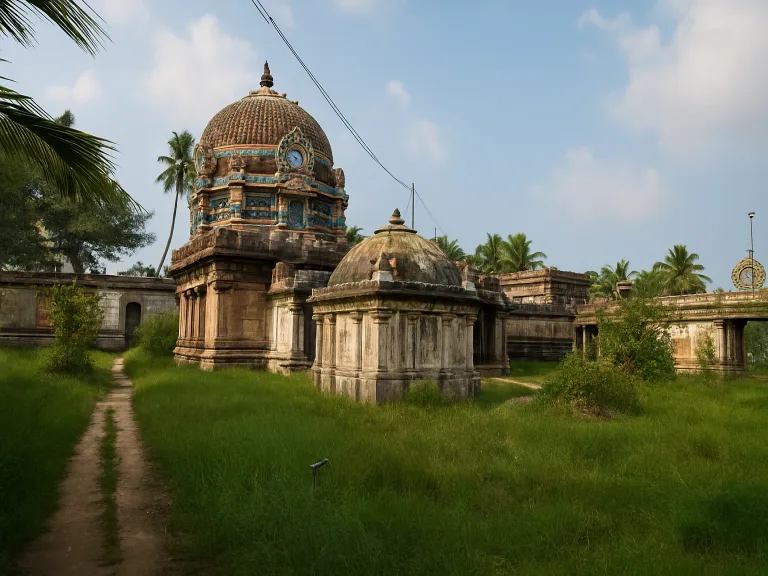
Natrunaiyappar Temple follows the broad Dravidian Saiva temple pattern found across the Cauvery delta. The central sanctum enshrines Shiva as a lingam, with worship directed to Natrunaiyappar as the presiding deity. The goddess shrine for Malayan Madanthai forms an essential part of the sacred layout, reflecting the standard Saiva emphasis on the presence of both Shiva and Shakti within the temple complex.
The architectural value of the temple lies in its continuity with the early Tamil Shiva temple tradition rather than in large-scale monumental display. As with many Paadal Petra Sthalams in village settings, the sacred core is organised around the garbhagriha, adjoining mandapas, circumambulatory worship space, and subsidiary shrines. These elements support the ritual sequence of darshan, pradakshina, offerings, and festival worship that defines the functioning of a Saiva temple.
A fully documented architectural chronology, including the exact date of each structural component, is not established in widely available historical sources. For this reason, it is not appropriate to assign the existing structure to a single builder or precise construction campaign without inscriptional confirmation. The temple should be understood as an ancient Tevaram shrine whose architecture has been maintained through time, preserving a traditional village-temple form connected with Tamil Saiva worship.
✨
Temple Highlights
✨
Tevaram Paadal Petra Sthalam
The temple is identified with Tirunanipalli, one of the Shiva shrines praised in the canonical Tevaram hymns.
✨
Association with Tirugnana Sambandar
The shrine is connected with the devotional tradition of Tirugnana Sambandar, one of the foremost Tamil Saiva saints.
✨
Ancient name Tirunanipalli
Ponsei or Punjai is associated with the older sacred place-name Tirunanipalli in Saiva temple literature.
✨
Presiding deity Natrunaiyappar
Shiva is worshipped as Natrunaiyappar, a name meaning the good companion or true support.
✨
Goddess Malayan Madanthai
The goddess is worshipped as Malayan Madanthai, a form of Parvati associated with the meaning daughter of the mountain.
✨
Cauvery delta sacred landscape
The temple belongs to a region rich in ancient Saiva shrines, Tamil bhakti history, and agrarian temple settlements.
🙏
Spiritual Benefits
Seeking the grace of Shiva as a steady companion and support
Praying for courage, clarity, and emotional strength
Worshipping Shiva and Parvati together for family harmony
Offering prayers for protection from fear and uncertainty
Deepening devotion through the Tevaram Saiva tradition
Experiencing pilgrimage to an ancient Tamil Shiva shrine
Practising pradakshina and quiet worship in a sacred village setting
🚗
How to Reach
🛣️
By Road
Ponsei or Punjai is reached by local roads from the Sirkazhi and Mayiladuthurai region. Local buses, taxis, or private vehicles are commonly used for visiting village temples in this area.
🚆
By Rail
Sirkazhi Railway Station is a practical rail access point for the Ponsei region. Travellers should continue by local road transport from the station.
✈️
By Air
Air travellers can use major airports serving central or northern Tamil Nadu and continue by rail or road toward the Sirkazhi-Mayiladuthurai region. Current flight options should be checked before travel.
💡
Visitor Tips
Confirm the current temple opening hours before travelling.
Plan local transport in advance, as village temples may have limited public transport frequency.
Dress modestly and follow normal temple etiquette inside the shrine.
Check locally before taking photographs, especially near the sanctum and ritual areas.
Carry sufficient drinking water during hot months.
Combine the visit with nearby Tevaram temples in the Sirkazhi and Mayiladuthurai region if time permits.
Avoid relying only on online timings for small temples; local confirmation is advisable.

 WhatsApp Us