🛕About Temple
Navaneetheswarar Temple at Sikkal, in Nagapattinam district of Tamil Nadu, is an ancient Saiva temple whose presiding deity is Lord Shiva as Navaneetheswarar, also known as Vennai Nathar, the Lord associated with butter. The goddess is worshipped as Vel Nedunganni Amman. The temple is especially renowned for the shrine of Lord Murugan as Singaravelar, making it one of the best-known Murugan-associated shrines in the Cauvery delta while remaining, in its primary form, a Shiva temple.
Sikkal is a well-documented Paadal Petra Sthalam, praised in the Tamil Saiva devotional canon, the Tevaram. This places the temple within the sacred geography of early medieval Tamil Shaivism and confirms its importance by the 7th century CE. The temple is part of the rich temple network of the Nagapattinam and Tiruvarur region, where Chola-period religious architecture, hymnal traditions, and festival culture are strongly represented.
The temple’s living importance is centred on both Navaneetheswarar and Singaravelar. Devotees visit for Shiva worship, Amman worship, and the famous Skanda Sashti observances connected with Murugan receiving the Vel from the goddess before the destruction of Surapadman. The temple is also noted for housing shrines for Shiva, Murugan, and Vishnu within the same complex, reflecting the layered devotional character of Tamil temple worship.
ℹ️Temple Information
🛕
Presiding Deity
Navaneetheswarar
👸
Goddess
Vel Nedunganni Amman
⭐
Temple Type
Shiva temple, Paadal Petra Sthalam, Murugan-associated temple, Dravidian temple
📅
Built Period
Established by the 7th century CE as evidenced by Tevaram hymns; existing structural elements belong to the medieval Tamil temple tradition.
🏛
Dynasty
Chola period associations are documented for the region and temple tradition; specific original builder is not securely established.
Need Help Planning your visit to
Arulmigu Navaneetheswarar Temple?
Our travel experts can help you with transportation,
darshan timings, nearby sightseeing and complete temple tour planning.
⭐Temple Significance
Navaneetheswarar Temple is significant as a Tevaram Paadal Petra Sthalam, as the shrine of Shiva worshipped as the butter-associated Navaneetheswarar, and as the celebrated abode of Sikkal Singaravelar, where Murugan receives the Vel from the goddess during Skanda Sashti.
📜History
Navaneetheswarar Temple is historically significant because it is one of the Saiva shrines praised in the Tevaram hymns. The temple is associated with Tirugnanasambandar’s devotional corpus, which establishes that the shrine was active and sacred to Tamil Saivites by the 7th century CE. This hymnal evidence is one of the strongest historical markers for the antiquity of the Sikkal temple.
The existing temple fabric belongs to the long architectural and religious history of the Cauvery delta, a region deeply shaped by the Cholas and later Tamil dynasties. The temple’s stone construction, axial layout, gopuram, mandapas, and subsidiary shrines reflect the development of medieval Tamil temple architecture. While later renovations and additions are part of the temple’s history, the sacred status of the site predates many visible structural layers.
Sikkal became widely known beyond Saiva circles because of the shrine of Singaravelar, the Murugan of Sikkal. The annual Skanda Sashti festival, especially the ritual moment when Murugan receives the Vel from Vel Nedunganni Amman, has given the temple a distinctive place in Tamil devotional memory. The temple therefore preserves both the canonical Saiva identity of Navaneetheswarar and a major Murugan festival tradition that continues to draw devotees from across Tamil Nadu.
🕉️Mythology
The mythology of Sikkal is closely connected with butter, the name Navaneetheswarar, and the origin of the place name. In local temple tradition, the divine cow Kamadhenu is associated with the site, and sage Vasishta worshipped Shiva here. The Shiva lingam is described in the sthala tradition as being formed from butter. When the sage attempted to move the lingam after worship, it remained fixed in place; this act of being stuck is connected with the name Sikkal.
The presiding deity is therefore known as Navaneetheswarar or Vennai Nathar, both names referring to butter. This legend gives the temple a distinctive identity among Saiva shrines and explains why the site is remembered as a place where Shiva accepted worship in a form connected with purity, nourishment, and devotion. The mythology also connects the sacred landscape with Kamadhenu, milk, and the temple tank tradition.
The most famous Murugan-related mythology of the temple concerns Singaravelar. During Skanda Sashti, Murugan receives the Vel from his mother, Vel Nedunganni Amman, before setting out to defeat Surapadman. The festival dramatizes this sacred episode, and the image of Singaravelar is widely associated with the devotional belief that the deity manifests the intensity of battle-readiness at this moment. This mythology is central to Sikkal’s identity in Murugan worship.
🏛Architecture
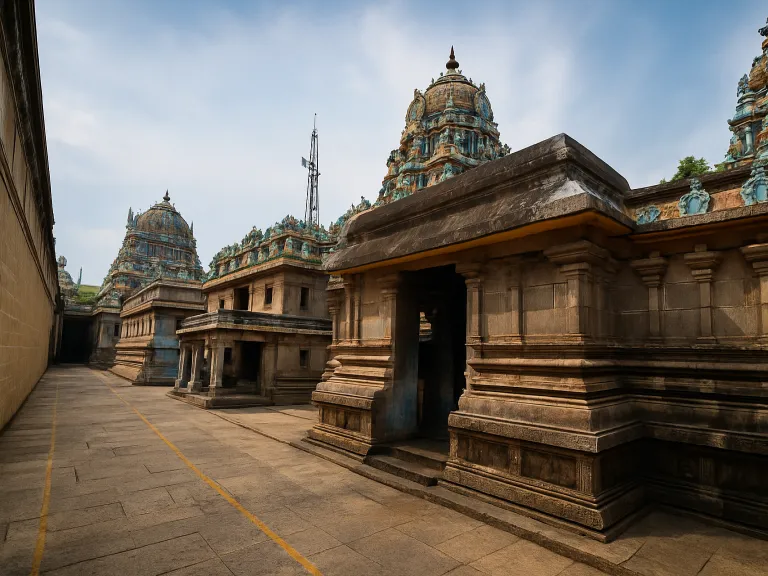
Navaneetheswarar Temple follows the Dravidian temple plan typical of the Cauvery delta. The complex is organised around the sanctum of Lord Shiva as Navaneetheswarar, with the goddess shrine, mandapas, circumambulatory paths, and subsidiary shrines forming the ritual layout. The temple’s gopuram, prakara arrangement, and sculptural elements reflect the architectural vocabulary of medieval Tamil temples.
A notable feature of the complex is the prominence of the Singaravelar shrine. Although the temple is primarily a Shiva temple, the Murugan shrine is one of its most celebrated spaces and plays the central role during Skanda Sashti. The presence of Vel Nedunganni Amman, Navaneetheswarar, Singaravelar, and the Vishnu shrine known as Kola Vamana Perumal gives the complex a multi-shrine character within a Saiva sacred setting.
The temple includes traditional elements such as a sacred tank and a sthala vriksha, and its spaces are used for daily worship, processions, and annual festivals. The architecture is not only structural but liturgical: corridors, mandapas, and shrine alignments support circumambulation, festival movement, and ritual gathering. Its built form reflects both the canonical Saiva heritage of a Paadal Petra Sthalam and the living festival culture that has made Sikkal famous.
🌳
Sacred Features
🌳 Temple Tree
Malligai
The jasmine plant is associated with the temple as the sthala vriksha in temple tradition.
💧 Temple Tank
Ksheera Pushkarini
The temple tank is associated with the Kamadhenu and milk-related mythology of the Sikkal sthala tradition.
✨
Temple Highlights
✨
Paadal Petra Sthalam
The temple is one of the sacred Shiva shrines praised in the Tevaram, confirming its importance in Tamil Saiva devotional history.
✨
Navaneetheswarar as Vennai Nathar
The presiding Shiva lingam is associated with the sthala legend of butter, giving the deity the names Navaneetheswarar and Vennai Nathar.
✨
Sikkal Singaravelar Shrine
The Murugan shrine in the temple is one of the most famous features of Sikkal and is central to the Skanda Sashti festival.
✨
Vel Nedunganni Amman
The goddess is worshipped as the divine mother who gives the Vel to Murugan in the temple’s important festival tradition.
✨
Kola Vamana Perumal Shrine
The temple complex is also known for the presence of a Vishnu shrine, reflecting the inclusive sacred layout of the site.
🙏
Spiritual Benefits
Devotees worship Navaneetheswarar for grace, steadiness, and removal of inner obstacles.
Worship of Vel Nedunganni Amman is sought for motherly protection and courage.
Devotees pray to Sikkal Singaravelar for strength, clarity, and victory over difficulties.
Skanda Sashti worship is considered especially important for Murugan devotees.
The temple is visited for blessings connected with devotion, family welfare, and spiritual discipline.
🎉
Major Festivals
🎉
Skanda Sashti
The most celebrated festival at Sikkal, centred on Singaravelar receiving the Vel from Vel Nedunganni Amman before the Surasamharam episode.
🎉
Maha Shivaratri
An important Saiva festival observed with worship of Lord Navaneetheswarar.
🎉
Panguni Uthiram
A major Tamil temple festival associated with divine marriage and Murugan worship in many temples, observed in the temple’s annual festival cycle.
🎉
Karthigai Deepam
A festival associated with Shiva and Murugan worship, marked by lamps and devotional observances.
🪔
Special Poojas
🪔
Skanda Sashti Vel Vaangum ceremony
The ritual moment during Skanda Sashti when Singaravelar receives the Vel from Vel Nedunganni Amman is the temple’s best-known special observance.
🪔
Abhishekam to Navaneetheswarar
Ritual bathing and worship are performed to the Shiva lingam as part of regular Saiva temple worship.
🪔
Abhishekam to Singaravelar
Special worship to Lord Murugan is performed during festival periods and Murugan-related observances.
🚗
How to Reach
🛣️
By Road
Sikkal is accessible by road from Nagapattinam and Tiruvarur. Buses, taxis, and local transport connect the temple with nearby towns.
🚆
By Rail
Sikkal has a railway station on the Nagapattinam-Tiruvarur route, and Nagapattinam is a major nearby railhead.
✈️
By Air
The nearest major airport is Tiruchirappalli International Airport, from where Sikkal can be reached by road or rail via the Cauvery delta towns.
💡
Visitor Tips
Maintain silence and respectful conduct inside the shrine areas.
During Skanda Sashti, expect large crowds and allow extra time for darshan.
Check current temple timings locally before planning a visit, as schedules may change on festival days.
Wear modest clothing suitable for a traditional South Indian temple.
Footwear must be left outside the temple premises before entering worship areas.
Carry drinking water during hot months when travelling in the Nagapattinam region.
If visiting multiple temples nearby, plan transport in advance because local travel times can vary.

 WhatsApp Us