🛕About Temple
Neelakandeswarar Temple at Iluppaipattu is a Shiva temple in the Tamil Nadu Cauvery delta region, associated with the village name Iluppaipattu, also rendered in Tamil temple lists with related forms such as Iluppaiyur. The presiding deity is Lord Shiva worshipped as Neelakandeswarar, the blue-throated form of Shiva. The goddess is worshipped as Amirthavalli. The temple is part of the living Shaiva worship landscape of the Mayiladuthurai region, where many ancient and medieval Shiva shrines are clustered around river-fed settlements.
The temple is known primarily through its devotional identity rather than through a widely published epigraphical or archaeological dossier. It is counted in Shaiva temple tradition as a Thevara Vaippu Sthalam, meaning a shrine remembered in the Tevaram corpus without a separate full decad being available for the temple. This association gives the temple importance within Tamil Shaivism and links it to the sacred geography celebrated by the Nayanmar saints.
Because detailed historical records, inscriptions, official festival calendars, and measured architectural studies are not widely available for public verification, only core information is recorded here. The temple should be understood as a village Shiva shrine of devotional significance, centred on worship of Neelakandeswarar and Amirthavalli, with its religious value strengthened by its place in the wider network of Cauvery delta Shaiva temples.
ℹ️Temple Information
🛕
Presiding Deity
Neelakandeswarar
⭐
Temple Type
Shiva temple, Shaiva temple, Thevara Vaippu Sthalam
Need Help Planning your visit to
Arulmigu Neelakandeswarar Temple?
Our travel experts can help you with transportation,
darshan timings, nearby sightseeing and complete temple tour planning.
⭐Temple Significance
Neelakandeswarar Temple, Iluppaipattu, is significant as a Shiva shrine associated with the Tamil Shaiva sacred geography and identified in Shaiva temple tradition as a Thevara Vaippu Sthalam. Its deity name connects the temple to the powerful Neelakantha form of Shiva, symbolizing divine compassion, protection, and the transformation of poison into grace.
📜History
The historically verifiable importance of Neelakandeswarar Temple, Iluppaipattu, rests mainly on its place in Tamil Shaiva sacred geography. The shrine is identified in Shaiva temple tradition as a Thevara Vaippu Sthalam. Vaippu Sthalams are temples whose names occur in the hymns of the Nayanmars, especially in listings of sacred places, even though an individual full hymn for the shrine is not preserved or not available in the same way as the Padal Petra Sthalams.
This association places Iluppaipattu within the devotional memory of the early medieval Tamil bhakti movement. The Tevaram tradition belongs to the broad historical period of the 7th to 9th centuries CE, when the hymns of Appar, Sambandar, and Sundarar shaped the sacred map of Tamil Shaivism. The mention of a shrine in this tradition indicates that the place was religiously known within the Shaiva world by that period, but it does not by itself establish the date of the present structure, the name of a builder, or the exact dynasty responsible for construction.
No securely documented builder, foundation inscription, dynastic patronage statement, or construction date is included here because such details are not widely established for this temple. The temple may have undergone repairs, rebuilding, or local patronage over time, as is common for village temples in the Cauvery delta, but specific claims require inscriptional or institutional confirmation. Therefore, the history is best presented as a devotional-historical association with the Tevaram tradition rather than as a fully documented royal foundation narrative.
🕉️Mythology
The name Neelakandeswarar refers to Lord Shiva as Neelakantha, the blue-throated one. In pan-Indian Shaiva mythology, this form is connected with the churning of the ocean, when the deadly halahala poison emerged before the nectar. Shiva consumed the poison to protect the worlds, and the poison remained in his throat, giving him the name Neelakantha. This mythology explains the theological meaning of the deity’s name and the compassionate aspect of Shiva worshipped in temples bearing this title.
At Iluppaipattu, the presiding Shiva is worshipped under this name, while the goddess is known as Amirthavalli. The name Amirthavalli is associated with amrita, or nectar, in devotional language. The pairing of Neelakandeswarar and Amirthavalli is spiritually meaningful because the blue-throated Shiva myth and the idea of nectar both belong to the sacred vocabulary of protection, grace, and transformation. This is a devotional interpretation of the names rather than a separately verified local sthala purana.
No detailed temple-specific mythology, such as a verified legend involving a named sage, king, celestial being, temple tank, or sacred tree, is included here because it is not established in widely available historical temple documentation. The mythological content therefore remains limited to the well-known Shaiva meaning of Neelakandeswarar and the devotional significance of worshipping Shiva as the one who absorbs poison for the welfare of creation.
🏛Architecture
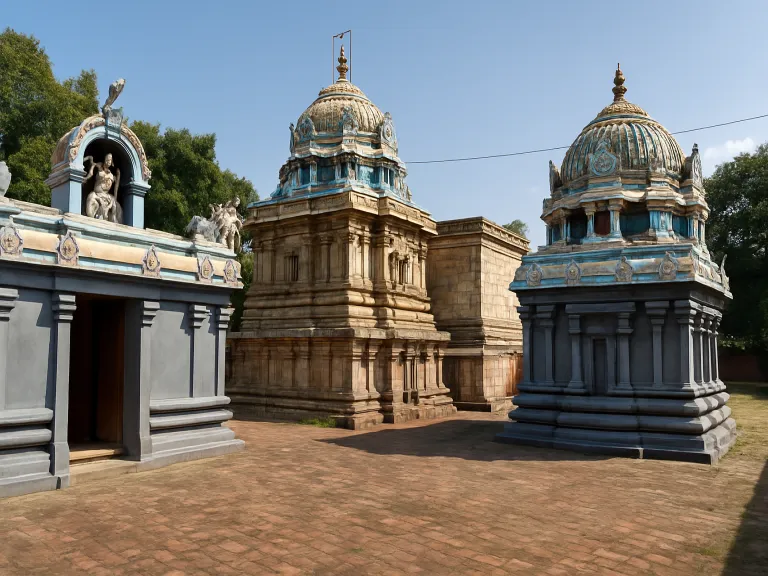
The architectural information available for Neelakandeswarar Temple, Iluppaipattu, is limited in publicly verifiable historical material. The temple is a Shaiva place of worship centred on the sanctum of Lord Neelakandeswarar, where Shiva is worshipped in linga form, and on the worship of the goddess Amirthavalli. This arrangement follows the essential liturgical pattern of Tamil Shiva temples, where the presiding Shiva shrine and the goddess shrine together form the devotional core of the temple.
The temple belongs to the broader architectural environment of the Cauvery delta, a region known for stone and brick Shiva temples that evolved through many periods of patronage, renovation, and local maintenance. However, for this specific temple, details such as the number of prakaras, the height or tiers of the gopuram, dated sculptural phases, inscriptional panels, mandapa chronology, and specific iconographic programs are not included because they are not securely established here through widely available documentation.
For visitors and researchers, the safest architectural description is that of a functioning Tamil Shaiva temple whose importance lies in worship continuity and devotional association rather than in a presently documented royal architectural profile. Any further study of its architecture should be based on on-site observation, temple records, inscriptions if present, and official heritage documentation. Claims of Chola, Pandya, Nayak, or later structural additions should not be made without confirmed evidence for this temple.
✨
Temple Highlights
✨
Neelakandeswarar as Presiding Deity
The temple is dedicated to Lord Shiva as Neelakandeswarar, the blue-throated form associated with the protection of the worlds in Shaiva mythology.
✨
Goddess Amirthavalli
The consort of the presiding deity is worshipped as Amirthavalli, a name carrying devotional associations with nectar and grace.
✨
Thevara Vaippu Sthalam Association
The temple is identified in Tamil Shaiva tradition as a Thevara Vaippu Sthalam, giving it importance within the sacred geography of the Nayanmar hymns.
✨
Cauvery Delta Shaiva Setting
Iluppaipattu belongs to the wider Mayiladuthurai and Cauvery delta temple region, which contains many historically important Shiva shrines.
🙏
Spiritual Benefits
Meditation on Shiva as Neelakandeswarar, the compassionate protector
Devotional focus on transforming negativity into inner strength
Worship of Shiva and Amirthavalli together as divine grace and protection
Strengthening of Shaiva devotion through a temple connected with the Tevaram sacred landscape
A quiet setting for prayer, reflection, and simple worship
Opportunity to honour the Neelakantha form of Shiva during personal prayers
🚗
How to Reach
🛣️
By Road
Iluppaipattu can be reached by local roads in the Mayiladuthurai region. Visitors should confirm the exact village route locally before travelling.
🚆
By Rail
Mayiladuthurai Junction is the major railway station serving the region; onward travel requires local road transport.
✈️
By Air
The nearest major airport for the region is generally Tiruchirappalli International Airport, followed by road or rail travel toward Mayiladuthurai.
💡
Visitor Tips
Confirm the opening hours locally before travelling, as verified temple timings are not available here.
Dress modestly and follow the customs of a Hindu place of worship.
Ask temple authorities before taking photographs inside or around the shrine.
Carry drinking water if visiting smaller villages in the Cauvery delta region.
Plan road travel with local guidance, as village access routes may vary.
Maintain silence and avoid disturbing ongoing worship.
Check locally for special poojas, festival observances, or priest availability before making offerings.

 WhatsApp Us