🛕About Temple
Neelakandeswarar Temple at Thiruneelakkudi is a historic Shiva temple in Thiruneelakkudi village in the Kumbakonam region of Thanjavur district, Tamil Nadu. The presiding deity is Lord Neelakandeswarar, a form of Shiva connected with the blue-throated Neelakanta aspect. The goddess is worshipped as Oppilamulai Ammai, also known by the Sanskrit name Anupamasthani. The temple is one of the revered Shaiva temples of the Cauvery delta and belongs to the sacred landscape celebrated in the Tamil devotional canon.
The temple is recognized as a Paadal Petra Sthalam because it is praised in the Tevaram hymns of the Nayanmar saints. This places Thiruneelakkudi among the ancient Shiva shrines that were already sacred centres during the early medieval Bhakti period. Its importance is not based on scale alone, but on its liturgical standing, association with Shaiva saints, and continuing worship of Shiva in the form of a lingam.
Thiruneelakkudi is especially associated with the Neelakanta mythology, in which Shiva bears the effect of the cosmic poison in his throat for the protection of the worlds. Devotees visit the temple for worship connected with health, relief from suffering, and surrender to Shiva’s protective grace. The temple remains part of the Kumbakonam region’s dense network of ancient Shaiva shrines, many of which are linked by Tevaram hymns, Chola-period history, and ongoing Tamil temple worship.
ℹ️Temple Information
🛕
Presiding Deity
Neelakandeswarar
👸
Goddess
Oppilamulai Ammai
⭐
Temple Type
Shiva temple, Paadal Petra Sthalam, Tevaram temple, Dravidian temple, Shaivite pilgrimage temple
📅
Built Period
The shrine was sacred by the 7th century CE through Tevaram references; the extant structural phases are associated with the early medieval Chola period, broadly 9th–10th century CE, with later additions and renovations.
Need Help Planning your visit to
Arulmigu Neelakandeswarar Temple?
Our travel experts can help you with transportation,
darshan timings, nearby sightseeing and complete temple tour planning.
⭐Temple Significance
Neelakandeswarar Temple is significant as a Tevaram Paadal Petra Sthalam dedicated to Shiva as Neelakanta. Its importance rests on its place in Tamil Shaiva Bhakti literature, its association with the mythology of Shiva bearing the cosmic poison, and its continued role in the sacred temple network of the Kumbakonam region.
📜History
The historical importance of Neelakandeswarar Temple is firmly connected with the Tevaram tradition. The shrine is counted among the Paadal Petra Sthalams, the Shiva temples praised in the hymns of the Tamil Shaiva saints. The hymns of Tirugnana Sambandar and Tirunavukkarasar establish the sanctity of Thiruneelakkudi by the 7th century CE, showing that the site was already an active and respected centre of Shiva worship during the formative period of Tamil Bhakti literature.
The present temple belongs to the long temple-building and temple-renovating culture of the Chola country. Thiruneelakkudi lies in the fertile Cauvery delta, where the Cholas and later regional patrons supported numerous Shiva temples through endowments, structural additions, ritual arrangements, and maintenance. While the exact founder of this temple is not documented in widely established sources, its historical identity is inseparable from the Chola Nadu Shaiva sacred geography and the Tevaram canon.
As with many ancient temples in the Kumbakonam region, the shrine’s history combines early devotional memory, medieval stone architecture, and continuing ritual practice. The temple’s inclusion in the Paadal Petra Sthalam list gives it a place of enduring religious importance beyond local worship. It is visited by devotees who follow the Tevaram temple circuit and by pilgrims exploring the old Shiva temples around Kumbakonam, Thiruvidaimarudur, Aduthurai, and the surrounding Cauvery delta settlements.
🕉️Mythology
The mythology of Thiruneelakkudi centres on Shiva as Neelakanta, the Lord with the blue throat. In the well-known Shaiva and Puranic account of the churning of the ocean, the deadly halahala poison emerged before the nectar. To protect the worlds, Shiva received the poison, and Goddess Parvati restrained it at his throat so that it did not descend into his body. The poison marked his throat blue, giving him the name Neelakanta.
Temple tradition connects this cosmic act of compassion with the deity of Thiruneelakkudi, Neelakandeswarar. The name of the place itself is understood in relation to the blue-throated Lord. Devotees approach the shrine as a sacred place where Shiva’s act of absorbing suffering for the welfare of creation is remembered and worshipped. The goddess Oppilamulai Ammai is revered with the Lord, reflecting the inseparable role of Shakti in the mythology of Neelakanta.
A local temple tradition also gives importance to abhishekam, especially the offering of oil to the Shiva lingam. Devotional accounts describe the oil abhishekam as connected with cooling, healing, and the removal of afflictions, in keeping with the mythology of the poison held in Shiva’s throat. These narratives belong to the sacred tradition of the temple and are distinct from verifiable political history. They continue to shape the devotional identity of Thiruneelakkudi and the way pilgrims understand the grace of Neelakandeswarar.
🏛Architecture
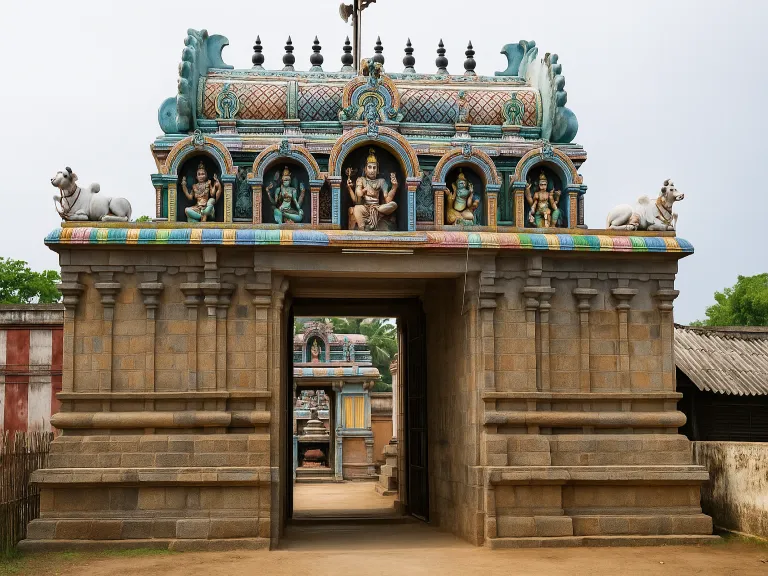
Neelakandeswarar Temple follows the traditional Dravidian temple layout of the Cauvery delta, with the sanctum of Shiva as the ritual centre. The presiding deity is enshrined as a Shiva lingam, approached through the customary sequence of entrance, mandapa spaces, and inner shrine. The temple’s arrangement reflects the compact but spiritually dense form common to many Paadal Petra Sthalams of the Kumbakonam region, where the sanctum, circumambulatory space, subsidiary shrines, and festival areas support daily worship.
The goddess Oppilamulai Ammai has a separate shrine within the temple complex, as is standard in major Shaiva temples of Tamil Nadu. The architectural language is marked by stone construction, axial worship movement, and icons associated with Shaiva temple practice. The temple preserves the ritual grammar of Tamil Shiva temples: devotees enter, worship Ganesha and other attendant deities where present, circumambulate the prakara, and finally worship Neelakandeswarar and the goddess.
The structure should be understood in the broader context of Chola Nadu temple architecture rather than as a monument known for a single colossal feature. Its value lies in its antiquity, Tevaram status, sacred associations, and continuity of worship. Like many temples in the region, it has undergone maintenance and additions over time. The built form supports both individual prayer and collective observances such as abhishekam, pradakshina, festival worship, and recitation of Shaiva hymns.
✨
Temple Highlights
✨
Paadal Petra Sthalam
The temple is one of the Shiva shrines praised in the Tevaram hymns, giving it an important place in the Tamil Shaiva sacred canon.
✨
Neelakanta Form of Shiva
The presiding deity, Neelakandeswarar, is associated with Shiva’s blue-throated form, remembered for protecting the worlds from the cosmic poison.
✨
Goddess Oppilamulai Ammai
The goddess of the temple is worshipped as Oppilamulai Ammai, also known as Anupamasthani.
✨
Kumbakonam Region Shrine
The temple forms part of the dense network of ancient Shiva temples in and around Kumbakonam and the Cauvery delta.
✨
Oil Abhishekam Tradition
Temple tradition gives special devotional importance to abhishekam to Neelakandeswarar, especially in connection with the Neelakanta mythology.
🙏
Spiritual Benefits
Worship of Shiva as Neelakanta for protection and inner strength
Prayers for relief from suffering and fear
Devotional worship for physical and mental well-being
Seeking the grace of Shiva and Parvati together
Meditation on Shiva’s compassion in bearing the poison for the welfare of creation
Participation in Shaiva worship connected with Tevaram tradition
Offering abhishekam and prayer as an act of surrender
Pilgrimage merit associated with visiting a Paadal Petra Sthalam
🎉
Major Festivals
🎉
Maha Shivaratri
A major annual Shaiva observance dedicated to Lord Shiva, marked by special worship in Shiva temples. Visitors should confirm the current local arrangements before planning a visit.
🎉
Pradosham
A regular Shaiva observance connected with worship of Shiva and Nandi. Devotees commonly visit Shiva temples on Pradosham days for special prayers.
🎉
Aippasi Annabhishekam
A significant observance in many Shiva temples in Tamil Nadu, during which the Shiva lingam is ceremonially covered with cooked rice. Local confirmation is advised for the temple’s current schedule.
🎉
Arudra Darshan
A Shaiva festival associated with Lord Shiva, especially in his cosmic dance aspect. Visitors should verify the specific observance schedule at the temple.
🪔
Special Poojas
🪔
Abhishekam to Neelakandeswarar
Abhishekam to the Shiva lingam is central to worship at the temple and is devotionally connected with the Neelakanta form of Shiva.
🪔
Oil Abhishekam
Temple tradition gives special importance to oil abhishekam to Neelakandeswarar, associated with the mythology of Shiva bearing the cosmic poison.
🪔
Pradosha Pooja
Pradosha worship is a Shaiva observance dedicated to Lord Shiva. Devotees visit Shiva temples for prayer on these days, subject to the temple’s current schedule.
🚗
How to Reach
🛣️
By Road
Thiruneelakkudi can be reached by road from Kumbakonam and nearby Cauvery delta towns. Local buses, taxis, and hired vehicles are commonly used for visiting temples in this region.
🚆
By Rail
The Kumbakonam region is served by railway stations including Kumbakonam and nearby local stations. Travellers should verify the most convenient station and onward road transport before departure.
✈️
By Air
The nearest major airport commonly used for the Kumbakonam region is Tiruchirappalli International Airport, followed by onward travel by road or rail.
💡
Visitor Tips
Confirm the current opening hours with local contacts before travelling, as verified public timing information may vary.
Wear modest clothing suitable for a functioning Hindu temple.
Carry small cash for offerings or local expenses, as digital payment facilities may not always be available.
Avoid photography inside sanctum areas unless temple authorities explicitly permit it.
Visit with nearby Kumbakonam-region temples if planning a Tevaram or Shiva temple circuit.
Maintain silence and follow the queue or local worship practice during puja times.
Check local transport availability for the return journey if visiting by bus or hired vehicle.
During major Shaiva observance days, expect more devotees and allow extra time for darshan.

 WhatsApp Us