🛕About Temple
Neelamega Perumal Temple at Thanjavur is a revered Vishnu shrine associated with the Divya Desam known as Thanjai Mamani Koil. It stands in the Vennatrankarai area of Thanjavur, close to the Vennar river, and is worshipped as part of a sacred group of three nearby Vishnu temples. The presiding deity is Neelamega Perumal, and the goddess is Sengamalavalli Thayar. The temple is important in Sri Vaishnava tradition because the group is included among the 108 Divya Desams praised in the Nalayira Divya Prabandham.
The name Neelamega means “dark rain-cloud,” a classical devotional description of Vishnu’s auspicious form. The Thanjai Mamani Koil Divya Desam is not represented by a single large complex alone; it is understood through the combined sanctity of Neelamega Perumal Temple, Manikundra Perumal Temple, and Thanjaiyali Nagar or Veera Narasimha Perumal Temple. Devotees commonly visit the associated shrines together to complete worship at this Divya Desam.
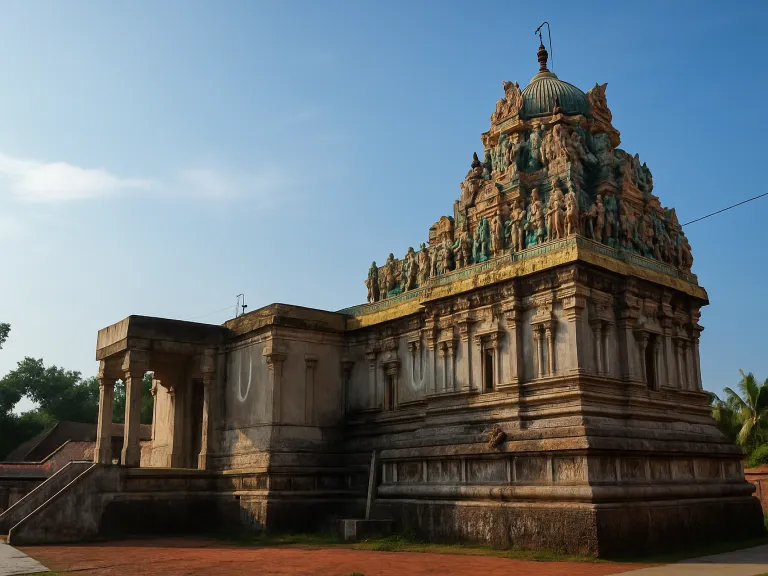
Unlike the monumental Chola temples of Thanjavur, Neelamega Perumal Temple is modest in scale but high in religious importance. Its sanctity rests on its Divya Desam status, its association with Tirumangai Alvar’s hymns, and its local sthala-purana connecting Vishnu with the protection of sages and the origin traditions of Thanjavur. The temple remains a significant stop for pilgrims following the Divya Desam circuit in the Kaveri delta.
ℹ️Temple Information
🛕
Presiding Deity
Neelamega Perumal
👸
Goddess
Sengamalavalli Thayar
⭐
Temple Type
Divya Desam, Vishnu temple, Sri Vaishnava temple
📅
Built Period
At least early medieval period; the shrine is documented in the devotional tradition of Tirumangai Alvar. The exact construction date of the present temple is not securely established.
🙏
Sampradaya
Sri Vaishnavism
Need Help Planning your visit to
Sri Neelamega Perumal Temple?
Our travel experts can help you with transportation,
darshan timings, nearby sightseeing and complete temple tour planning.
⭐Temple Significance
Neelamega Perumal Temple is significant as part of Thanjai Mamani Koil, one of the 108 Divya Desams revered in Sri Vaishnava tradition. It is praised in the Nalayira Divya Prabandham by Tirumangai Alvar and is worshipped together with the nearby Manikundra Perumal and Thanjaiyali Nagar shrines.
📜History
The secure historical importance of Neelamega Perumal Temple comes from its inclusion in the Thanjai Mamani Koil Divya Desam, which is praised in the Nalayira Divya Prabandham. Tirumangai Alvar, generally placed in the early medieval period, sang of this sacred place, showing that the shrine or its sacred tradition was established by the time of the Alvar devotional movement. This places the temple’s religious memory at least in the early medieval Tamil Vaishnava landscape.
Thanjavur was an important political and cultural centre under several dynasties, especially the Cholas, and later under the Nayaks and Marathas. However, widely cited temple information for Neelamega Perumal Temple does not provide a securely documented individual builder or a dated foundation inscription for the present structure. For this reason, its built_by and dynasty attribution should be treated with caution unless supported by specific inscriptional evidence. Its history is better understood through Divya Prabandham tradition, continuous worship, and its place within the sacred geography of Thanjavur.
The three temples of Thanjai Mamani Koil together preserve a distinctive Vaishnava identity in a city better known internationally for the Brihadeeswarar Temple. Neelamega Perumal Temple’s historical role is therefore devotional and textual rather than imperial or monumental. It is part of the sacred network of Kaveri delta Vishnu temples that were celebrated by the Alvars and later organized in Sri Vaishnava pilgrimage practice as the 108 Divya Desams.
🕉️Mythology
The mythology of Neelamega Perumal Temple belongs to the sthala-purana tradition of Thanjai Mamani Koil. In this tradition, sages performing austerities in the region were disturbed by powerful asuras connected with the ancient name and sacred memory of Thanjavur. Vishnu appeared in different forms to protect the sages, restore order, and grant divine vision. These mythic episodes are linked with the three sacred Vishnu shrines that together make up Thanjai Mamani Koil.
One strand of the local tradition connects the name Thanjavur with an asura named Thanjakan. After being defeated by Vishnu, the asura requested that the place be known by his name, and the sacred region came to be associated with Thanjai or Thanjavur in the mythological account. The fierce protective manifestation of Vishnu as Narasimha is especially associated with the related Thanjaiyali Nagar shrine, while Neelamega Perumal represents Vishnu’s gracious and beautiful form.
Sage Parasara is also associated with the sacred legend of the place in temple tradition. The three deities of Thanjai Mamani Koil are understood as manifestations through which Vishnu protected dharma and blessed devotees. These accounts are part of religious mythology and should be distinguished from verifiable political history. Their importance lies in explaining the sacred character of the site, the grouping of the three temples, and the devotional meaning of worshipping Neelamega Perumal in Thanjavur.
🏛Architecture
Neelamega Perumal Temple follows the broad pattern of a South Indian Vaishnava temple, with a sanctum for the presiding deity, spaces for ritual worship, and associated shrines for the goddess and other deities. The temple is smaller and more intimate than the large royal monuments of Thanjavur, but its layout reflects the functional requirements of daily Vaishnava worship: darshan of the moolavar, worship of Thayar, circumambulation, and festival movement within the available temple space.
The temple’s architectural identity is closely connected with the Divya Desam tradition rather than with a single documented royal building campaign. The shrine is associated with the Soundarya Vimanam in temple tradition. As in many Vishnu temples of Tamil Nadu, the sanctum and mandapa arrangement emphasizes axial worship, with devotees approaching the deity through successive sacred spaces. The iconographic focus is on Vishnu as Neelamega Perumal and on Sengamalavalli Thayar as the divine consort.
Because Thanjai Mamani Koil is a group Divya Desam, the architectural experience extends beyond one structure. Pilgrims understand the sacred site through visits to Neelamega Perumal Temple and the two related shrines, Manikundra Perumal Temple and Thanjaiyali Nagar or Veera Narasimha Perumal Temple. Together they form a compact Vaishnava sacred cluster in Thanjavur. The architectural value of Neelamega Perumal Temple is therefore found in its ritual continuity, Divya Desam status, and integration with the religious geography of the Vennar river area.
🌳
Sacred Features
💧 Temple Tank
Amrita Theertham
Amrita Theertham is associated with the Thanjai Mamani Koil Divya Desam tradition. The Vennar river is also connected with the sacred setting of the temple group.
✨
Temple Highlights
✨
Divya Desam status
Neelamega Perumal Temple is part of Thanjai Mamani Koil, counted among the 108 Divya Desams sacred to Sri Vaishnavas.
✨
Praised by Tirumangai Alvar
The temple group is celebrated in the Nalayira Divya Prabandham, giving it a central place in Tamil Vaishnava devotional tradition.
✨
Three-temple sacred cluster
The Divya Desam is experienced through Neelamega Perumal Temple, Manikundra Perumal Temple, and Thanjaiyali Nagar or Veera Narasimha Perumal Temple.
✨
Vennar river setting
The temple is located in the Vennatrankarai area of Thanjavur, linking it to the sacred geography of the Kaveri delta region.
✨
Sengamalavalli Thayar shrine
The goddess of the temple is worshipped as Sengamalavalli Thayar, the divine consort of Neelamega Perumal.
🙏
Spiritual Benefits
Worship of Vishnu as Neelamega Perumal for divine grace and protection
Prayer to Sengamalavalli Thayar for compassion and auspiciousness
Participation in the sacred merit of visiting a Divya Desam
Devotional connection with the hymns of Tirumangai Alvar
Seeking inner peace through darshan and circumambulation
Completing worship at the three shrines of Thanjai Mamani Koil
Strengthening devotion to Sriman Narayana in Sri Vaishnava tradition
🎉
Major Festivals
🎉
Vaikunta Ekadashi
Vaikunta Ekadashi is an important Vaishnava observance connected with worship of Vishnu and is observed with special devotion in Divya Desam temples. Visitors should confirm the local schedule with the temple.
🚗
How to Reach
🛣️
By Road
Thanjavur is well connected by road with Tiruchirappalli, Kumbakonam, Chennai, Madurai, and other towns of Tamil Nadu. Local transport from Thanjavur city can be used to reach the Vennatrankarai area.
🚆
By Rail
Thanjavur Junction is the main railway station serving the city and has train connections to major destinations in Tamil Nadu and beyond.
✈️
By Air
The nearest major airport is Tiruchirappalli International Airport. From there, visitors can travel to Thanjavur by road or rail.
💡
Visitor Tips
Confirm the current temple timings locally before travelling, as published schedules may vary.
Visit the related Manikundra Perumal and Thanjaiyali Nagar shrines to complete the Thanjai Mamani Koil Divya Desam experience.
Carry simple, modest clothing suitable for temple worship.
Allow extra time if visiting during Vaishnava festival days or weekends.
The temple is in Thanjavur city, so it can be combined with other major heritage and temple visits nearby.
Respect restrictions around sanctum areas and ask temple staff before taking photographs.
Keep footwear only in the designated area outside the temple premises.

 WhatsApp Us