🛕About Temple
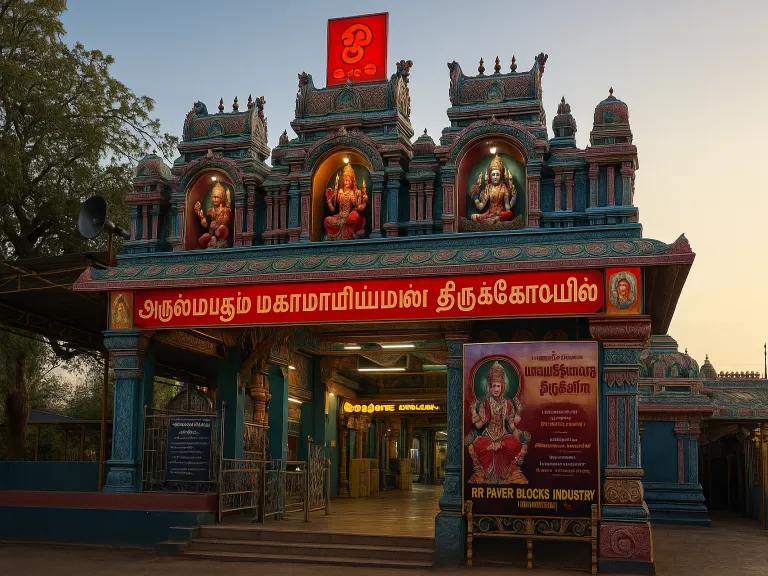
Padaikatti Maha Mariamman Temple is a well-known Amman shrine at Valangaiman in the Thiruvarur district of Tamil Nadu, close to the Kumbakonam region of the Kaveri delta. The presiding deity is Maha Mariamman, worshipped as a powerful mother goddess associated with protection, healing, rain, fertility, and the welfare of families. The temple is especially identified with the name Padaikatti, which refers to a distinctive votive practice connected with the goddess.
The shrine is best known for the Paadai Katti or Paadai Kavadi vow, in which devotees fulfil a prayer after surviving severe illness, danger, or a crisis. In this practice, a symbolic bier-like structure is carried or offered as an act of gratitude to the goddess. This ritual identity distinguishes the Valangaiman temple from many other Mariamman shrines and makes it an important centre of living folk-Shakti devotion in the Kaveri delta.
The temple’s public importance rests more on continuing worship and community tradition than on royal inscriptions or large-scale imperial architecture. Unlike the major Chola stone temples of the region, the available historical record does not clearly identify a founder, dynasty, or original date of construction for this shrine. Its authenticity lies in its uninterrupted devotional role for Valangaiman and surrounding villages, where Maha Mariamman is approached as a compassionate but powerful guardian mother.
ℹ️Temple Information
🛕
Presiding Deity
Maha Mariamman
👸
Goddess
Padaikatti Maha Mariamman
⭐
Temple Type
Mariamman temple, Amman temple, Shakti temple, Village guardian deity shrine
Need Help Planning your visit to
Sri Padaikatti Maha Mariamman Temple?
Our travel experts can help you with transportation,
darshan timings, nearby sightseeing and complete temple tour planning.
⭐Temple Significance
Padaikatti Maha Mariamman Temple is significant for its unique Paadai Katti vow tradition and for its role as a major Mariamman shrine serving Valangaiman and the surrounding Kaveri delta region. Devotees approach the goddess for protection, recovery from distress, fulfilment of vows, and family welfare.
📜History
The documented history of Padaikatti Maha Mariamman Temple is limited when compared with the epigraphically recorded Chola and later-period temples around Kumbakonam, Thanjavur, and Thiruvarur. No widely accepted inscriptional record or published historical account clearly names the founder of the temple, fixes its construction date, or links it to a specific ruling dynasty. For this reason, the founder, period, and dynasty are best left unassigned unless supported by temple records or verified scholarship.
The shrine belongs to the long-standing Tamil tradition of Amman worship in which village and regional mother goddesses protect settlements from disease, drought, fear, and social distress. In the Kaveri delta, such shrines often developed through local patronage, community festivals, and vow-based worship rather than through royal endowments alone. Valangaiman’s Maha Mariamman became especially prominent because of the Paadai Katti vow, a ritual expression of gratitude after recovery from grave danger or illness.
In modern devotional memory, the temple is recognized primarily through its annual festival and the large number of devotees who come to fulfil vows to the goddess. Its history is therefore a history of living worship, local identity, and collective faith rather than one of documented imperial patronage. The absence of confirmed dynastic information should not be confused with lack of antiquity; it only means that reliable historical details have not been firmly established in the public record.
🕉️Mythology
The mythology of Padaikatti Maha Mariamman Temple belongs to the wider Tamil Mariamman tradition, where the goddess is venerated as a mother who can both remove suffering and discipline devotees through divine power. Mariamman is closely connected in local religious imagination with heat, fever, epidemics, rain, agricultural well-being, and the protection of village life. At Valangaiman, these themes are expressed through the intense vow-centered devotion offered to Maha Mariamman.
The name Padaikatti is associated with a local devotional tradition involving the paadai, a bier-like structure normally associated with death. In the temple’s ritual context, the paadai is transformed into a symbol of survival, surrender, and thanksgiving. Devotees who have faced severe illness, danger, or a life-threatening crisis approach the goddess with a vow and, after relief, fulfil it through the Paadai Katti or Paadai Kavadi offering. The act expresses that the devotee’s life has been returned through the grace of the goddess.
This mythology should be understood as sacred local tradition rather than political or architectural history. It does not provide a dated origin for the temple or identify a founder. Instead, it explains why the goddess is experienced by devotees as an urgent and protective presence. The ritual power of the temple lies in the belief that Maha Mariamman stands between death and life, fear and recovery, misfortune and renewed hope.
🏛Architecture
Padaikatti Maha Mariamman Temple is known primarily as a living Amman shrine rather than as a monument defined by dated inscriptions, sculptural programs, or royal architectural claims. The available public information does not provide verified details about the original plan, builder, construction phases, measurements, or named architectural patrons. Therefore, the temple’s architecture is best described cautiously as a functional Tamil goddess shrine shaped by worship needs and festival practice.
Like many Mariamman temples in the Kaveri delta, the focus of the sacred space is the sanctum of the presiding goddess, where devotees receive darshan and offer vows, archana, and other forms of worship. The ritual environment is oriented toward direct devotional contact with Maha Mariamman. Space for circumambulation, gathering, and festival movement is important because the temple receives devotees who come for vow fulfilment, especially during the Paadai Katti observance.
The temple’s architectural significance is therefore inseparable from its ritual use. Its identity is not based on a documented Chola vimana, a historically dated gopuram, or a known royal inscription, but on the way the built space accommodates an intense community-centred form of Shakti worship. Any precise claims about original materials, sculptural dating, gopuram height, or Agamic layout require verification from temple authorities, archaeological documentation, or reliable field records.
✨
Temple Highlights
✨
Paadai Katti vow tradition
The temple is especially known for the vow in which devotees offer or carry a symbolic paadai after relief from serious illness, danger, or crisis.
✨
Maha Mariamman as guardian mother
The presiding goddess is worshipped as a powerful protective mother associated with healing, rain, welfare, and the removal of fear.
✨
Important Amman shrine of Valangaiman
The temple is a recognized centre of local Shakti worship in Valangaiman, near the Kumbakonam region of the Kaveri delta.
✨
Living folk-Shakti worship
The temple’s identity is shaped by continuing community devotion and vow fulfilment rather than by documented royal patronage.
🙏
Spiritual Benefits
Devotees seek protection from fear, danger, and misfortune.
Devotees pray for recovery and strength during illness or distress.
Families offer thanks to the goddess after fulfilment of vows.
Worshippers seek relief from obstacles affecting household welfare.
Devotees pray for health, rain, fertility, and prosperity in the Mariamman tradition.
The Paadai Katti vow is offered as an act of gratitude after survival from severe crisis.
Devotees seek the compassionate grace of the mother goddess for peace of mind.
🎉
Major Festivals
🎉
Annual Paadai Katti Festival
The most distinctive festival associated with the temple, during which devotees fulfil vows to Padaikatti Maha Mariamman through the Paadai Katti or Paadai Kavadi offering.
🪔
Special Poojas
🪔
Paadai Katti Nerthi Kadan
A vow-fulfilment offering made by devotees after relief from serious illness, danger, or crisis, expressing gratitude to Maha Mariamman.
🪔
Archana to Maha Mariamman
Devotees offer archana to the presiding goddess for protection, health, family welfare, and fulfilment of prayers.
🚗
How to Reach
🛣️
By Road
Valangaiman is connected by road to Kumbakonam and nearby towns in the Thiruvarur district. Local buses, taxis, and private vehicles from Kumbakonam are commonly used.
🚆
By Rail
Kumbakonam railway station is a convenient railhead for reaching Valangaiman, followed by local road transport.
✈️
By Air
Tiruchirappalli International Airport is the nearest major airport generally used by travellers visiting the Kumbakonam and Valangaiman region.
💡
Visitor Tips
Confirm current temple timings with local sources before planning the visit.
Expect heavy crowds during the annual Paadai Katti festival period.
Wear modest clothing suitable for a Tamil Nadu temple visit.
Keep footwear outside the temple premises as per local practice.
Use Kumbakonam as a convenient rail and road base for reaching Valangaiman.
Carry drinking water during hot months, especially if visiting during crowded festival days.
Follow instructions from temple volunteers and local authorities during vow processions or festival movement.

 WhatsApp Us