🛕About Temple
Papanasanathar Temple at Papanasam is a revered Shiva temple in Tirunelveli district, Tamil Nadu, situated close to the point where the Tamiraparani River emerges from the Western Ghats and flows into the plains. The presiding deity is Lord Shiva worshipped as Papanasanathar, meaning the Lord who destroys sins, and the goddess is Ulagammai. The temple is closely associated with the sacred geography of the Tamiraparani river valley and with Papanasam, a place whose name itself is linked with spiritual purification.
The shrine is best known as the first temple in the Nava Kailasam group, a set of nine Shiva temples along the Tamiraparani associated with the nine grahas. Papanasanathar Temple is associated with Surya, the Sun. Devotees visit the temple for Shiva worship, Surya-related prayers, and ritual bathing in the sacred waters of the Tamiraparani near Papanasam.
The temple combines river, hill, and shrine in a distinctive sacred landscape. Its importance is devotional rather than imperial: the exact founder and original construction date are not securely established in widely available historical sources. The temple remains a major pilgrimage point for devotees visiting Ambasamudram, Papanasam, Agasthiyar Falls, and the Nava Kailasam circuit of Tirunelveli district.
ℹ️Temple Information
🛕
Presiding Deity
Papanasanathar
⭐
Temple Type
Shiva temple, Nava Kailasam temple, Surya-associated Navagraha shrine, Riverine pilgrimage temple
Need Help Planning your visit to
Arulmigu Papanasanathar Temple?
Our travel experts can help you with transportation,
darshan timings, nearby sightseeing and complete temple tour planning.
⭐Temple Significance
Papanasanathar Temple is significant as a major Shiva shrine of Papanasam in Tirunelveli district, a sacred bathing and pilgrimage center on the Tamiraparani River, and the Surya-associated temple among the Nava Kailasam temples. Devotees revere Lord Shiva here as the remover of sins and worship the goddess Ulagammai for grace and protection.
📜History
The early historical record of Papanasanathar Temple does not preserve a securely documented founder, construction year, or single royal patron. The shrine belongs to the old sacred landscape of the Tamiraparani river basin in the Tirunelveli region, an area long associated with Shiva worship, riverine pilgrimage, and temple-centered settlement. Its antiquity is reflected in its continued place in local worship and in the Nava Kailasam pilgrimage tradition.
Historically, Papanasam lay within the cultural sphere of the southern Tamil country, where Pandya, later Nayaka, and other regional powers supported temple worship across different periods. However, assigning the present temple complex to a specific dynasty or builder requires inscriptional or archival evidence that is not consistently available in standard public descriptions of the shrine. For this reason, the builder and dynasty are best left unspecified rather than attributed without firm evidence.
The temple’s documented importance in modern religious practice comes from its identity as Papanasanathar Temple of Papanasam and as the Surya-associated shrine among the Nava Kailasam temples along the Tamiraparani. The temple continues to function as an active Shiva temple, linked with daily worship, festival observances, river bathing, ancestor rites in the Papanasam area, and pilgrimage circuits that include other ancient temples of Tirunelveli district.
🕉️Mythology
The mythology of Papanasanathar Temple centers on the meaning of the name Papanasam, the destruction of sins. In local sacred tradition, worship of Lord Shiva as Papanasanathar and bathing in the sacred waters of the Tamiraparani at Papanasam remove accumulated sins and purify the devotee. The river, the hill setting, and the Shiva shrine are treated as a single sacred environment where prayer and ritual bathing are spiritually powerful.
A major legend links the temple with Sage Agastya. In the mythology of southern Tamil Shaiva temples, Agastya was directed to the south to balance the earth when Shiva and Parvati’s divine wedding drew the gods and sages to the Himalayas. At Papanasam, Shiva and Parvati granted Agastya the vision of their wedding, making the place sacred to those who seek divine grace even when they cannot be physically present at the cosmic event.
The temple is also connected with the Nava Kailasam tradition of the Tamiraparani. In this tradition, nine Shiva shrines along the river are associated with the nine grahas, and Papanasam is the first among them, linked with Surya. Devotees undertake the Nava Kailasam pilgrimage for planetary harmony, Shiva’s blessings, and release from spiritual burdens. These accounts belong to temple mythology and living devotional tradition, distinct from documented political history.
🏛Architecture
Papanasanathar Temple follows the general form of a Tamil Shaiva temple, with a sanctum for the Shiva linga, a separate shrine for the goddess Ulagammai, mandapas for worship and congregation, and prakara spaces used for circumambulation. The temple is part of the Dravidian architectural tradition of southern Tamil Nadu, where the sacred axis of the shrine, the linga, the goddess shrine, subsidiary deities, and ritual movement through the temple define the experience of worship.
The temple’s architectural setting is especially important. Unlike many urban temples enclosed within dense settlement, Papanasanathar Temple stands in a landscape shaped by the Tamiraparani River and the nearby Western Ghats. The presence of sacred water near the temple is integral to its identity. Devotees often connect worship in the temple with ritual bathing or prayers at the river, especially because the place-name Papanasam is associated with purification.
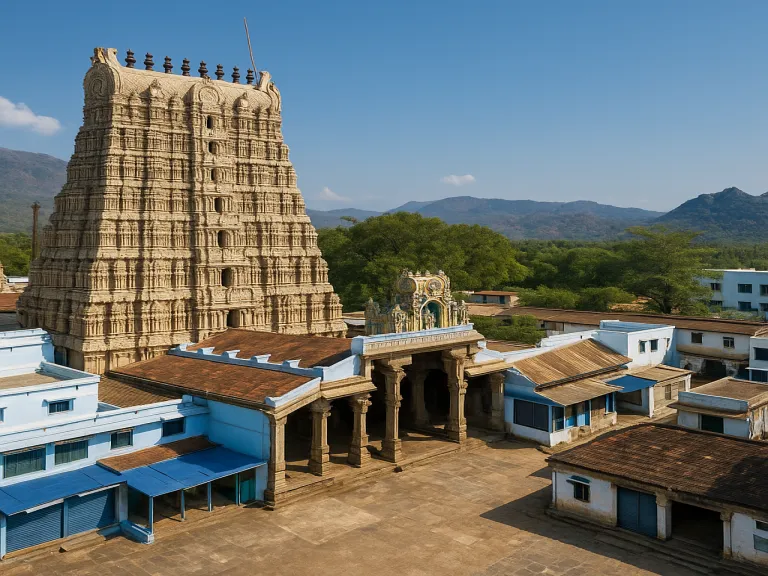
The visible structure includes characteristic components of a South Indian Shiva temple: entrance tower, enclosed courtyard, pillared halls, sanctum, Nandi facing Shiva, and shrines for attendant deities. The exact dates of individual architectural additions are not firmly established in widely available sources, so specific attributions to a dynasty or period should be treated with caution. The temple is best understood as a living sacred complex that has grown around an old Shiva shrine and a powerful riverine pilgrimage tradition.
🌳
Sacred Features
💧 Temple Tank
Tamiraparani River / Papanasa Theertham
The sacred waters at Papanasam are associated with purification and the removal of sins. Devotees connect worship at Papanasanathar Temple with prayers and ritual bathing in the Tamiraparani.
✨
Temple Highlights
✨
Surya Sthalam of Nava Kailasam
The temple is revered as the first of the nine Nava Kailasam Shiva temples along the Tamiraparani and is associated with Surya.
✨
Sacred Tamiraparani Setting
The shrine stands at Papanasam near the Tamiraparani River, a place closely linked with sacred bathing and purification.
✨
Lord Shiva as Papanasanathar
The presiding deity is worshipped as the Lord who removes sins, giving the temple its central spiritual identity.
✨
Goddess Ulagammai Shrine
The goddess Ulagammai is worshipped as the divine consort of Papanasanathar and is an important focus of devotion.
✨
Agastya Mythology
Local mythology connects the shrine with Sage Agastya and the divine vision of Shiva and Parvati’s wedding.
🙏
Spiritual Benefits
Seeking forgiveness and spiritual purification through worship of Papanasanathar
Prayers for relief from accumulated sins and mental burdens
Surya-related worship as part of the Nava Kailasam tradition
Blessings for health, clarity, vitality, and positive energy
Grace of Goddess Ulagammai for family welfare and protection
Spiritual merit through worship on Pradosham and Maha Shivaratri
Pilgrimage benefit from visiting the Nava Kailasam temples along the Tamiraparani
🎉
Major Festivals
🎉
Maha Shivaratri
A major festival for Shiva worship, observed with special prayers and night-long devotion in Shiva temples.
🎉
Pradosham
A twice-monthly sacred period for Shiva worship, observed by devotees with prayers to Papanasanathar and Nandi.
🎉
Aadi Amavasai
A significant day for ancestor-related rites in sacred river locations, with many devotees visiting the Papanasam area and the Tamiraparani.
🎉
Karthigai Deepam
A Tamil Shaiva festival associated with lamps and worship of Lord Shiva.
🪔
Special Poojas
🪔
Pradosha Pooja
Special worship offered to Lord Shiva during Pradosham, a sacred time for seeking Shiva’s grace.
🪔
Abhishekam to Papanasanathar
Ritual bathing of the Shiva linga with sacred substances, performed as part of Shiva worship.
🪔
Ulagammai Amman Worship
Devotional worship offered to Goddess Ulagammai for protection, welfare, and divine grace.
🪔
Surya-related Nava Kailasam Worship
Devotees worship Papanasanathar as the Surya-associated shrine in the Nava Kailasam pilgrimage tradition.
🚗
How to Reach
🛣️
By Road
Papanasam is accessible by road from Ambasamudram and Tirunelveli. Buses and taxis operate in the Tirunelveli-Ambasamudram-Papanasam region.
🚆
By Rail
Papanasam has a railway station on the Tirunelveli-Sengottai line. Ambasamudram and Tirunelveli are also useful rail access points.
✈️
By Air
The nearest commonly used airport is Tuticorin Airport. Madurai and Thiruvananthapuram airports are also used by travelers depending on route and connectivity.
💡
Visitor Tips
Verify current temple opening hours locally before planning darshan.
Dress modestly and follow temple customs during worship.
Respect restrictions around the sanctum and ritual areas.
If visiting the river or bathing ghats, follow local safety instructions carefully.
The temple can be combined with a Nava Kailasam pilgrimage itinerary along the Tamiraparani.
Festival and Amavasai days may draw larger crowds, so plan extra time.
Check transport availability in advance if relying on buses or trains from Ambasamudram or Tirunelveli.

 WhatsApp Us