🛕About Temple
Prananatheswarar Temple at Thirumangalakudi is a revered Shiva temple near Aduthurai and Kumbakonam in Tamil Nadu’s Cauvery delta. The presiding deity is Lord Shiva as Prananatheswarar, also written Prananadeswarar, and the goddess is Mangalambigai. The temple is closely associated with the sacred landscape around Suryanar Kovil, one of the well-known Navagraha temples of Tamil Nadu. Devotees visiting Suryanar Kovil commonly include worship at Thirumangalakudi because local tradition places Shiva here as the source of grace for the Navagrahas.
The temple is counted among the Tevaram shrines praised by the Tamil Shaiva saints, giving it the status of a Paadal Petra Sthalam. Its sacred identity is strongly connected with auspiciousness, protection of life, marital harmony and relief from planetary afflictions. The name Thirumangalakudi itself carries the sense of an auspicious settlement, and the goddess Mangalambigai is worshipped for mangalam, or auspicious well-being.
Unlike the nearby Suryanar Kovil, which is specifically associated with Surya and the Navagrahas, Thirumangalakudi centers on Shiva and Shakti worship. The temple remains an active place of daily worship and is part of the pilgrimage circuit followed by devotees in and around Kumbakonam. Its importance comes from a combination of Tevaram sanctity, Chola-period temple culture, Navagraha-related tradition and continuing local worship.
ℹ️Temple Information
🛕
Presiding Deity
Prananatheswarar
⭐
Temple Type
Shiva temple, Tevaram Paadal Petra Sthalam, Chola-period temple, Navagraha-associated pilgrimage temple
📅
Built Period
Chola period, approximately 11th-12th century CE, with later additions and renovations.
Need Help Planning your visit to
Arulmigu Prananatheswarar Temple?
Our travel experts can help you with transportation,
darshan timings, nearby sightseeing and complete temple tour planning.
⭐Temple Significance
Prananatheswarar Temple is significant as a Tevaram Paadal Petra Sthalam, a Chola-period Shiva temple and the principal Shiva shrine associated in local practice with Suryanar Kovil and Navagraha worship. Devotees worship here for protection of life, auspiciousness, marital harmony and relief from planetary afflictions.
📜History
Prananatheswarar Temple belongs to the historic group of Shiva temples in the Cauvery delta that flourished under the Cholas. Thirumangalakudi is documented as a Tevaram shrine, which establishes that the place was sacred to Tamil Shaivism by the period of the Nayanmar hymns. The present structural temple shows the character of medieval Tamil stone temple building, with later repairs and additions made during subsequent centuries of worship.
The temple’s exact founder is not firmly documented in widely available historical records. Its standing form is associated with the Chola period, and the wider region around Kumbakonam, Aduthurai and Mayiladuthurai contains many Chola temples that received royal, local and mercantile support. The temple’s continued importance is also linked to the emergence of the nearby Suryanar Kovil as a major Navagraha shrine, since Thirumangalakudi is treated in local pilgrimage practice as the primary Shiva temple connected with that sacred complex.
Historically, the temple’s significance rests more securely on its Tevaram status and its place in the Chola sacred geography than on a single known builder. The deity Prananatheswarar and the goddess Mangalambigai are repeatedly connected in temple tradition with life, auspiciousness and restoration. Over time, the temple became an essential stop for devotees seeking blessings before or after visiting Suryanar Kovil and other Navagraha temples in the Kumbakonam region. It continues to preserve the devotional heritage of Tamil Shaivism in an area known for dense temple networks and Chola-period sacred architecture.
🕉️Mythology
The mythology of Thirumangalakudi centers on Lord Shiva as Prananatheswarar, the Lord who protects or restores prana, the vital life force. Local temple tradition connects the name with an episode in which a devotee’s life was restored through the grace of Shiva and the compassionate intervention of the goddess Mangalambigai. This story explains why the deity is specially worshipped for long life, protection from danger and recovery of well-being.
Another important local tradition links the temple with the Navagrahas. The planetary deities are described in temple lore as having worshipped Shiva at Thirumangalakudi to receive relief from affliction and regain their power. This mythology gives the temple a special place in the Navagraha pilgrimage circuit even though the shrine itself is a Shiva temple, not a separate Navagraha temple. Devotees therefore worship Prananatheswarar and Mangalambigai while seeking relief from planetary difficulties.
The goddess Mangalambigai is central to the temple’s sacred meaning. Her name is associated with mangalam, or auspiciousness, and devotees approach her for blessings related to marriage, family welfare and removal of obstacles. In local religious understanding, Thirumangalakudi is an auspicious kshetra where Shiva grants life and the goddess grants prosperity and harmony. These mythological traditions are distinct from the temple’s historical record, but they continue to shape the living worship and pilgrimage practices followed at the temple.
🏛Architecture
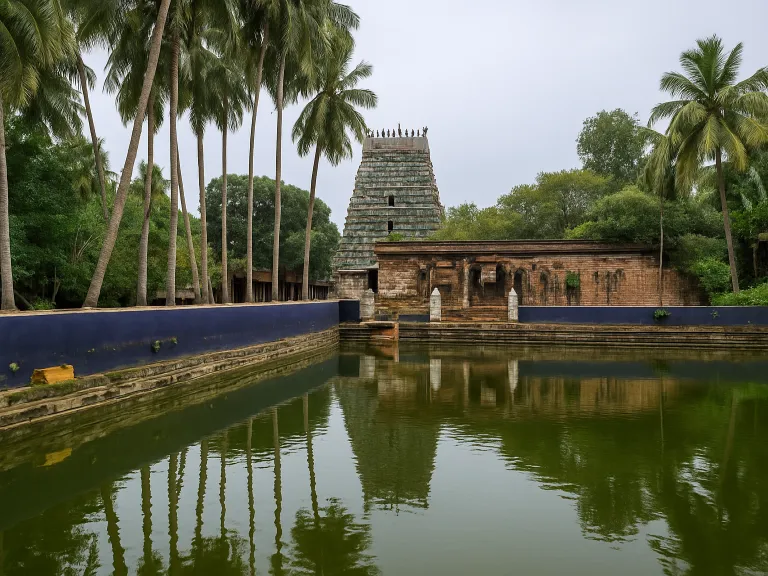
Prananatheswarar Temple follows the Dravidian architectural pattern common to medieval Shiva temples of the Cauvery region. The temple is organized around the sanctum of Lord Shiva in linga form, with the goddess Mangalambigai enshrined in her own shrine. The layout includes enclosed prakarams, a gopuram entrance, subsidiary shrines and the ritual axis used for daily puja and circumambulation. Its built form reflects the functional and symbolic order of Tamil Shaiva temple worship.
The sanctum of Prananatheswarar is the ritual heart of the temple. As in other classical Shiva temples, the devotee moves from the outer space of the temple toward the garbhagriha, where the linga is worshipped through abhishekam, alankaram, deepa aradhana and other daily rites. The goddess shrine gives equal devotional importance to Mangalambigai, whose worship is closely associated with auspiciousness and family welfare. The temple also contains the usual Shaiva sacred spaces required for festival movement, circumambulation and subsidiary worship.
The architecture is not known for a single monumental sculptural feature in the way some imperial Chola temples are, but for its continuity as a living temple in the Kumbakonam region. Its stone construction, prakarams and iconographic arrangement place it within the established grammar of South Indian Shaiva temple design. The temple’s close relationship with Suryanar Kovil further enhances its architectural and ritual importance, because pilgrims experience the two shrines as part of a connected sacred landscape.
🌳
Sacred Features
💧 Temple Tank
Mangala Theertham
The temple tradition associates the sacred water source with the auspicious identity of Thirumangalakudi and the worship of Mangalambigai.
✨
Temple Highlights
✨
Tevaram Paadal Petra Sthalam
The temple is one of the Shiva shrines praised in the Tevaram hymns of the Tamil Shaiva saints, giving it high importance in Tamil Shaiva tradition.
✨
Association with Suryanar Kovil
Thirumangalakudi is closely linked with nearby Suryanar Kovil, and devotees often worship here as part of the Navagraha pilgrimage circuit.
✨
Lord Prananatheswarar
Shiva is worshipped as Prananatheswarar, the Lord connected with protection of prana, or life force, in temple tradition.
✨
Goddess Mangalambigai
The goddess is revered as Mangalambigai, associated with auspiciousness, marriage blessings and family welfare.
✨
Cauvery Delta Temple Heritage
The temple forms part of the dense sacred geography of Chola-period Shiva temples around Kumbakonam and Aduthurai.
🙏
Spiritual Benefits
Blessings for protection of life and health
Relief from Navagraha-related afflictions according to temple tradition
Auspiciousness in family life
Blessings for marriage and marital harmony
Removal of obstacles in important undertakings
Peace of mind through Shiva worship
Grace of Mangalambigai for prosperity and well-being
🎉
Major Festivals
🎉
Maha Shivaratri
A major annual festival for Lord Shiva, observed with special worship and night-long devotion in Shiva temples.
🎉
Pradosham
The twice-monthly Pradosham worship is important for Shiva devotees and is observed with special pujas to Lord Prananatheswarar.
🎉
Margazhi Tiruvadhirai
A significant Shaiva observance connected with Lord Shiva, especially Nataraja worship, celebrated during the Tamil month of Margazhi.
🎉
Navaratri
The goddess Mangalambigai is worshipped with special devotion during the Navaratri period.
🪔
Special Poojas
🪔
Pradosha Pooja
Special worship to Lord Shiva performed during Pradosham, a sacred period for seeking Shiva’s grace.
🪔
Abhishekam to Prananatheswarar
Ritual bathing of the Shiva linga with sacred substances, performed as part of regular and special worship.
🪔
Archana to Mangalambigai
Devotees offer archana to the goddess for auspiciousness, family welfare and marital harmony.
🪔
Navagraha-related Worship
Devotees seeking relief from planetary afflictions worship Prananatheswarar and Mangalambigai in connection with the nearby Suryanar Kovil tradition.
🚗
How to Reach
🛣️
By Road
Thirumangalakudi is accessible by road from Kumbakonam, Aduthurai and Mayiladuthurai. It lies close to Suryanar Kovil on the Kumbakonam-Aduthurai temple route.
🚆
By Rail
Aduthurai railway station is one of the nearest railheads. Kumbakonam railway station is a major nearby station with better connectivity.
✈️
By Air
The nearest major airport is Tiruchirappalli International Airport, from where the temple can be reached by road via Kumbakonam.
💡
Visitor Tips
Visit Prananatheswarar Temple along with nearby Suryanar Kovil if following the Navagraha pilgrimage route.
Carry simple offerings such as flowers or fruits if you wish to perform archana.
Dress modestly and respectfully as this is an active place of worship.
Confirm current timings locally before planning an early morning or evening visit.
Weekdays are generally quieter than major festival and Pradosham days.
Allow time for circumambulation and worship at both the Shiva and goddess shrines.
Combine the visit with other temples near Aduthurai and Kumbakonam if travelling by road.

 WhatsApp Us