🛕About Temple
Prasanna Venkatachalapathy Temple at Gunaseelam is a well-known Vishnu temple in Tiruchirappalli district, Tamil Nadu. The temple stands in the village of Gunaseelam, on the Tiruchirappalli-Musiri side of the region, and is dedicated to Lord Venkatachalapathy, the form of Vishnu associated with Tirumala. The presiding deity is worshipped as Prasanna Venkatachalapathy, meaning the gracious or pleasing Venkatachalapathy.
The temple is especially known among devotees for prayers connected with mental peace and recovery from mental distress. Many families visit the shrine seeking the grace of the deity for persons facing psychological suffering, and this association has made Gunaseelam one of the most recognized Vishnu temples in central Tamil Nadu. The temple is also called Then Tirupati, or the Tirupati of the South, in devotional usage because of its connection with Lord Venkateswara worship.
Gunaseelam is not one of the 108 Divya Desams, but it is an important Vaishnava shrine with a strong local and regional following. The temple combines regular worship of Vishnu with a distinctive devotional identity shaped by its sthala-purana, its association with sage Gunaseela, and its reputation as a place where devotees pray for healing, composure, and divine protection.
ℹ️Temple Information
🛕
Presiding Deity
Prasanna Venkatachalapathy
👸
Goddess
Alamelu Mangai Thayar
⭐
Temple Type
Vishnu temple, Vaishnava temple, Venkatachalapathy temple, Pilgrimage temple
Need Help Planning your visit to
Sri Prasanna Venkatachalapathy Temple?
Our travel experts can help you with transportation,
darshan timings, nearby sightseeing and complete temple tour planning.
⭐Temple Significance
The temple is significant as a prominent Venkatachalapathy shrine near Tiruchirappalli and as a devotional center where many devotees pray for mental peace, recovery from distress, and the grace of Lord Vishnu. Its sacred identity is linked with sage Gunaseela and with the worship of Lord Venkateswara.
📜History
The documented historical details of Prasanna Venkatachalapathy Temple at Gunaseelam are limited when compared with major inscription-rich temples of the Kaveri region. The temple is primarily known through its living worship, regional devotional memory, and sthala-purana connected with sage Gunaseela. A securely established inscriptional foundation date, original builder, and ruling dynasty are not widely documented in standard public accounts of the shrine.
Gunaseelam lies in the culturally important Tiruchirappalli region, where Vishnu and Shiva temples flourished under several South Indian powers. However, no specific historically verified Chola, Pandya, Vijayanagara, or Nayak foundation record is commonly cited for this temple. For that reason, the precise period of the first structural temple, the identity of its patron, and the dynasty responsible for its earliest construction should be treated as unverified unless supported by direct epigraphic evidence.
The temple’s historical importance therefore rests mainly on continuity of worship, its regional prominence as a Venkatachalapathy shrine, and its public religious role. In modern times it is widely recognized for its special association with devotees seeking relief from mental distress. The temple has become a major pilgrimage point near Tiruchirappalli and Musiri, drawing devotees from many parts of Tamil Nadu. Its history is best understood as a combination of living temple practice, local sacred tradition, and the wider Tamil Vaishnava devotion to Lord Venkateswara.
🕉️Mythology
According to the sthala-purana of Gunaseelam, sage Gunaseela was a devoted worshipper of Lord Venkateswara of Tirumala. Desiring to have the Lord’s presence near his hermitage, the sage performed intense penance. Pleased with his devotion, Vishnu appeared before him as Venkatachalapathy and granted his wish by manifesting at Gunaseelam in a gracious form. This is the sacred basis for the deity’s name, Prasanna Venkatachalapathy.
The local tradition further narrates that the sage later had to leave the place for further spiritual duties and entrusted the worship to his disciples. Over time, due to natural disturbances and the loss of regular care, the deity became hidden from public worship. The story explains that the divine presence remained at the site until it was revealed again through signs that drew attention to the buried or concealed image.
Another element in the temple tradition speaks of the deity’s recovery and restoration of worship after a period of obscurity. These narratives are part of the temple’s sacred memory and are not presented as dated political history. They explain why the place is called Gunaseelam, why the Lord is worshipped as Prasanna Venkatachalapathy, and why devotees regard the shrine as a powerful place of grace, healing, and compassionate intervention. The mythology gives the temple its devotional identity and connects it symbolically with the worship of Lord Venkateswara at Tirumala.
🏛Architecture
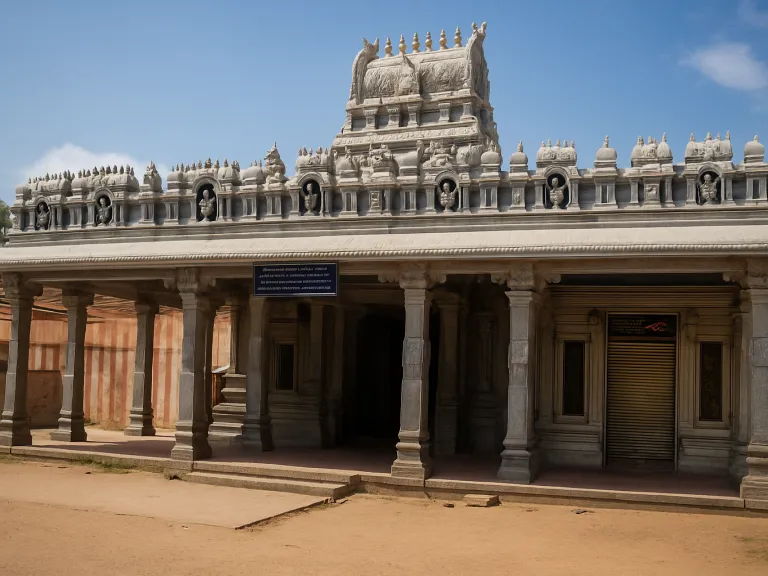
Prasanna Venkatachalapathy Temple follows the broad architectural language of Tamil Vaishnava temples. The complex is organized around the sanctum of Lord Prasanna Venkatachalapathy, with spaces for worship, circumambulation, and congregation. The entrance, gopuram, mandapas, and inner shrine arrangement reflect the Dravidian temple idiom familiar in the Kaveri region, though precise construction phases and dated architectural layers are not securely established in widely available historical records.
The presiding deity is enshrined in the sanctum as Venkatachalapathy, the standing form of Vishnu associated with Tirumala worship. The temple layout supports daily ritual movement from the entrance through the outer areas toward the sanctum, allowing devotees to receive darshan and perform circumambulation. The presence of subsidiary spaces for temple worship, processional use, and festival gatherings is consistent with its active role as a regional pilgrimage shrine.
The architecture is valued less for a documented royal monumentality and more for its devotional function. Its built form serves the central experience of darshan of Prasanna Venkatachalapathy and the special prayer practices for which Gunaseelam is known. The temple’s visual identity includes the Vaishnava sacred atmosphere, the sanctum-focused plan, and the congregational spaces used by visiting devotees. Since exact builder names, construction dates, and dynasty-specific phases are not reliably established in common historical references, the architectural description should be understood as observational and functional rather than a firm dynastic classification.
✨
Temple Highlights
✨
Prasanna Venkatachalapathy
The main deity is Lord Venkatachalapathy in a gracious form, worshipped by devotees as a compassionate manifestation of Vishnu.
✨
Then Tirupati association
The temple is popularly known in devotional usage as Then Tirupati because of its connection with Lord Venkateswara worship.
✨
Prayers for mental peace
Gunaseelam is widely known for devotees who come seeking divine grace for mental distress and inner stability.
✨
Sage Gunaseela tradition
The temple’s sacred narrative is centered on sage Gunaseela, whose penance is associated with the manifestation of the deity.
✨
Pilgrimage near Tiruchirappalli
The temple is an accessible Vaishnava pilgrimage site for devotees visiting the Tiruchirappalli and Musiri region.
🙏
Spiritual Benefits
Devotees pray for mental peace and emotional stability.
Devotees seek relief from psychological distress through the grace of the deity.
Families pray for the well-being of affected relatives.
Devotees seek protection, composure, and divine guidance.
Worshippers pray for general health, harmony, and spiritual strength.
🎉
Major Festivals
🎉
Annual Brahmotsavam
The temple celebrates its annual Brahmotsavam as an important festival for Lord Prasanna Venkatachalapathy, drawing devotees for special worship and processions.
🎉
Vaikunta Ekadasi
Vaikunta Ekadasi is observed as a major Vaishnava festival, with special devotion to Lord Vishnu.
🎉
Purattasi Saturdays
Saturdays in the Tamil month of Purattasi are especially sacred for Lord Venkateswara worship and attract many devotees.
🚗
How to Reach
🛣️
By Road
Gunaseelam is reachable by road from Tiruchirappalli and Musiri. Buses and private vehicles connect the village with the surrounding towns in Tiruchirappalli district.
🚆
By Rail
The nearest major rail access is through Tiruchirappalli, from where visitors can continue by road to Gunaseelam.
✈️
By Air
The nearest airport is Tiruchirappalli International Airport, followed by road travel to Gunaseelam.
💡
Visitor Tips
Check the current temple opening hours before travelling, especially on festival days.
Expect larger crowds during Purattasi, Vaikunta Ekadasi, weekends, and local festival periods.
Wear modest clothing suitable for worship in a Hindu temple.
If visiting with a person needing special care, ensure a responsible family member or attendant is present.
Confirm photography rules at the temple before taking pictures.
Use Tiruchirappalli or Musiri as convenient access points for road travel.
Maintain silence and decorum inside the temple premises.
Carry essential medicines and personal necessities if travelling with elderly or unwell devotees.

 WhatsApp Us