🛕About Temple
Ramalingeswarar Temple at Papanasam is a Shiva temple in Papanasam town of Thanjavur district, Tamil Nadu, in the fertile Kaveri delta region between Thanjavur and Kumbakonam. The presiding deity is Lord Shiva worshipped as Ramalingeswarar, and the goddess is worshipped as Parvathavarthini or Parvathavardhini. The temple is known for its connection with the Ramayana cycle of sacred geography and for the presence of numerous Shiva lingams associated with the worship of Rama.
The name Papanasam means the destruction or removal of sins, and the temple’s religious identity is closely linked with the idea of atonement through Shiva worship. Local temple tradition connects the shrine with Sri Rama’s worship of Shiva after the war in Lanka. Devotees therefore regard the temple as a place for prayer, repentance, and inner purification. The shrine should be distinguished from other well-known temples bearing the name Papanasam, including Papanasanathar Temple in Tirunelveli district and Palaivananathar Temple in Papanasam town.
Ramalingeswarar Temple forms part of the sacred landscape of the Thanjavur region, where Shiva, Vishnu, Murugan, and Shakti temples stand close to river-fed settlements and old pilgrimage routes. Its principal attraction for devotees is the worship of Ramalingeswarar along with the group of Shiva lingams within the temple precincts. While many details of its construction history are not securely documented in widely available sources, the temple remains an active place of worship and a culturally important Shaiva shrine in Papanasam.
ℹ️Temple Information
🛕
Presiding Deity
Ramalingeswarar
👸
Goddess
Parvathavarthini
⭐
Temple Type
Shiva temple, Shaiva temple, Ramayana-associated temple
Need Help Planning your visit to
Arulmigu Ramalingeswarar Temple?
Our travel experts can help you with transportation,
darshan timings, nearby sightseeing and complete temple tour planning.
⭐Temple Significance
Ramalingeswarar Temple is significant as a Shaiva shrine in Papanasam connected with the Ramayana tradition of Sri Rama worshipping Lord Shiva for spiritual purification. The temple is also noted for its group of Shiva lingams, which gives devotees an opportunity to perform concentrated Shiva worship within one sacred complex.
📜History
The documented historical record of Ramalingeswarar Temple at Papanasam is limited when compared with large inscriptional monuments of the Chola period in the Kaveri delta. The temple is widely identified as an old Shaiva shrine of Papanasam, but a securely established foundation inscription, a named royal builder, or a complete chronological history is not available in well-established public historical accounts. For this reason, specific claims about the original builder, exact date of construction, or ruling dynasty should be treated with caution unless supported by temple inscriptions or official records.
Papanasam itself is a historically significant settlement in Thanjavur district, located in a region dense with medieval and later temples. The Kaveri delta saw major temple building, renovation, and endowment activity under the Cholas, later Pandyas, Vijayanagara rulers, Nayaks, Marathas, and local patrons. Ramalingeswarar Temple belongs to this broader religious landscape, but the currently available information does not allow a precise assignment of the temple’s origin to any one dynasty. Its continuing identity is preserved primarily through worship tradition, local memory, and its association with the Ramayana-related name Ramalingeswarar.
The temple’s historical importance rests less on a single documented royal event and more on its continuity as a Shaiva place of worship in Papanasam. The shrine is recognized by devotees for the main linga of Ramalingeswarar, the goddess shrine, and the group of Shiva lingams within the complex. Later repairs, additions, and routine renovations are common in living Tamil temples, but only those supported by authenticated inscriptions or official temple records can be stated as history. In the absence of such verified details, the temple is best described as an ancient local Shaiva shrine with a strong devotional tradition.
🕉️Mythology
The mythology of Ramalingeswarar Temple is centered on Sri Rama and his worship of Lord Shiva. Local temple tradition narrates that after the battle in Lanka and the killing of Ravana, Rama sought spiritual release from the burden of war and the sin associated with killing Ravana, who is described in the epic tradition as a learned ruler and devotee of Shiva. Rama therefore worshipped Shiva in the form of a linga, and the deity came to be revered as Ramalingeswarar, the Lord worshipped by Rama.
The sacred meaning of Papanasam is tied to this legend. The word is understood as the destruction of sin, and devotees connect the temple with the idea that sincere worship, repentance, and surrender to Shiva can cleanse accumulated wrongdoing. The presence of multiple Shiva lingams in the temple is interpreted by devotees as an intensification of Shiva worship, allowing pilgrims to offer prayers to many forms of the same divine principle within one sacred space. The Ramayana association gives the temple a devotional character that is both Shaiva and connected with the story of Rama.
In this mythology, Rama is not presented only as a victorious king but as a devotee who turns to Shiva with humility after fulfilling his duty. This theme is important in many South Indian sacred traditions connected with Rama’s worship of Shiva. At Ramalingeswarar Temple, the legend encourages devotees to approach the deity for forgiveness, moral clarity, and renewal. These mythological associations belong to temple tradition and devotional belief, and they are distinct from verifiable political or architectural history.
🏛Architecture
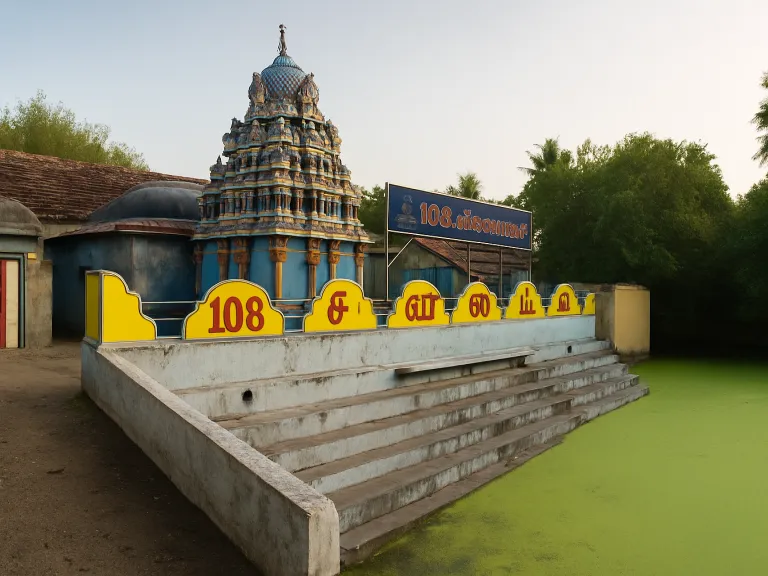
Ramalingeswarar Temple follows the functional pattern of a Tamil Shaiva temple, with Lord Shiva worshipped in the sanctum as a linga and the goddess worshipped in a separate shrine. The most noted architectural-devotional feature of the temple is the presence of many Shiva lingams within the precincts, commonly associated with the sacred number 108 in local accounts. This arrangement gives the shrine a distinctive devotional experience, as pilgrims can worship the presiding deity and also circumambulate or offer reverence to the group of lingams.
The temple’s built form reflects the practical layout of living temples in the Kaveri delta, where worship spaces, subsidiary shrines, mandapas, circumambulatory paths, and entrance areas are organized around the central sanctum. The shrine is not generally known in public historical writing for large-scale sculptural programs comparable to imperial Chola monuments such as Darasuram or Gangaikonda Cholapuram. Its importance lies more in sacred association and continuous worship than in monumental scale. Without authenticated architectural surveys, details such as exact dimensions, tower tiers, construction phases, and sculptural dating should not be stated as fixed facts.
The temple architecture is best understood as a devotional environment shaped by Shaiva ritual needs. The linga of Ramalingeswarar forms the focal point, while the goddess shrine completes the Shiva-Shakti worship pattern. The group of lingams gives the temple a distinctive identity among Papanasam shrines and reinforces its association with collective Shiva worship. As with many active Tamil temples, later renovations and repairs may have altered portions of the structure, but specific renovation dates or patrons should be recorded only when supported by inscriptions or official temple documentation.
✨
Temple Highlights
✨
Ramayana Association
The temple is connected in local tradition with Sri Rama’s worship of Lord Shiva for atonement after the war in Lanka.
✨
Presiding Deity Ramalingeswarar
Lord Shiva is worshipped as Ramalingeswarar, a name associated with the linga worshipped by Rama.
✨
Goddess Parvathavarthini
The goddess is worshipped as Parvathavarthini or Parvathavardhini, completing the Shiva-Shakti worship tradition of the temple.
✨
Multiple Shiva Lingams
The temple is known for the presence of numerous Shiva lingams within the precincts, a major devotional feature for pilgrims.
✨
Papanasam Sacred Meaning
The name Papanasam is associated with the destruction of sins, which aligns with the temple’s mythology of purification and repentance.
🙏
Spiritual Benefits
Prayer for removal of sins and inner purification, in keeping with the meaning of Papanasam
Seeking the grace of Lord Shiva through worship of Ramalingeswarar
Devotional reflection on repentance, humility, and righteous conduct through the Rama legend
Worship of multiple Shiva lingams as an act of concentrated Shaiva devotion
Prayer to Ramalingeswarar and Parvathavarthini for family welfare and peace
Mental calm and spiritual focus through darshan, circumambulation, and Shiva nama japa
🎉
Major Festivals
🎉
Maha Shivaratri
The principal all-India festival dedicated to Lord Shiva. Devotees visit Shiva temples for night worship, abhishekam, and prayers; the current local arrangements at Ramalingeswarar Temple should be confirmed with the temple.
🪔
Special Poojas
🪔
Pradosham Worship
Pradosham is an important recurring Shaiva observance dedicated to Lord Shiva. Devotees commonly visit Shiva temples during this period for darshan and worship; the local schedule should be confirmed.
🪔
Abhishekam to Lord Shiva
Abhishekam is a central form of Shiva worship performed to the linga. Availability, timings, and participation procedures should be checked directly with the temple.
🚗
How to Reach
🛣️
By Road
Papanasam is on the Thanjavur-Kumbakonam route and is accessible by buses, taxis, and private vehicles from Thanjavur, Kumbakonam, and nearby towns.
🚆
By Rail
Papanasam Railway Station is the local railhead on the Thanjavur-Kumbakonam section. Visitors can also use Thanjavur or Kumbakonam railway stations depending on train availability.
✈️
By Air
The nearest major airport is Tiruchirappalli International Airport. From the airport, travellers can continue by road through Thanjavur toward Papanasam.
💡
Visitor Tips
Confirm the current opening hours locally before travelling, as temple schedules can change on festival and ritual days.
Plan the visit along with other Papanasam and Kumbakonam-region temples if travelling by road.
Wear modest clothing appropriate for a traditional Hindu temple.
Follow the instructions of temple priests and staff regarding access to inner areas and ritual spaces.
Do not assume photography is permitted; ask temple authorities before taking pictures.
Carry small cash for offerings or archana if you wish to participate in worship.
Visit early in the day or during cooler evening hours in the hot months of the Kaveri delta.
Maintain silence and avoid touching shrines, lingams, or ritual objects unless permitted.

 WhatsApp Us