🛕About Temple
Ramanathaswamy Temple at Rameshwaram in Ramanathapuram district, Tamil Nadu, is one of the most revered Shiva temples in India. The temple stands on Rameswaram Island, close to the Pamban coast, and is dedicated to Lord Ramanathaswamy, a form of Shiva worshipped as a Jyotirlinga. It is also one of the four Char Dham pilgrimage centres of India, giving it importance in both Shaiva worship and pan-Indian pilgrimage routes.
The temple is closely associated with the Ramayana landscape of southern India. Pilgrims usually connect their visit with Agni Theertham on the seashore and the sacred wells inside the temple complex. The shrine is famous for the practice of bathing in the temple theerthams before darshan, a ritual associated with purification, prayer and the completion of pilgrimage vows.
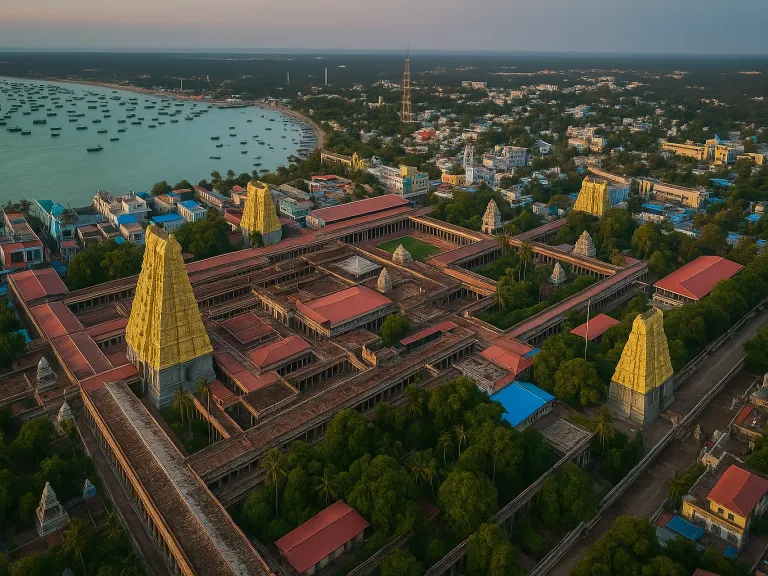
Ramanathaswamy Temple is also celebrated for its large Dravidian temple complex, high gopurams, extensive prakarams and exceptionally long pillared corridors. Its religious identity combines the sanctity of a Jyotirlinga, the memory of Rama’s worship of Shiva, and centuries of patronage by South Indian rulers and local chiefs. The temple remains an active place of worship, drawing devotees from Tamil Nadu, North India, Sri Lanka-linked pilgrimage circuits and the wider Hindu diaspora.
ℹ️Temple Information
🛕
Presiding Deity
Ramanathaswamy
👸
Goddess
Parvathavardhini Amman
⭐
Temple Type
Jyotirlinga temple, Char Dham temple, Shaivite temple, Dravidian temple, Ramayana-associated pilgrimage temple
📅
Built Period
Major structural development from the medieval period, with significant expansions from the 12th to 18th centuries CE.
🏛
Dynasty
Pandya; Jaffna kingdom patrons; Ramanathapuram Sethupathi chiefs
Need Help Planning your visit to
Arulmigu Ramanathaswamy Temple?
Our travel experts can help you with transportation,
darshan timings, nearby sightseeing and complete temple tour planning.
⭐Temple Significance
Ramanathaswamy Temple is one of the twelve Jyotirlinga shrines of Shiva and one of the four Char Dham pilgrimage centres. It is also a major Ramayana-associated temple where Rama is connected with the worship of Shiva after the war in Lanka.
📜History
The antiquity of Ramanathaswamy Temple is connected with the sacred geography of Rameshwaram, but the present stone temple grew over several centuries. The shrine is referred to in medieval Tamil religious and pilgrimage traditions, and its importance increased because of its association with both Shiva worship and the Ramayana. The earliest structural phases of the temple are generally placed in the medieval period, with later rulers expanding the complex.
The Pandya rulers are associated with important early patronage at Rameshwaram. Historical records and inscriptions show that the temple received endowments from South Indian rulers, merchants and devotees. The Jaffna kingdom, especially rulers connected with the Arya Chakravarti line, also contributed to the temple’s development. These links reflect Rameshwaram’s position on maritime routes between the Tamil coast and Sri Lanka.
Major architectural expansion continued under the Sethupathi chiefs of Ramanathapuram, who were custodians of the region connected with the route to Setu. The long corridors and several later mandapas owe much to the Sethupathi period, especially between the 17th and 18th centuries. The temple therefore cannot be assigned to one builder alone; it is the result of cumulative patronage by Pandya rulers, Jaffna-linked patrons, the Sethupathis and later administrators who maintained its ritual and pilgrimage importance.
🕉️Mythology
In the temple’s mythology, Ramanathaswamy Temple is linked to the Ramayana episode that follows Rama’s victory over Ravana. Rama, regarded as an incarnation of Vishnu, desired to worship Shiva before returning from Lanka. The worship was connected with atonement for killing Ravana, who, though an enemy, was born in a Brahmin lineage and was a great devotee of Shiva.
The tradition describes Rama asking Hanuman to bring a Shiva linga from Kailasa. When Hanuman’s return was delayed, Sita made a linga from sand so that the worship could be performed at the auspicious time. This linga became Ramanathaswamy, the principal deity of the temple. When Hanuman returned with the linga, Rama installed it also, and it is worshipped in the temple as Vishwalingam or Hanumad Lingam.
The temple’s sacred bathing tradition is also explained through Ramayana-linked sacred geography. The seashore known as Agni Theertham and the wells inside the temple are connected with purification before worship. Devotees associate Rameshwaram with Rama’s bridge to Lanka, the Setu, and with the completion of vows after pilgrimage to Kashi. These narratives give the temple a distinctive place where Shaiva worship, Rama devotion and pilgrimage rituals meet.
🏛Architecture
Ramanathaswamy Temple is a major example of Dravidian temple architecture in Tamil Nadu. The complex is enclosed by high walls and entered through monumental gopurams. The eastern rajagopuram is the tallest gateway of the temple and dominates the approach from the town. The sanctum houses the Ramanathaswamy linga, while the goddess shrine, mandapas, subsidiary shrines and ritual spaces are arranged within successive prakarams.
The temple is especially renowned for its corridors, among the longest pillared corridors in Indian temple architecture. The third corridor is famous for its long perspective, carved stone pillars and rhythmic alignment. The mandapas display features typical of late medieval and early modern Tamil architecture, including sculpted pillars, yali motifs and ornamental ceilings. The scale of the corridors reflects the patronage of the Sethupathi rulers of Ramanathapuram.
Another significant architectural and ritual feature is the group of sacred wells inside the complex. These wells, known as theerthams, are used by pilgrims before darshan. The temple layout integrates water ritual, processional movement and shrine worship. While its core sanctity is ancient, the visible structure shows layered construction, with additions by Pandya patrons, Jaffna-linked rulers, Sethupathi chiefs and later maintainers. This layered character gives the temple both architectural grandeur and historical depth.
🌳
Sacred Features
💧 Temple Tank
Agni Theertham
Agni Theertham is the sacred seashore near the temple where pilgrims bathe before proceeding for darshan and the theertham rituals inside the temple.
✨
Temple Highlights
✨
Jyotirlinga Shrine
Ramanathaswamy Temple is one of the twelve Jyotirlinga temples dedicated to Shiva, making it one of the most important Shaiva pilgrimage sites in India.
✨
Char Dham Pilgrimage Centre
Rameshwaram is one of the four Char Dham sites, along with Badrinath, Dwarka and Puri, giving the temple national pilgrimage significance.
✨
Ramayana Association
The temple is connected with the Ramayana tradition in which Rama worships Shiva at Rameshwaram after the battle in Lanka.
✨
Long Pillared Corridors
The temple is famous for its vast pillared corridors, especially the third corridor, known for its scale, symmetry and sculptural detail.
✨
Sacred Theerthams
Pilgrims bathe at Agni Theertham and in the sacred wells inside the temple complex before worshipping Ramanathaswamy.
🙏
Spiritual Benefits
Devotees seek the blessings of Lord Shiva as Ramanathaswamy.
Pilgrims perform theertham bathing as a ritual of purification before darshan.
Worship at the temple is associated with the completion of vows connected with Rameshwaram pilgrimage.
Devotees pray for relief from sins and inner burdens in the context of the temple’s Ramayana mythology.
Many pilgrims combine Rameshwaram worship with Kashi pilgrimage traditions.
Couples and families offer prayers for welfare, harmony and spiritual protection.
Maha Shivaratri worship at the temple is considered especially sacred by devotees.
🎉
Major Festivals
🎉
Maha Shivaratri
Maha Shivaratri is one of the most important festivals of the temple, marked by special worship of Lord Ramanathaswamy and large numbers of devotees.
🎉
Aadi Amavasai
Aadi Amavasai draws many pilgrims to Rameshwaram for ancestral rites, sacred bathing and temple worship.
🎉
Thai Amavasai
Thai Amavasai is an important day for pilgrimage, theertham bathing and ancestral observances at Rameshwaram.
🎉
Navaratri
Navaratri is observed with worship of the goddess Parvathavardhini Amman and associated temple rituals.
🎉
Arudra Darshan
Arudra Darshan is a significant Shaiva observance connected with Shiva worship and is observed in many major Shiva temples, including Rameshwaram.
🪔
Special Poojas
🪔
Spatika Lingam Darshan
Early morning darshan of the Spatika Lingam is a well-known worship practice at Ramanathaswamy Temple.
🪔
Theertham Bathing Ritual
Pilgrims bathe in Agni Theertham and the sacred wells inside the temple before worshipping Ramanathaswamy.
🪔
Abhishekam
Abhishekam to Lord Ramanathaswamy is an important form of worship performed according to temple procedure.
🪔
Archana
Devotees offer archana to Ramanathaswamy and Parvathavardhini Amman through the temple’s worship arrangements.
🚗
How to Reach
🛣️
By Road
Rameshwaram is connected by road to Ramanathapuram, Madurai and other towns in Tamil Nadu. Buses and taxis operate to the temple town via the Pamban road bridge.
🚆
By Rail
Rameswaram railway station connects the island with mainland Tamil Nadu through the Pamban rail route. The temple is within the town and can be reached by local transport from the station.
✈️
By Air
The nearest major airport is Madurai Airport. From Madurai, visitors can travel to Rameshwaram by road or rail.
💡
Visitor Tips
Plan extra time for the theertham bathing ritual before darshan if you intend to perform it.
Carry a change of clothes if participating in bathing at Agni Theertham or the temple wells.
Expect larger crowds during Maha Shivaratri, Aadi Amavasai, Thai Amavasai and holiday seasons.
Check current darshan timings locally before visiting, as schedules can change during festivals and special rituals.
Footwear must be left outside the temple in designated areas.
Respect queues, temple staff instructions and restricted areas within the shrine complex.
The temple is close to the sea, so early morning visits are often more comfortable in warm months.
Keep valuables secure, especially during crowded pilgrimage periods.

 WhatsApp Us