🛕About Temple
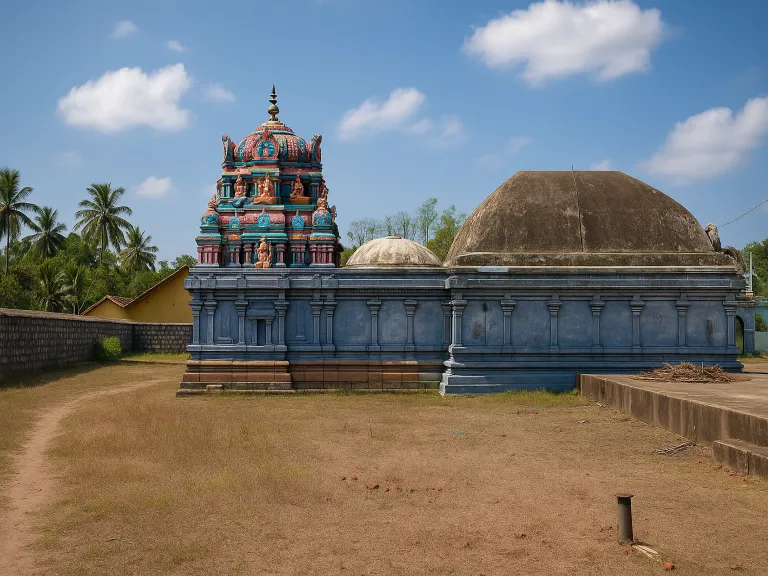
Ramanathaswamy Temple at Thirukannapuram is a Shaiva temple dedicated to Lord Shiva in the Thirukannapuram area of present-day Tamil Nadu. The presiding deity is worshipped as Ramanathaswamy or Ramanatheswarar, represented by a Shiva lingam, and the goddess is worshipped as Soodikodutha Nayagi. The temple belongs to the sacred landscape of the old Chola country, where many temples were praised in the Tamil Saiva devotional canon.
The temple is significant because it is counted among the Paadal Petra Sthalams, the Shiva temples glorified in the Tevaram hymns of the Nayanmar saints. Its sacred status is therefore not based only on later local memory, but on its place in the early medieval Tamil Shaiva bhakti tradition. Thirukannapuram is also well known for the nearby Sowriraja Perumal Temple, a Vaishnava Divya Desam, making the village an important pilgrimage point for both Shaiva and Vaishnava devotees.
The name Ramanathaswamy connects the temple with the devotional memory of Sri Rama worshipping Shiva. As with many ancient Tamil temples, the exact founding donor and the earliest structural phase are not securely documented in widely available historical records. The temple continues to be revered primarily for its Tevaram association, its Shiva worship, and its location in a region dense with ancient temples, sacred tanks, and pilgrimage routes.
ℹ️Temple Information
🛕
Presiding Deity
Ramanathaswamy
👸
Goddess
Soodikodutha Nayagi
⭐
Temple Type
Shiva temple, Paadal Petra Sthalam, Tevaram shrine
📅
Built Period
Known from at least the 7th century CE through the Tevaram tradition; the original construction date is not securely documented.
Need Help Planning your visit to
Arulmigu Ramanathaswamy Temple?
Our travel experts can help you with transportation,
darshan timings, nearby sightseeing and complete temple tour planning.
⭐Temple Significance
Ramanathaswamy Temple, Thirukannapuram is significant as a Paadal Petra Sthalam praised in the Tamil Shaiva Tevaram tradition. It is dedicated to Lord Shiva as Ramanathaswamy and is associated in sacred mythology with Sri Rama’s worship of Shiva. Its location in Thirukannapuram, near the well-known Sowriraja Perumal Divya Desam, gives the village importance in both Shaiva and Vaishnava pilgrimage traditions.
📜History
The historically secure importance of Ramanathaswamy Temple at Thirukannapuram rests on its association with the Tevaram, the 7th-century Tamil Shaiva devotional corpus. Temples praised in the Tevaram are known as Paadal Petra Sthalams, and this status places Thirukannapuram within the earliest layer of documented Tamil Shaiva sacred geography. The hymns of the Nayanmars helped preserve the names, deities, and sanctity of such shrines through continuous liturgical memory.
The temple belongs to the cultural region historically called Chola Nadu, an area that developed a dense network of Shiva temples from the early medieval period onward. While many temples in this region received patronage from Chola rulers and later dynasties, the specific builder of this temple and the exact date of its first construction are not securely established in widely documented sources. For this reason, the temple is best described as an ancient Shaiva shrine known from at least the period of the Tevaram.
Later history of the temple reflects the continuity of worship rather than a single documented royal foundation. The present structure, like many Tamil temples, represents layers of maintenance, renovation, and ritual use across centuries. Its historical identity is therefore tied to three verifiable elements: its dedication to Shiva as Ramanathaswamy, its association with the Nayanmar hymns, and its survival as a functioning sacred site in Thirukannapuram.
🕉️Mythology
In the mythology associated with Ramanathaswamy Temple at Thirukannapuram, the shrine is connected with Sri Rama, the hero of the Ramayana. The name Ramanathaswamy means “Lord worshipped by Rama” or “Lord of Rama,” and local sthala-purana tradition links the Shiva lingam here with Rama’s devotion to Shiva. This sacred memory gives the temple its distinctive identity among the Shiva shrines of the region.
The mythological theme is similar to the wider South Indian tradition in which Rama worships Shiva to receive divine grace and to remove the burden associated with war. At Thirukannapuram, the focus of the tradition is not political history but devotional humility: Rama, though revered as an incarnation of Vishnu, offers worship to Shiva. This theme is important in Tamil sacred geography because it expresses harmony between Shaiva and Vaishnava devotion.
The presence of the famous Sowriraja Perumal Temple in the same village adds depth to this sacred atmosphere. Thirukannapuram is therefore remembered not merely as a location of separate temples, but as a place where the devotional traditions of Shiva and Vishnu stand close together. The mythology of Ramanathaswamy Temple is best understood as a sacred narrative that explains the deity’s name, honors Rama’s worship, and reinforces the temple’s spiritual significance.
🏛Architecture
Ramanathaswamy Temple follows the essential spatial pattern of a Tamil Shiva temple, with the sanctum housing the Shiva lingam as the central focus of worship. The deity is worshipped as Ramanathaswamy or Ramanatheswarar, and the goddess shrine is dedicated to Soodikodutha Nayagi. The temple’s ritual arrangement would be understood through the standard Shaiva axis of approach, worship, circumambulation, and offerings before the presiding deity.
The architecture is significant less for monumental scale and more for continuity within the sacred temple-building tradition of the Kaveri delta and the old Chola country. Temples in this region commonly developed through successive additions, including enclosed spaces, mandapas, subsidiary shrines, and outer circulation areas. For this temple, widely verified measurements, tower details, inscriptional records, and named architectural patrons are not consistently available, so such details should not be asserted without site-level confirmation.
As a Paadal Petra Sthalam, the architectural value of the temple is closely linked to its liturgical value. The built form serves the daily worship of Shiva, the recitation of sacred hymns, and the observance of Shaiva festivals. The temple represents the durable South Indian model in which architecture, mythology, and devotional memory are inseparable. Its sanctum, goddess shrine, and ritual spaces support a living tradition rather than functioning only as an archaeological monument.
✨
Temple Highlights
✨
Paadal Petra Sthalam
The temple is counted among the Shiva shrines praised in the Tevaram hymns of the Nayanmar saints.
✨
Rama-associated Shiva shrine
The deity’s name Ramanathaswamy is connected with the sacred memory of Sri Rama worshipping Lord Shiva.
✨
Ancient Shaiva sacred geography
The temple belongs to the old Chola country, a region known for many early medieval Tamil Shiva temples.
✨
Goddess Soodikodutha Nayagi
The consort of Ramanathaswamy is worshipped as Soodikodutha Nayagi.
✨
Thirukannapuram pilgrimage setting
The village is also known for the Sowriraja Perumal Temple, creating a notable Shaiva-Vaishnava pilgrimage environment.
🙏
Spiritual Benefits
Devotees worship Lord Ramanathaswamy for the grace of Shiva.
The temple is visited for spiritual purification connected with the Rama-Shiva mythology.
Worship here is valued by devotees who revere the Tevaram hymns and Nayanmar tradition.
Prayers are offered for inner peace, humility, and devotion.
The shrine is considered meaningful for devotees seeking harmony between Shaiva and Vaishnava devotional ideals.
Pradosham worship is especially valued by Shiva devotees.
Maha Shivaratri worship is considered spiritually important for meditation on Shiva.
🎉
Major Festivals
🎉
Maha Shivaratri
A major Shaiva festival dedicated to Lord Shiva, observed with special worship, night vigil, and prayers in Shiva temples.
🎉
Pradosham
A regular Shaiva observance connected with worship of Lord Shiva and Nandi during the pradosha period.
🎉
Aippasi Annabhishekam
A Shaiva observance in which the Shiva lingam is worshipped with cooked rice offerings in the Tamil month of Aippasi.
🪔
Special Poojas
🪔
Abhishekam to Ramanathaswamy
Ritual bathing of the Shiva lingam with prescribed offerings, performed as part of Shaiva worship.
🪔
Pradosha Pooja
Special worship offered to Lord Shiva during Pradosham, an important period for Shiva devotees.
🪔
Rudra Parayanam and Archana
Recitation of sacred Rudra hymns and offering of archana to Lord Shiva, subject to temple practice and priest availability.
🚗
How to Reach
🛣️
By Road
Thirukannapuram is accessible by road from towns in the Tiruvarur and Nagapattinam region. Local buses, taxis, and private vehicles are commonly used for temple visits.
🚆
By Rail
Visitors may use railway stations in the Tiruvarur-Nagapattinam region and continue to Thirukannapuram by road. Current train connectivity should be checked before travel.
✈️
By Air
The nearest major airport generally used for this region is Tiruchirappalli International Airport, followed by onward road or rail travel.
💡
Visitor Tips
Confirm current opening hours locally before planning the visit.
Carry cash for offerings, as small temples may not always support digital payments.
Dress modestly and follow temple customs during worship.
Avoid photographing the sanctum unless explicit permission is given.
Visit early in the morning or evening for a quieter darshan experience.
Combine the visit with nearby Thirukannapuram temples if time permits.
Check local transport availability for the return journey, especially in the evening.

 WhatsApp Us