🛕About Temple
Rathnagiriswarar Temple at Thirumarugal is an ancient Shiva temple in the Cauvery delta region of Tamil Nadu, in the present Nagapattinam district. The presiding deity is Lord Shiva worshipped as Rathnagiriswarar, also known as Manickavannar, and the divine consort is worshipped as Vanduvarkuzhali Amman. The temple is closely associated with Tamil Shaiva devotional literature and is counted among the Paadal Petra Sthalams, the sacred Shiva temples praised in the Tevaram hymns.
Thirumarugal has an important place in the religious geography of the lower Cauvery region. The name of the village is associated with the marugal plant, identified in temple tradition with a plantain variety that serves as the sthala-vriksha of the shrine. The temple is revered by devotees who visit the Nagapattinam, Tiruvarur and Mayiladuthurai belt of ancient Shaiva temples, where many shrines were celebrated by the Nayanmars.
The temple is especially remembered for its connection with Tirugnanasambandar, one of the principal Shaiva saints. In local tradition and hagiographical accounts, Sambandar’s hymn at Thirumarugal is linked with the revival of a young merchant who had died from a snake bite. Because of this association, the temple is approached by devotees seeking divine protection, removal of fear and blessings for marriage, family life and well-being.
ℹ️Temple Information
🛕
Presiding Deity
Rathnagiriswarar
👸
Goddess
Vanduvarkuzhali Amman
⭐
Temple Type
Shiva temple, Paadal Petra Sthalam, Tevaram shrine, Ancient Tamil Shaiva temple
📅
Built Period
Before the 7th century CE as established by Tevaram references; later structural phases are not precisely documented in widely available historical records.
Need Help Planning your visit to
Arulmigu Rathnagiriswarar Temple?
Our travel experts can help you with transportation,
darshan timings, nearby sightseeing and complete temple tour planning.
⭐Temple Significance
Rathnagiriswarar Temple is significant as a Paadal Petra Sthalam praised in the Tevaram hymns of the Tamil Shaiva saints. It is also revered for the Thirumarugal legend in which Tirugnanasambandar restored a snake-bitten youth to life through devotion to Lord Shiva.
📜History
The antiquity of Rathnagiriswarar Temple is firmly established by its presence in the Tevaram canon. The shrine was already a recognised Shiva temple by the 7th century CE, when the Nayanmar saints Tirugnanasambandar and Appar sang about Thirumarugal. This makes the temple part of the early medieval sacred landscape of Tamil Shaivism, before the large-scale imperial Chola temple-building phase that later shaped many shrines of the Cauvery delta.
The temple’s historical identity is therefore based more securely on literary evidence than on a single known founder. The Tevaram hymns and later Shaiva hagiographical traditions preserved the sanctity of Thirumarugal and linked it with the devotional movement that spread through Tamil Nadu between the 6th and 9th centuries CE. The temple belongs to the group of 275 Paadal Petra Sthalams, which remain among the most important pilgrimage sites for Tamil Shaivites.
The present temple complex reflects the Dravidian temple idiom of the Cauvery delta, where older shrines were maintained, rebuilt and expanded across several centuries by regional rulers, local communities and temple patrons. A precise historical builder for the extant structure is not securely documented in widely available temple records. Its historical significance rests on its Tevaram status, its association with the Nayanmars, and its continuous role as a living Shaiva place of worship in the Nagapattinam region.
🕉️Mythology
The best-known sacred legend of Thirumarugal is connected with Tirugnanasambandar. According to Shaiva tradition, a young merchant and a maiden came to Thirumarugal after leaving their homes with the intention of marriage. While staying there, the young man was bitten by a snake and died. The distressed maiden appealed to Sambandar, who was present in the region, and the saint prayed to Lord Shiva of Thirumarugal through his hymn.
The legend states that by the grace of Rathnagiriswarar and the power of Sambandar’s devotion, the dead youth was restored to life. The event is celebrated in the temple’s sacred memory as an example of Shiva’s compassion and the saving power of sincere devotion. The revived youth and the maiden were then united in marriage in the presence of the Lord, making the shrine especially meaningful to devotees who pray for protection from danger and for removal of obstacles in marriage.
Another strand of temple tradition connects the sacred place with the marugal plant, from which the village name Thirumarugal is derived. The temple’s devotional identity is also associated with the name Rathnagiriswarar, meaning the Lord of the gem-like hill or radiant sacred presence. These narratives belong to the temple’s mythological and devotional heritage, distinct from the historical evidence of its antiquity in the Tevaram hymns.
🏛Architecture
Rathnagiriswarar Temple follows the Dravidian architectural pattern typical of ancient Shaiva temples in the Cauvery delta. The temple is organised around the sanctum of Lord Shiva, where Rathnagiriswarar is worshipped in the form of a Shiva lingam. The shrine is enclosed within prakara spaces used for circumambulation, and the sacred movement of devotees is directed from the entrance toward the garbhagriha and the principal deity.
The goddess Vanduvarkuzhali Amman has her own shrine within the temple complex, reflecting the standard Shaiva arrangement in which Shiva and Shakti are worshipped as inseparable divine presences. The temple also includes the usual subsidiary shrines and icons associated with Tamil Shaiva worship, such as Ganesha, Murugan, Chandikeswarar and other deities commonly found in Shiva temples. These spaces support daily worship, festival rituals and circumambulatory devotion.
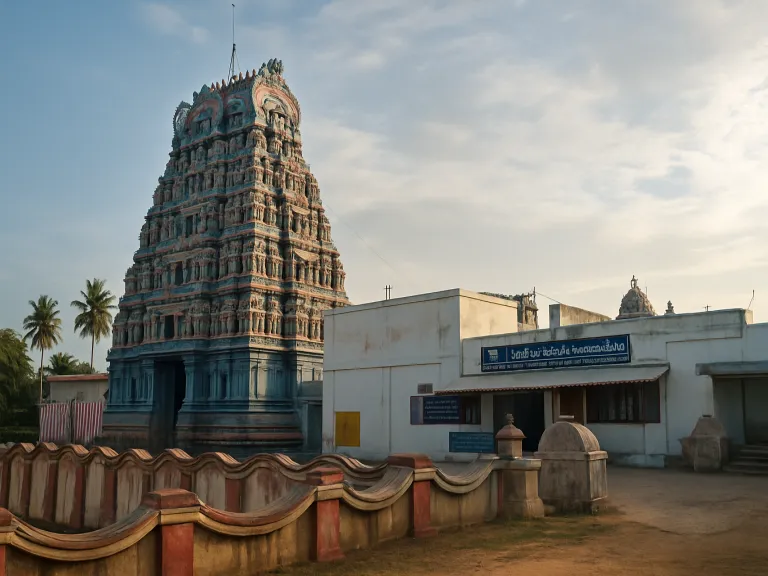
Architecturally, the temple is valued less for a single monumental feature and more for its continuity as a Tevaram shrine that preserves the ritual and spatial grammar of Tamil Shaiva temple worship. Its gopuram entrance, enclosed precinct, sanctum, goddess shrine, sacred tree and temple water source together form the complete sacred environment expected in an old Cauvery-region Shiva temple. The structure seen today represents layers of maintenance and renovation over time while preserving the shrine’s ancient devotional identity.
🌳
Sacred Features
🌳 Temple Tree
Marugal plant
The village name Thirumarugal is associated with the marugal plant, identified in temple tradition as the sacred sthala-vriksha of the shrine.
✨
Temple Highlights
✨
Paadal Petra Sthalam
The temple is one of the sacred Shiva shrines praised in the Tevaram hymns and is part of the revered Tamil Shaiva pilgrimage tradition.
✨
Association with Tirugnanasambandar
Thirumarugal is remembered for the legend in which Sambandar prayed to Rathnagiriswarar and restored a young merchant who had died from a snake bite.
✨
Ancient Cauvery Delta Shrine
The temple belongs to the historic sacred geography of the lower Cauvery region, where many early Shaiva temples flourished.
✨
Sthala-vriksha Connection
The name Thirumarugal is associated with the marugal plant, preserved in temple tradition as the sacred tree of the shrine.
✨
Shiva as Rathnagiriswarar
The presiding deity is worshipped as Rathnagiriswarar, also known as Manickavannar, a name connected with radiance and gem-like splendour.
🙏
Spiritual Benefits
Devotees pray for protection from fear and danger.
Devotees pray for relief from difficulties connected with marriage.
Devotees seek blessings for family harmony and domestic well-being.
Devotees offer worship for recovery, health and divine protection.
Devotees seek removal of obstacles through the grace of Lord Shiva.
Devotees visit to receive the merit of worship at a Tevaram Paadal Petra Sthalam.
Devotees pray for spiritual strength and deeper devotion to Shiva.
🎉
Major Festivals
🎉
Maha Shivaratri
Maha Shivaratri is one of the most important annual observances for Lord Shiva and is associated with night-long worship, abhishekam and devotion in Shiva temples.
🎉
Pradosham
Pradosham is an important recurring Shaiva observance dedicated to Lord Shiva and Nandi, generally observed twice every lunar month.
🎉
Tiruvathirai
Tiruvathirai in the Tamil month of Margazhi is a major Shaiva observance connected with Lord Shiva as Nataraja.
🎉
Aippasi Annabhishekam
Annabhishekam during the Tamil month of Aippasi is a significant Shiva temple ritual in which the lingam is ceremonially covered with cooked rice.
🪔
Special Poojas
🪔
Abhishekam to Rathnagiriswarar
Sacred bathing of the Shiva lingam with ritual substances is central to daily and special worship of Lord Shiva.
🪔
Pradosha Puja
Pradosha worship is performed for Lord Shiva during the twilight period on Pradosham days and is considered especially auspicious in Shaiva tradition.
🪔
Archana to Vanduvarkuzhali Amman
Devotees offer archana to the goddess seeking blessings for family welfare, protection and auspiciousness.
🚗
How to Reach
🛣️
By Road
Thirumarugal is reachable by road from Nagapattinam, Tiruvarur, Nannilam and nearby towns in the Cauvery delta region. Local buses, taxis and private vehicles are commonly used for temple visits.
🚆
By Rail
The nearest convenient railway access is through stations in the Nagapattinam and Tiruvarur region. Travellers should confirm the most suitable station based on current train services.
✈️
By Air
The nearest major airport for long-distance travellers is Tiruchirappalli International Airport, followed by onward travel by road or rail toward Nagapattinam and Thirumarugal.
💡
Visitor Tips
Confirm current temple timings locally before travelling, as schedules can change on festival and maintenance days.
Wear modest clothing suitable for worship in a traditional Hindu temple.
Carry drinking water during summer months, as the Nagapattinam region can be hot and humid.
Check locally before taking photographs, especially inside the temple precincts.
Plan additional time for pradakshina and quiet worship, as this is a Tevaram shrine of devotional importance.
Combine the visit with nearby Shaiva and Vaishnava temples in the Nagapattinam and Tiruvarur region if time permits.
Visit early in the morning or late in the evening for a calmer darshan experience.

 WhatsApp Us