🛕About Temple
Rathnapureeswarar Temple at Thiruvazhkoliputhur is a sacred Shiva temple in the Mayiladuthurai region of Tamil Nadu’s Cauvery delta. The presiding deity is Lord Shiva worshipped as Rathnapureeswarar, and the goddess is worshipped as Vandamar Poonguzhali Amman. The shrine is known mainly through its place in the Tamil Saiva devotional tradition and through the Tevaram hymns that sanctify it.
The temple is counted among the Paadal Petra Sthalams, the Shiva temples praised in the canonical Tevaram hymns of the Nayanmars. Thirugnana Sambandar, one of the foremost Saiva saints of the 7th century CE, sang on this shrine, making it part of the sacred geography of Tamil Shaivism. Its importance rests not on royal scale or monumental fame, but on continuous devotional memory.
Thiruvazhkoliputhur belongs to the cluster of ancient Shiva shrines around Sirkazhi, Vaitheeswaran Koil, Thiruppungur and other historic temple settlements of northern Cauvery delta. The temple preserves the characteristic atmosphere of a village Saiva sthalam, where the linga, the goddess shrine, the Tevaram association and regular worship form the core of the experience. For devotees and heritage travellers, it is valued as an authentic Tevaram shrine connected with early Tamil bhakti.
ℹ️Temple Information
🛕
Presiding Deity
Rathnapureeswarar
👸
Goddess
Vandamar Poonguzhali Amman
⭐
Temple Type
Shiva temple, Paadal Petra Sthalam, Tevaram shrine
📅
Built Period
7th century CE or earlier, as the shrine is attested in the Tevaram hymns of Thirugnana Sambandar.
Need Help Planning your visit to
Arulmigu Rathnapureeswarar Temple?
Our travel experts can help you with transportation,
darshan timings, nearby sightseeing and complete temple tour planning.
⭐Temple Significance
Rathnapureeswarar Temple is significant as a Paadal Petra Sthalam praised by Thirugnana Sambandar in the Tevaram. It is part of the sacred Saiva geography of the Cauvery delta and preserves the devotional memory of early Tamil bhakti.
📜History
The historically secure importance of Rathnapureeswarar Temple begins with its mention in the Tevaram corpus. Thirugnana Sambandar’s hymn on Thiruvazhkoliputhur establishes that the shrine was already a recognized Saiva place of worship by the 7th century CE. This makes the sacred site older than, or at least contemporary with, the early phase of Tamil bhakti literature.
The temple stands within the old Chola country of the Cauvery delta, a region where Saiva worship, temple construction and Tamil devotional culture received sustained patronage over many centuries. However, the original founder of the Thiruvazhkoliputhur temple is not securely identified in widely documented historical sources. The present structural fabric reflects the long history of Tamil temple maintenance, renovation and ritual continuity rather than a single clearly recorded building campaign.
Its inclusion among the Paadal Petra Sthalams is the most important historical marker for the temple. Unlike imperial Chola monuments whose inscriptions and donors are extensively studied, this shrine is chiefly known through canonical religious literature and local continuity of worship. The historical narrative should therefore be separated from later legend: the verifiable fact is that Thiruvazhkoliputhur was a Saiva shrine celebrated by Sambandar and preserved within the sacred list of Tevaram temples. This connection gives it enduring significance in Tamil religious history.
🕉️Mythology
The mythology of Rathnapureeswarar Temple is best understood through its devotional identity rather than through a single widely documented puranic episode. The name Rathnapureeswarar connects the deity with the idea of ratna, meaning gem or precious jewel. In Saiva devotional language, this conveys the vision of Shiva as the priceless inner treasure and the radiant Lord worshipped in the sanctum as a linga.
The goddess name Vandamar Poonguzhali Amman is also rich in Tamil devotional imagery. The expression evokes the goddess with beautiful, flower-adorned tresses around which bees gather, a poetic form of describing divine beauty and auspiciousness. Such names are part of the sacred language of Tamil temples, where the goddess is experienced as compassionate, graceful and inseparable from Shiva.
The most securely preserved sacred memory of the temple comes through Thirugnana Sambandar’s Tevaram hymn. In the Saiva tradition, a place praised by a Nayanmar is not merely a geographic location but a living sthalam charged with the saint’s devotion. Later temple traditions may preserve local accounts, but a consistent and widely documented mythic narrative for Thiruvazhkoliputhur is not available in standard historical summaries. For this reason, the temple’s mythology is presented here through its deity names, Tevaram sanctity and devotional symbolism rather than through unverifiable stories.
🏛Architecture
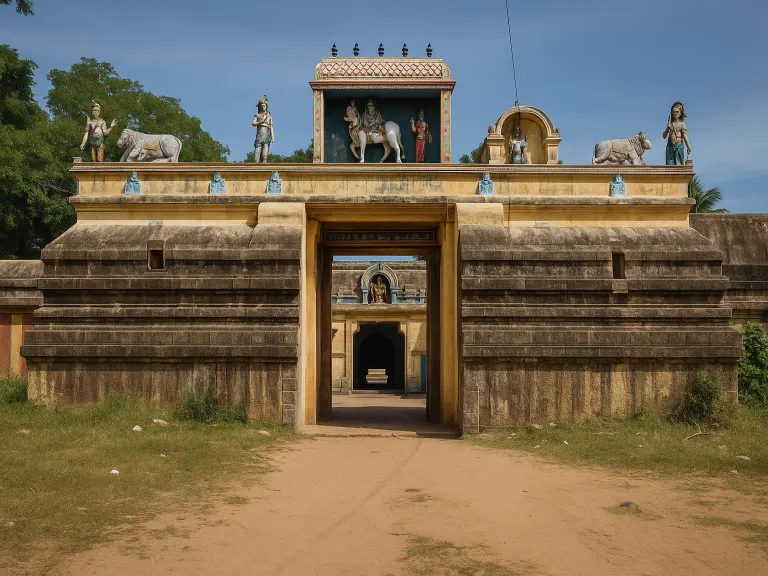
Rathnapureeswarar Temple follows the Dravidian temple pattern found in many older Saiva shrines of the Cauvery delta. The central focus is the garbhagriha, where Lord Shiva is enshrined in linga form as Rathnapureeswarar. The goddess Vandamar Poonguzhali Amman is worshipped in her own shrine, maintaining the standard Saiva temple arrangement of Shiva and Shakti as complementary sacred presences.
The temple layout reflects the functional architecture of a living village shrine rather than the monumental scale of the largest Chola temples. The principal components include the sanctum, adjoining halls for worship, circumambulatory space and subsidiary areas used for ritual movement. Such temples are designed around darshan, pradakshina, abhishekam and festival worship, with the sanctum and the deity’s presence forming the architectural and spiritual center.
As with many Tevaram shrines, the architectural history may include renovations and additions made across different periods, but a specific original architect, patron or construction date is not clearly established in widely available historical records. The importance of the building lies in its continuity as a Paadal Petra Sthalam and in the way its architecture supports traditional Saiva worship. Visitors should approach it as a historic sacred site of the Tamil bhakti landscape, where compact form, ritual use and literary sanctity are more significant than ornamental grandeur.
✨
Temple Highlights
✨
Paadal Petra Sthalam
The temple is one of the Shiva shrines praised in the Tevaram hymns, giving it a revered place in Tamil Saiva tradition.
✨
Tevaram connection
Thirugnana Sambandar sang on Thiruvazhkoliputhur, establishing the shrine’s antiquity and devotional importance.
✨
Lord Rathnapureeswarar
The presiding deity is Lord Shiva worshipped in linga form as Rathnapureeswarar.
✨
Vandamar Poonguzhali Amman
The goddess is worshipped as Vandamar Poonguzhali Amman, a name rich in Tamil devotional imagery.
✨
Cauvery delta sacred landscape
The shrine forms part of the dense network of ancient Saiva temples around Sirkazhi and Mayiladuthurai.
🙏
Spiritual Benefits
Seeking the grace of Lord Shiva as Rathnapureeswarar
Worshipping at a shrine sanctified by Tevaram hymns
Deepening devotion through Tamil Saiva bhakti tradition
Offering prayers to Shiva and Shakti together
Performing pradakshina and quiet worship in an ancient sthalam
Connecting with the sacred temple network of the Cauvery delta
🎉
Major Festivals
🎉
Maha Shivaratri
A major Saiva observance dedicated to Lord Shiva. Visitors should confirm the temple’s local programme and timings in advance.
🎉
Pradosham
A regular Saiva observance connected with worship of Lord Shiva and Nandi. The local schedule should be verified before visiting.
🎉
Arudra Darshanam
An important Shaiva festival associated with Lord Shiva, especially in Tamil temples. Local observance details should be confirmed.
🎉
Aippasi Annabhishekam
A widely observed ritual in Shiva temples in Tamil Nadu, involving sacred offering to the Shiva linga. Local arrangements should be checked.
🪔
Special Poojas
🪔
Abhishekam
Ritual bathing of the Shiva linga is a central form of worship in Saiva temples. Availability and timing should be confirmed with the temple.
🪔
Pradosha Pooja
Worship performed on Pradosham days for Lord Shiva. Visitors should verify the local schedule.
🪔
Somavara Worship
Monday worship is especially associated with Lord Shiva. Specific arrangements at the temple should be checked locally.
🚗
How to Reach
🛣️
By Road
Thiruvazhkoliputhur can be approached by road from the Sirkazhi, Vaitheeswaran Koil and Mayiladuthurai region using local buses, taxis or private vehicles.
🚆
By Rail
Rail access is available through stations in the Sirkazhi, Vaitheeswaran Koil and Mayiladuthurai region. Visitors should confirm the most convenient station based on current transport connections.
✈️
By Air
Travellers generally use major airports serving the central and northern Tamil Nadu region and continue by rail or road to the Mayiladuthurai district area.
💡
Visitor Tips
Confirm current opening hours with local contacts before travelling.
Carry cash for offerings, as small rural temples may not support digital payments consistently.
Dress modestly and remove footwear before entering the temple premises.
Maintain silence near the sanctum and avoid interrupting ongoing rituals.
Ask temple staff before taking photographs.
Combine the visit with nearby Tevaram temples in the Sirkazhi and Vaitheeswaran Koil region if time permits.
Visit during cooler months for more comfortable travel in the Cauvery delta.
Check local transport availability in advance, especially for early morning or late evening visits.

 WhatsApp Us