🛕About Temple
Sri Renugambal Temple at Padavedu, also written as Padaveedu or Padaiveedu, is a major Amman shrine in Tiruvannamalai district, Tamil Nadu. The temple is dedicated to Goddess Renugambal, identified with Renuka Devi, the mother of Sage Parasurama and wife of Sage Jamadagni in Hindu sacred tradition. Padavedu lies in the fertile northern Tamil region between the historical towns of Vellore, Arani and Polur, and is known for a cluster of medieval temples associated with the old Padaiveedu settlement.
The shrine is especially important because Padavedu was a noted political and cultural centre under the Sambuvarayar chiefs during the medieval period. The name Padaiveedu means a military camp or fortified settlement, reflecting the area’s historical role. Within this landscape, Renugambal Amman is worshipped as the presiding protective goddess of the region, and the temple continues to attract devotees from Tiruvannamalai, Vellore, Chennai and neighbouring districts.
The temple combines historical importance with active living worship. Devotees visit for darshan of the Mother Goddess, offer kumkum and flowers, and participate in Amman-related observances, especially during Aadi and Navaratri. The site is also visited together with other Padavedu temples, making it both a sacred destination and an entry point into the religious heritage of the Sambuvarayar capital.
ℹ️Temple Information
🛕
Presiding Deity
Sri Renugambal Amman
👸
Goddess
Sri Renugambal Amman
⭐
Temple Type
Amman temple, Shakti temple, Historic Tamil Nadu temple, Living Hindu temple
📅
Built Period
13th–14th century CE
Need Help Planning your visit to
Arulmigu Sri Renugambal Temple?
Our travel experts can help you with transportation,
darshan timings, nearby sightseeing and complete temple tour planning.
⭐Temple Significance
Sri Renugambal Temple is significant as the principal Renuka Devi shrine of Padavedu, a historically important Sambuvarayar centre. It links the Puranic tradition of Renuka, mother of Parasurama, with the Tamil Amman worship tradition and the medieval sacred geography of northern Tamil Nadu.
📜History
Padavedu has a documented place in the medieval history of northern Tamil Nadu. The settlement served as the capital or important stronghold of the Sambuvarayar chiefs, who rose to prominence between the later Chola and Vijayanagara periods. Inscriptions and temple remains across Padavedu show that the region was a centre of administration, military organisation, temple patronage and agrarian endowments. Sri Renugambal Temple belongs to this historical environment and is associated with the temple-building activity of the Sambuvarayar rulers.
The Sambuvarayars, including rulers connected with the Rajanarayana Sambuvaraya line, controlled parts of present-day Tiruvannamalai and Vellore regions during the 13th and 14th centuries CE. Their capital at Padaiveedu contained several shrines dedicated to Shiva, Vishnu and the Goddess. The Renugambal shrine reflects the importance given to local guardian goddesses and pan-Indian Puranic deities within the same political landscape. Later Vijayanagara influence in the region also contributed to the continuation of temple worship and renovation of sacred sites.
The temple’s history should be understood as part of Padavedu’s broader temple complex rather than as an isolated monument. While the precise date of the first shrine cannot be fixed with certainty from commonly available public information, the medieval phase of construction and patronage is securely connected with the Sambuvarayar period. The temple remains a living place of worship rather than only an archaeological monument, and its historical identity is preserved through continued ritual use and regional memory.
🕉️Mythology
The mythology of Sri Renugambal Temple centres on Renuka Devi, revered in Hindu tradition as the wife of Sage Jamadagni and the mother of Parasurama, the sixth avatara of Vishnu. In the Puranic narrative, Renuka was renowned for her chastity, spiritual power and devotion to her husband. Her story is closely connected with the testing of dharma, obedience, maternal grace and divine restoration, themes that made Renuka one of the most widely worshipped mother figures in many regions of India.
According to the sacred narrative, Sage Jamadagni once became angered and commanded his sons to behead their mother Renuka. Only Parasurama obeyed the command. Pleased with his obedience, Jamadagni granted him boons, and Parasurama asked for his mother to be restored to life. Renuka was revived and came to be worshipped as a powerful mother goddess. This mythology is narrated at many Renuka and Yellamma shrines, including the devotional tradition associated with Padavedu.
At Padavedu, local religious tradition identifies Renugambal Amman with this compassionate and protective form of Renuka Devi. Devotees approach her as a mother who removes distress, protects families and grants courage in difficult circumstances. The mythology belongs to the sacred devotional layer of the temple and is distinct from the documented medieval history of Padavedu as a Sambuvarayar centre. The continuing worship of Renugambal links the Puranic figure of Renuka with the living Amman tradition of Tamil Nadu.
🏛Architecture
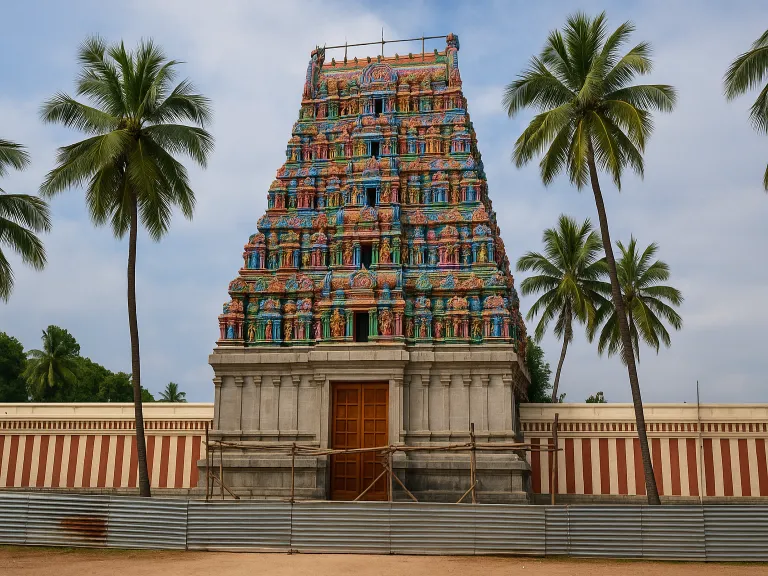
Sri Renugambal Temple follows the broad South Indian Dravidian temple pattern found in medieval Tamil Nadu. The sacred layout is organised around the sanctum of the presiding goddess, with approach spaces for worshippers, enclosed circulation areas and ritual mandapas. The temple is not only a historical structure but an active shrine, so its architecture includes both older masonry elements and later additions required for daily worship, festivals and public access.
The architectural character of Padavedu’s temples reflects the cultural world of the Sambuvarayars, whose patronage drew from the established Chola-Pandya temple idiom while developing a regional northern Tamil style. In the Renugambal shrine, the emphasis is on the Amman sanctum and the ritual presence of the goddess rather than on monumental scale alone. The temple precinct provides space for offerings, circumambulation, festival decoration and congregation of devotees during important occasions such as Aadi and Navaratri.
As with many living temples in Tamil Nadu, parts of the structure have undergone maintenance, repair and renewal over time. The present appearance therefore represents multiple phases rather than a single untouched building campaign. The temple should be appreciated along with the other Padavedu shrines, where stone construction, mandapas, sculptural details and sacred enclosures together show the religious and artistic life of the former Sambuvarayar capital. Specific technical details such as the governing Agama or original sthapati lineage are not reliably available in widely established sources.
✨
Temple Highlights
✨
Principal Renuka Devi shrine of Padavedu
The temple is dedicated to Sri Renugambal Amman, identified with Renuka Devi, mother of Parasurama in Hindu sacred tradition.
✨
Located in the Sambuvarayar capital region
Padavedu was an important medieval centre of the Sambuvarayar chiefs, and the temple forms part of this historically rich sacred landscape.
✨
Living Amman temple
The shrine remains an active place of worship where devotees offer prayers to the Mother Goddess for protection, welfare and strength.
✨
Part of the Padavedu temple circuit
Visitors commonly combine darshan at Renugambal Temple with other historic temples in and around Padavedu.
🙏
Spiritual Benefits
Seeking the grace of the Divine Mother
Prayers for family welfare and protection
Devotional worship for courage during difficulties
Seeking relief from mental distress through prayer
Offering gratitude for fulfilled vows
Participating in Amman worship during Aadi and Navaratri
Strengthening devotion to Renuka Devi
🎉
Major Festivals
🎉
Navaratri
Navaratri is an important festival for the worship of the Divine Mother, with special devotion to Sri Renugambal Amman.
🎉
Aadi month worship
The Tamil month of Aadi is significant for Amman worship, and devotees visit the temple for special prayers to the goddess.
🪔
Special Poojas
🪔
Kumkum Archana
Devotees offer kumkum archana to Sri Renugambal Amman as an expression of devotion to the Mother Goddess.
🪔
Abhishekam and Alankaram
Ritual bathing and decoration of the deity are part of the worship tradition of the temple.
🚗
How to Reach
🛣️
By Road
Padavedu is accessible by road from Polur, Arani, Vellore and Tiruvannamalai through local bus, taxi and private vehicle routes.
🚆
By Rail
Polur Railway Station is one of the practical rail access points for reaching Padavedu, followed by road travel to the temple.
✈️
By Air
Travellers generally use major airports serving northern Tamil Nadu and then continue by road to Padavedu.
💡
Visitor Tips
Verify current temple timings before travelling, as hours can change on festival days.
Dress modestly and follow local temple customs inside the shrine.
Carry cash for offerings, archana tickets or local expenses where digital payment may not be available.
Plan extra time if visiting during Aadi Fridays, Navaratri or other crowded festival periods.
Combine the visit with other historic temples in Padavedu if time permits.
Respect restrictions on photography wherever indicated by temple authorities.
Use Polur, Arani or Vellore as practical road access points depending on your route.

 WhatsApp Us