🛕About Temple
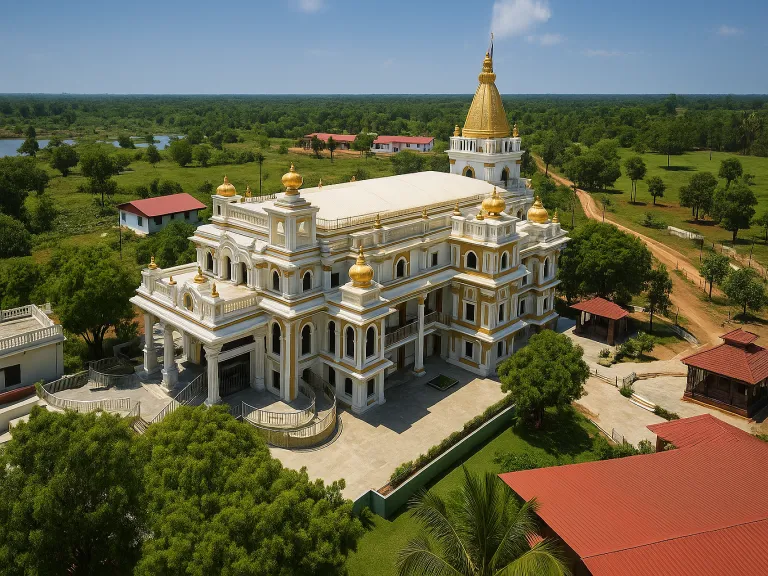
The Sai Baba Temple at Akkaraipatti is a modern devotional shrine dedicated to Shirdi Sai Baba, the revered saint of Shirdi in Maharashtra. Akkaraipatti is in Tiruchirappalli district, Tamil Nadu, close to the Samayapuram region, an area already known to pilgrims because of the famous Samayapuram Mariamman Temple. The temple serves devotees who worship Sai Baba as a guru and compassionate spiritual guide rather than as a deity belonging to an ancient Tamil dynastic temple tradition.
The central focus of worship is Sai Baba, whose message is widely summarized through faith, patience, charity, remembrance of God, and service to all beings. Devotees visit Sai temples for quiet prayer, bhajan, aarti, and personal vows. The Akkaraipatti shrine belongs to the broader network of Sai Baba temples that developed across India after Sai Baba’s Mahasamadhi in 1918 and especially in the modern period.
Unlike many historic temples in Tiruchirappalli district, this shrine is not known through stone inscriptions, royal endowments, or medieval temple chronicles. Its significance is therefore devotional and contemporary rather than archaeological. Well-established public information identifies it as a Sai Baba temple at Akkaraipatti, but detailed verified records about its founders, consecration date, temple-management history, daily ritual schedule, and official festival calendar are not consistently available in standard historical sources. For that reason, only broadly verifiable details are included here.
ℹ️Temple Information
🛕
Presiding Deity
Shirdi Sai Baba
⭐
Temple Type
Shirdi Sai Baba temple, Modern Hindu devotional shrine, Guru shrine
📅
Built Period
21st century
Need Help Planning your visit to
Sai Baba Temple?
Our travel experts can help you with transportation,
darshan timings, nearby sightseeing and complete temple tour planning.
⭐Temple Significance
The temple is significant as a modern Sai Baba shrine in Tiruchirappalli district and as a place where devotees worship Shirdi Sai Baba through prayer, faith, patience, charity, and remembrance of the guru. It is not documented as an ancient dynastic temple.
📜History
The historical background of the Sai Baba Temple at Akkaraipatti is best understood within the modern spread of devotion to Shirdi Sai Baba. Sai Baba lived at Shirdi in present-day Maharashtra and attained Mahasamadhi in 1918. After his lifetime, Shirdi became the principal centre of Sai worship, and temples dedicated to him were established in many parts of India. Tamil Nadu also developed several Sai Baba shrines, especially in urban and roadside pilgrimage settings where devotees gather for prayer, bhajan, and annadanam.
Akkaraipatti, located in Tiruchirappalli district near Samayapuram, became known to devotees through this modern Sai devotional movement. The temple is not documented as a Chola, Pandya, Nayak, Pallava, or Vijayanagara-period shrine. No widely established inscriptional evidence, royal charter, dynastic patronage record, or ancient sthala-purana text is available for this temple in standard historical accounts. Its history should therefore not be presented as part of the medieval temple-building chronology of Tamil Nadu.
Because verified public records about the builder, exact construction year, consecration details, and administrative lineage are not consistently available from well-established historical sources, those details are left unspecified. The historically reliable point is that this is a contemporary shrine dedicated to Shirdi Sai Baba and associated with the ongoing devotional culture of Sai worship in Tamil Nadu. Its value lies in living devotion, congregational worship, and the continuing influence of Sai Baba’s teachings rather than in antiquity or dynastic architecture.
🕉️Mythology
The Sai Baba Temple at Akkaraipatti does not have a widely documented ancient mythological narrative comparable to the sthala puranas of many classical Shiva, Vishnu, or Devi temples in Tamil Nadu. It is dedicated to Shirdi Sai Baba, a historical saint of the modern era, and its sacred meaning is shaped by guru devotion, personal prayer, and the devotional memory of Sai Baba’s life at Shirdi. Therefore, mythology connected with this shrine should be distinguished from the broader devotional traditions surrounding Sai Baba.
In Sai Baba devotion, stories about compassion, healing, protection, sacred ash known as udi, feeding the poor, and the unity of different paths of worship are central. These narratives come from the wider Sai tradition and from accounts associated with Shirdi. Devotees often approach Sai Baba as a living guru whose grace continues beyond physical death. Such devotional understanding belongs to the faith tradition of Sai worship and is not the same as a verifiable historical record about the Akkaraipatti temple itself.
The broader message connected with Sai Baba emphasizes Shraddha and Saburi, meaning faith and patience. Sai Baba is venerated by devotees across religious and regional backgrounds, and many Sai temples reflect this inclusive spiritual character. At Akkaraipatti, the mythic and devotional atmosphere comes from this pan-Indian Sai tradition rather than from a locally documented legend of gods, sages, rivers, demons, or royal patrons. No independent, well-established local myth specific to the temple is available for reliable inclusion.
🏛Architecture
The Sai Baba Temple at Akkaraipatti is a modern devotional temple rather than an ancient stone monument. Its architectural identity is centered on a sanctum for Shirdi Sai Baba and spaces that support congregational worship, darshan, bhajan, and prayer. Modern Sai temples commonly emphasize accessibility, clear sightlines to the main image, and a devotional atmosphere suited to a broad public. The Akkaraipatti shrine should be viewed in that context rather than as part of a medieval Dravidian architectural sequence.
Unlike historic temples with documented inscriptions, sculptural programs, mandapas, prakara expansions, and royal-period gopurams, this temple does not have a widely published architectural history in standard temple studies. No verified details are available here regarding the architect, construction measurements, consecration plan, stone source, sculptural iconography, or specific ritual layout. It would therefore be inaccurate to assign it to a Chola, Pandya, Nayak, Pallava, or Vijayanagara style without authoritative evidence.
The most reliable architectural description is that it is a contemporary Sai Baba shrine built for active devotion. The presence of Sai Baba as the principal focus differentiates it from Agamic temples dedicated to Shiva, Vishnu, Murugan, Ganesha, or Devi. Its sacred space functions as a guru temple, where devotees gather for prayer, offerings, and remembrance of Sai Baba’s teachings. Any detailed claims about dimensions, special materials, subsidiary shrines, or decorative symbolism should be confirmed directly from the temple administration before being treated as factual.
✨
Temple Highlights
✨
Dedicated to Shirdi Sai Baba
The principal focus of worship is Shirdi Sai Baba, the saint of Shirdi whose teachings emphasize faith, patience, compassion, and service.
✨
Modern devotional shrine
The temple belongs to the modern spread of Sai Baba worship in Tamil Nadu rather than to an ancient dynastic temple tradition.
✨
Located at Akkaraipatti
The shrine is associated with Akkaraipatti in Tiruchirappalli district, near the Samayapuram region.
✨
Guru-centered worship
Devotion at Sai temples centers on Sai Baba as a spiritual master and compassionate guide.
✨
No verified dynastic affiliation
No widely established historical evidence links the temple to Chola, Pandya, Pallava, Nayak, or Vijayanagara patronage.
🙏
Spiritual Benefits
Cultivating Shraddha, or faith, through prayer and remembrance of Sai Baba
Practising Saburi, or patience, as emphasized in Sai Baba devotion
Developing compassion and service-mindedness toward others
Finding mental peace through silent prayer and devotional singing
Strengthening trust in the guru principle
Encouraging charity, humility, and simplicity in daily life
Seeking inner courage during personal difficulties
Promoting respect for different paths of worship
🎉
Major Festivals
🎉
Guru Purnima
Guru Purnima is an important festival in the wider Shirdi Sai Baba devotional tradition, honouring the guru principle. Local observance details should be confirmed with the temple.
🎉
Rama Navami
Rama Navami is closely associated with worship at Shirdi and is observed by Sai devotees in many places. Local arrangements at Akkaraipatti should be verified directly.
🎉
Vijayadashami / Sai Baba Mahasamadhi Day
Vijayadashami marks the Mahasamadhi of Shirdi Sai Baba in 1918 and is a major day in Sai devotion. The temple’s specific schedule should be confirmed locally.
🚗
How to Reach
🛣️
By Road
Akkaraipatti can be reached by road from Tiruchirappalli via the Samayapuram side. Visitors should use current maps or local transport information for the exact route.
🚆
By Rail
The major railhead is Tiruchirappalli Junction. From there, visitors can continue by road toward Akkaraipatti near the Samayapuram region.
✈️
By Air
The nearest major airport is Tiruchirappalli International Airport. From the airport, visitors can travel by road to Akkaraipatti.
💡
Visitor Tips
Confirm the current temple timings directly before travelling.
Use Tiruchirappalli as the main transport base for rail and air connectivity.
Follow the normal etiquette of removing footwear before entering sacred areas.
Maintain silence and respect during prayer, bhajan, and aarti.
Check photography rules at the temple before taking any pictures.
Carry drinking water if travelling by road in hot weather.
Plan extra time if combining the visit with temples in Samayapuram, Srirangam, or Tiruchirappalli city.
Avoid relying on unverified online timings, fee details, or festival schedules.

 WhatsApp Us