🛕About Temple
Sangameswarar Temple at Bhavani, in Erode district of Tamil Nadu, is a celebrated Shiva temple standing beside the sacred meeting point of the Kaveri and Bhavani rivers. The confluence is popularly called Kooduthurai, and temple tradition also reveres an unseen Amudha or Amrita river, giving the place the religious status of a southern Triveni Sangamam. Because of this sacred geography, the temple is also known in devotional usage as Dakshina Prayag.
The presiding deity is Lord Sangameswarar, worshipped in the form of a Shiva linga, and the goddess is Sri Vedanayaki Amman. The shrine is associated with the ancient name Tirunana or Tirunanaa and is counted among the Thevaram Paadal Petra Sthalams, the Shiva temples praised in the canonical Tamil hymns of the Nayanmars. The temple is especially connected with Saint Tirugnanasambandar, whose hymns establish the site’s early devotional importance.
Sangameswarar Temple is not only a major Shaiva shrine but also a living pilgrimage centre for devotees visiting the river confluence for worship, bathing, and ancestral rites. The temple complex includes shrines for Shiva, the goddess, and other deities, with the riverbank forming an essential part of the pilgrimage experience. Its sacred setting, literary antiquity, and continuing ritual life make Bhavani Sangameswarar Temple one of the most important temples of the Kongu region of Tamil Nadu.
ℹ️Temple Information
🛕
Presiding Deity
Sangameswarar
⭐
Temple Type
Shiva temple, Thevaram Paadal Petra Sthalam, River confluence temple, Kongu Nadu temple
📅
Built Period
At least 7th century CE as a celebrated shrine in the Thevaram hymns; the present structural complex includes later medieval and post-medieval additions.
🏛
Dynasty
Chola, Pandya, Vijayanagara, and Nayak-period patronage is associated with the wider historical development of the temple and region.
Need Help Planning your visit to
Sri Sangameswarar Temple?
Our travel experts can help you with transportation,
darshan timings, nearby sightseeing and complete temple tour planning.
⭐Temple Significance
Sangameswarar Temple is significant as a Thevaram Paadal Petra Sthalam, a major Shiva temple of the Kongu region, and the principal shrine at Kooduthurai, the sacred confluence of the Kaveri, Bhavani, and the unseen Amudha river. It is revered as Dakshina Prayag and is important for Shiva worship, river worship, and ancestral rites.
📜History
The historical importance of Sangameswarar Temple is firmly supported by Tamil Shaiva devotional literature. The temple, known in early sources by the sacred name Tirunana, was praised in the Thevaram hymns of Saint Tirugnanasambandar of the 7th century CE. This literary reference proves that Bhavani was already an established Shiva pilgrimage centre during the early medieval period, before many later structural additions took shape.
The present temple complex reflects the long religious history of the Kongu region. Bhavani and the surrounding area came under the influence of several South Indian powers, including the Cholas, Pandyas, Vijayanagara rulers, and Nayak chiefs, and temples in the region received patronage, endowments, and architectural additions across these periods. Sangameswarar Temple therefore represents a layered sacred site rather than the work of a single builder or a single age.
In later centuries, the temple continued to be a major centre of worship because of its position at the river confluence. The coexistence of Shaiva worship with the presence of an Adikesava Perumal shrine within the temple complex reflects the inclusive temple culture of Tamil Nadu. A well-known local account from the colonial period connects the British official William Garrow with Vedanayaki Amman, and an ivory cradle associated with this account is preserved as part of the temple’s remembered heritage.
🕉️Mythology
The principal sacred tradition of Sangameswarar Temple is connected with the meeting of rivers at Bhavani. Devotees regard Kooduthurai as the confluence of the Kaveri, the Bhavani, and the invisible Amudha or Amrita river. In temple mythology, bathing at this confluence before worshipping Sangameswarar is considered spiritually purifying, similar in sacred value to worship at northern Prayag. This belief is the reason the site is reverently called Dakshina Prayag.
The name Sangameswarar means the Lord of the Sangamam, or the Lord of the confluence. Temple tradition presents Shiva here as the deity who sanctifies the meeting of waters and grants grace to those who worship with devotion. The goddess Vedanayaki is revered as the divine mother associated with sacred knowledge, and her name means the mistress or leader of the Vedas. The ancient name Tirunana is also preserved in Shaiva devotional memory.
A widely repeated local temple tradition concerns William Garrow, a British official connected with the Bhavani area. The story says that Vedanayaki Amman appeared in a dream or warning and saved him from danger when his residence was damaged. In gratitude, he offered an ivory cradle to the goddess. This account belongs to temple lore and devotional memory rather than early historical mythology, but it remains one of the best-known narratives associated with the shrine.
🏛Architecture
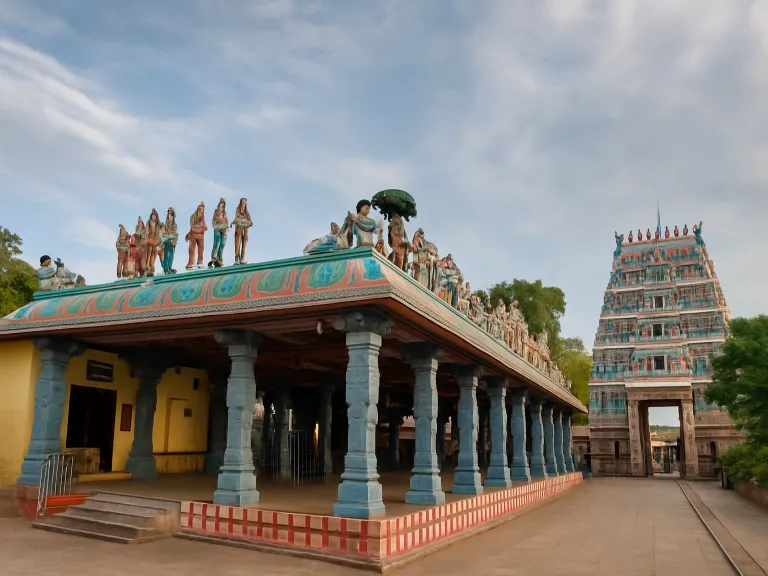
Sangameswarar Temple follows the broad Dravidian temple pattern of Tamil Nadu, with a walled sacred complex, entrance towers, prakaras, mandapas, subsidiary shrines, and sanctums arranged for ritual circumambulation. The temple’s location beside the Kaveri-Bhavani confluence is central to its design and pilgrimage function. Devotees commonly combine worship inside the temple with a visit to the riverbank at Kooduthurai.
The main sanctum enshrines Lord Sangameswarar as a Shiva linga, while Sri Vedanayaki Amman has a separate shrine within the temple complex. The temple also houses shrines for other deities, including Adikesava Perumal, demonstrating the presence of both Shaiva and Vaishnava worship spaces in the same sacred enclosure. The mandapas provide space for daily worship, festival processions, and ritual gatherings during important observances.
Architectural features visible in the complex include stone pillars, sculptural panels, ritual corridors, and gopuram-style entrances typical of medieval and later Tamil temple building. The temple does not derive its importance from unusual scale alone, but from the integration of architecture, riverine sacred geography, and continuous worship. Its built form reflects successive additions and renovations made across centuries while preserving the core identity of an ancient Thevaram Shiva shrine at a major confluence.
🌳
Sacred Features
🌳 Temple Tree
Ilanthai
The Ilanthai tree is associated with the sthala vriksha tradition of the temple.
💧 Temple Tank
Kooduthurai Sangamam
The sacred confluence of the Kaveri, Bhavani, and the unseen Amudha river functions as the principal sacred water body associated with the temple.
✨
Temple Highlights
✨
Kooduthurai Sangamam
The temple stands beside the sacred meeting point of the Kaveri and Bhavani rivers, with temple tradition also revering the unseen Amudha river.
✨
Dakshina Prayag
Because of the confluence, Bhavani is revered as Dakshina Prayag, the southern counterpart of the sacred Prayag confluence.
✨
Thevaram Paadal Petra Sthalam
The shrine is one of the Shiva temples praised in the Thevaram hymns, especially associated with Saint Tirugnanasambandar.
✨
Sangameswarar and Vedanayaki
The principal deities are Lord Sangameswarar in linga form and Goddess Vedanayaki Amman in a separate shrine.
✨
Adikesava Perumal Shrine
The temple complex includes a shrine for Adikesava Perumal, reflecting the inclusive sacred culture of the site.
✨
Ancestral Rites at the Confluence
The Kooduthurai riverbank is a major place where devotees perform rites for ancestors on suitable lunar days.
🙏
Spiritual Benefits
Worship of Lord Sangameswarar for Shiva’s grace and inner purification
Prayer to Vedanayaki Amman for wisdom, protection, and maternal blessings
Sacred bathing and worship at Kooduthurai for spiritual cleansing
Performance of ancestral rites at the river confluence
Participation in Pradosham worship for devotion to Shiva
Observance of Maha Shivaratri for intensified Shiva worship
🎉
Major Festivals
🎉
Maha Shivaratri
A major festival for Lord Sangameswarar, observed with special worship, abhishekam, and night-long devotion to Shiva.
🎉
Aadi Perukku
A significant river festival celebrated in the Tamil month of Aadi, especially important because of the temple’s location at the Kaveri-Bhavani confluence.
🎉
Pradosham
The twice-monthly Pradosham observance is important for Shiva worship and draws devotees for special puja to Lord Sangameswarar.
🎉
Navaratri
Navaratri is observed with worship of Sri Vedanayaki Amman, focusing on the goddess aspect of the temple.
🎉
Amavasya observances
New moon days are important at Kooduthurai for devotees performing ancestral rites and river-related worship.
🪔
Special Poojas
🪔
Abhishekam to Sangameswarar
Ritual bathing and worship of Lord Sangameswarar are performed as part of Shaiva temple worship.
🪔
Archana to Vedanayaki Amman
Devotees offer archana to Sri Vedanayaki Amman seeking the goddess’s blessings.
🪔
Pradosha Puja
Special worship to Lord Shiva is performed during Pradosham, the sacred twilight period connected with Shiva worship.
🪔
Maha Shivaratri Pooja
Special pujas and abhishekams are conducted for Lord Sangameswarar during Maha Shivaratri.
🪔
Ancestral Rites at Kooduthurai
Devotees perform tarpanam and related rites for ancestors at the sacred confluence through qualified priests.
🚗
How to Reach
🛣️
By Road
Bhavani is well connected by road from Erode and other towns of western Tamil Nadu. The temple is located within Bhavani town near Kooduthurai.
🚆
By Rail
The nearest major railway access is Erode Junction, from where Bhavani can be reached by road.
✈️
By Air
The nearest major airport is Coimbatore International Airport, with onward travel by road or rail via Erode.
💡
Visitor Tips
Confirm current darshan timings with the temple before travelling.
Visit early in the morning for a quieter experience at the confluence and temple.
Riverbanks can be crowded on Aadi Perukku, Amavasya days, and festival occasions.
Use caution near the river, especially during monsoon flow or water release periods.
Dress modestly and follow temple customs inside the sanctum areas.
If performing ancestral rites, arrange them through authorized local priests or temple-linked services.
Keep the riverbank clean and avoid leaving ritual materials or plastic waste in the water.
Allow time to visit both the temple and the Kooduthurai confluence area.

 WhatsApp Us