🛕About Temple
Sarangapani Swami Temple is a major Vishnu temple in Kumbakonam, Tamil Nadu, and one of the celebrated 108 Divya Desams sung by the Alvars in the Nalayira Divya Prabandham. The presiding deity is Sarangapani, Vishnu bearing the Sarnga bow, enshrined in a distinctive reclining posture known as Uthana Sayana. The temple stands in the heart of Kumbakonam, a sacred town known for its dense concentration of Shaiva and Vaishnava temples.
The temple is especially revered in the Sri Vaishnava tradition. The goddess is Komalavalli Thayar, who has her own shrine within the temple complex and is central to the temple’s mythology of the divine wedding. Sarangapani is also known as Aravamudhan, meaning the inexhaustible nectar, a name deeply associated with the devotional hymns of the Alvars.
Sarangapani Temple is among the most prominent temples of Kumbakonam because of its scale, scriptural importance, and striking Dravidian architecture. Its tall rajagopuram, chariot-shaped sanctum, sacred tank, and festival traditions make it an important pilgrimage destination for devotees of Vishnu. The temple is also linked with the transmission of Sri Vaishnava devotional literature, especially through the remembered association of Nathamuni with the hymn beginning “Aaravamudhe.” Historically, it represents a long continuum of worship, with early devotional references and later Chola, Vijayanagara, and Nayak-period contributions visible in its built form.
ℹ️Temple Information
🛕
Presiding Deity
Sarangapani Swami
👸
Goddess
Komalavalli Thayar
⭐
Temple Type
Divya Desam, Vishnu temple, Sri Vaishnava temple, Dravidian temple
📅
Built Period
The temple is attested in Alvar hymns of the 7th-9th centuries CE; the surviving structural complex developed mainly from the medieval Chola period with later Vijayanagara and Nayak additions.
🏛
Dynasty
Chola, Vijayanagara, Nayak
🙏
Sampradaya
Sri Vaishnavism
📖
Agama
Pancharatra Agama
Need Help Planning your visit to
Sri Sarangapani Swami Temple?
Our travel experts can help you with transportation,
darshan timings, nearby sightseeing and complete temple tour planning.
⭐Temple Significance
Sarangapani Swami Temple is one of the 108 Divya Desams and one of the foremost Vishnu temples of Kumbakonam. It is revered for the deity Aravamudhan in Uthana Sayana posture, the Komalavalli Thayar shrine, its association with Alvar hymns, and its role in Sri Vaishnava devotional memory.
📜History
Sarangapani Swami Temple is historically important because it is one of the Divya Desams praised by the Alvars, placing the shrine within the early medieval Vaishnava devotional movement of Tamil Nadu. The hymns of Periyalvar, Andal, Thirumazhisai Alvar, Nammalvar, and other Alvars refer to the deity of Kudandai, the old name of Kumbakonam, establishing the temple’s sacred status by the 7th to 9th centuries CE.
The surviving temple structure reflects multiple phases of construction and patronage. Chola-period inscriptions and architectural features show that the shrine developed substantially under the Cholas, who were active temple builders in the Kaveri delta. Later rulers and patrons of the Vijayanagara and Nayak periods contributed to mandapas, gopurams, processional traditions, and renovations, as occurred in many major temples of the region.
No single historical founder is securely documented for the entire temple. Its present form is the result of centuries of patronage, ritual continuity, and architectural expansion. The temple’s importance also increased through Sri Vaishnava memory connected with Nathamuni, who is associated with the recovery and propagation of the Nalayira Divya Prabandham after hearing verses on Aravamudhan. The temple therefore stands not only as a monument of architecture but also as a central site in the history of Tamil Vaishnava devotion, linking Alvar poetry, temple worship, and the institutional growth of Sri Vaishnavism in the Chola heartland.
🕉️Mythology
Temple mythology connects Sarangapani Swami Temple with Sage Hema Rishi and Goddess Lakshmi. According to the temple’s sacred narrative, Hema Rishi performed penance at Kumbakonam, seeking the grace of Vishnu. Lakshmi manifested as Komalavalli in the sacred tank known as Hema Pushkarini or Potramarai Kulam, and the sage raised her as his daughter. Vishnu then came to Kumbakonam to marry Komalavalli.
The sanctum’s chariot symbolism is linked with this divine wedding legend. Vishnu is described in temple tradition as arriving from Vaikuntha in a celestial chariot to wed Komalavalli Thayar. This mythic arrival is reflected architecturally in the garbhagriha, which is designed like a stone chariot with wheels and horses. The deity’s name Sarangapani refers to Vishnu holding the Sarnga bow, while Aravamudhan expresses his sweetness and inexhaustible grace to devotees.
Another important temple tradition is associated with Thirumazhisai Alvar. The deity is in Uthana Sayana, a reclining posture with the upper body slightly raised. The tradition explains this posture through the Alvar’s devotional command asking the Lord to rise and speak to him. The Lord is understood to have responded by lifting himself from the reclining position, and the raised posture has remained the temple’s distinctive iconographic feature. These narratives belong to the sacred mythology and devotional memory of the temple, separate from its historical construction history.
🏛Architecture
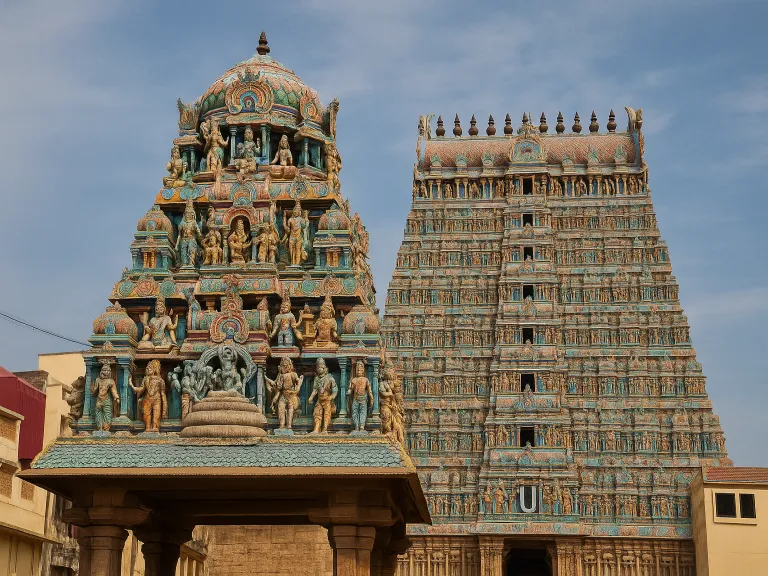
Sarangapani Swami Temple is a major example of Dravidian temple architecture in the Kaveri delta. The most prominent external feature is its tall rajagopuram, one of the tallest temple towers in Kumbakonam, rising in multiple tiers above the entrance. The temple complex includes prakaras, pillared mandapas, shrines for the main deity and goddess, and spaces for processional worship, all arranged according to the ritual needs of a large Vaishnava temple.
The sanctum is the temple’s most distinctive architectural feature. It is conceived as a stone chariot, with sculpted wheels and horses, reflecting the mythology of Vishnu arriving in a chariot to marry Komalavalli Thayar. The main deity, Sarangapani or Aravamudhan, is enshrined in Uthana Sayana, a raised reclining posture. The vimana above the sanctum is known in temple tradition as the Vaidika Vimanam.
The temple also has separate seasonal entrances associated with the sun’s northward and southward movements, commonly described as Uttarayana and Dakshinayana entrances. Sculptural details, granite bases, later brick-and-stucco superstructures, mandapa pillars, and processional pathways show the temple’s evolution across different periods of South Indian temple construction. The architecture integrates theology, mythology, and ritual movement: the chariot form recalls the divine wedding, the towering gopuram marks the temple’s civic and sacred presence in Kumbakonam, and the mandapas support festival processions and congregational worship. The result is a layered sacred complex shaped by medieval Tamil devotional culture and later royal patronage.
🌳
Sacred Features
💧 Temple Tank
Hema Pushkarini / Potramarai Kulam
The sacred tank is connected with the temple mythology of Lakshmi manifesting as Komalavalli and with the penance of Sage Hema Rishi.
✨
Temple Highlights
✨
One of the 108 Divya Desams
The temple is praised in the Nalayira Divya Prabandham by the Alvars and is a major Sri Vaishnava pilgrimage shrine.
✨
Uthana Sayana Posture
The presiding deity Sarangapani, also called Aravamudhan, is enshrined in a distinctive raised reclining posture.
✨
Chariot-Shaped Sanctum
The sanctum is designed like a stone chariot with wheels and horses, reflecting the mythology of Vishnu’s arrival for the divine wedding.
✨
Komalavalli Thayar Shrine
The goddess Komalavalli Thayar has an important shrine and is central to the temple’s sacred narrative.
✨
Tall Rajagopuram
The temple’s multi-tiered rajagopuram is one of the most prominent landmarks in Kumbakonam.
✨
Association with Alvar Hymns
The deity Aravamudhan is celebrated in Tamil Vaishnava devotional poetry, especially in hymns connected with Kudandai.
🙏
Spiritual Benefits
Devotees worship Sarangapani Swami for the grace of Vishnu and spiritual protection.
The temple is visited for devotion to Aravamudhan, celebrated as the inexhaustible nectar of divine compassion.
Couples and families offer prayers connected with the divine wedding of Sarangapani and Komalavalli Thayar.
Pilgrims recite or listen to Divya Prabandham hymns associated with the temple.
Devotees seek peace of mind through darshan of the Lord in Uthana Sayana posture.
Worship at the temple is valued as part of pilgrimage to the 108 Divya Desams.
Devotees pray to Komalavalli Thayar for prosperity, harmony, and maternal grace.
🎉
Major Festivals
🎉
Vaikunta Ekadasi
A major Sri Vaishnava festival observed with special worship and large devotee participation.
🎉
Brahmotsavam
The annual temple festival includes processional worship of the deity and is one of the important celebrations of the temple.
🎉
Temple Car Festival
The deity is taken in procession during the car festival, reflecting the temple’s strong processional tradition and chariot symbolism.
🎉
Mahamaham-related Worship
During the Mahamaham festival cycle of Kumbakonam, the town’s major temples, including Sarangapani Temple, become important centres of pilgrimage.
🪔
Special Poojas
🪔
Nitya Aradhanai
Daily Vaishnava worship is offered to Sarangapani Swami and Komalavalli Thayar according to the temple’s ritual tradition.
🪔
Thirumanjanam
Ceremonial bathing and adornment of the deity are performed on designated occasions as part of temple worship.
🪔
Archana
Devotees offer name-recitation worship to Sarangapani Swami and Komalavalli Thayar through the temple priests.
🪔
Divya Prabandham Recitation
Recitation of Alvar hymns is an important part of Sri Vaishnava worship associated with the temple.
🚗
How to Reach
🛣️
By Road
Kumbakonam is well connected by road with Thanjavur, Mayiladuthurai, Tiruchirappalli, and Chennai. The temple is located within Kumbakonam town and can be reached by local transport.
🚆
By Rail
Kumbakonam Railway Station is the nearest major rail point, with train connections to cities in Tamil Nadu and beyond.
✈️
By Air
The nearest major airport is Tiruchirappalli International Airport. From there, Kumbakonam can be reached by road or rail.
💡
Visitor Tips
Verify current darshan timings with the temple administration before visiting, as timings can change on festival days.
Plan extra time during Vaikunta Ekadasi, Brahmotsavam, and Kumbakonam festival seasons because of heavy crowds.
Wear modest clothing appropriate for a Hindu place of worship.
Keep footwear only in designated areas outside the temple premises.
Maintain silence and follow queue arrangements inside the prakaras and near the sanctum.
Check locally before taking photographs, as photography rules may differ by area within the temple.
Combine the visit with nearby Kumbakonam temples such as Chakrapani, Ramaswamy, and Adi Kumbeswarar if time permits.
Carry drinking water during hot months, as Kumbakonam can be humid and warm.

 WhatsApp Us