🛕About Temple
Sattainathar Temple at Sirkazhi in Mayiladuthurai district, Tamil Nadu, is one of the most revered Shaiva temples of the Cauvery delta. The temple is also known as Sirkazhi Brahmapureeswarar Temple, because the presiding linga in the lower sanctum is worshipped as Brahmapureeswarar. It is a celebrated Paadal Petra Sthalam, praised in the Tevaram hymns of the Tamil Saiva saints.
A distinctive feature of the shrine is its three-tiered sacred arrangement. Brahmapureeswarar is enshrined at the ground level, Thoniappar with the goddess is worshipped at an upper level, and Sattainathar, a fierce form associated with Shiva, is worshipped in the top shrine. This layered arrangement gives the temple a special place among Tamil Shaiva temples and connects it with multiple local sacred legends.
Sirkazhi is also inseparable from the life of Thirugnana Sambandar, one of the foremost Nayanmars. The saint was born in Sirkazhi, and the temple tank is connected with the famous episode in which the child Sambandar received divine milk from the goddess and began singing hymns on Shiva. Because of this association, the temple is not only a major Shiva shrine but also a central place in the devotional history of Tamil Saivism.
ℹ️Temple Information
🛕
Presiding Deity
Brahmapureeswarar
⭐
Temple Type
Shiva temple, Paadal Petra Sthalam, Tevaram temple, Nayanmar-associated temple, Ancient Tamil Shaiva temple
📅
Built Period
Before the 7th century CE; later structural additions and endowments are associated with the medieval period.
🏛
Dynasty
Chola-period patronage is historically associated with the region and temple development; the original ruling dynasty of foundation is not identified.
Need Help Planning your visit to
Arulmigu Sattainathar Temple?
Our travel experts can help you with transportation,
darshan timings, nearby sightseeing and complete temple tour planning.
⭐Temple Significance
Sattainathar Temple is significant as a Paadal Petra Sthalam praised in the Tevaram hymns, as the sacred temple of Brahmapureeswarar, Thoniappar, and Sattainathar, and as the birthplace and first hymn site of Thirugnana Sambandar. Its three-tiered sanctum arrangement and its role in Tamil Shaiva devotional history make it one of the most important Shiva temples in the Cauvery delta.
📜History
Sattainathar Temple is historically important because it was already a celebrated shrine by the 7th century CE, when Thirugnana Sambandar sang hymns on the deity of Sirkazhi. Appar and Sundarar are also associated with the Tevaram canon that preserves the sacred status of this temple. Its presence in the early medieval Tamil devotional corpus establishes the shrine as an ancient centre of Shaiva worship.
The original founder of the temple is not historically identified. The temple stands in the old Chola country, and medieval Chola patronage to temples in this region is well documented through inscriptions and architectural activity across the Cauvery delta. The existing complex reflects multiple phases of construction, renovation, and endowment rather than a single founding event. Later rulers and local patrons also contributed to the maintenance and expansion of major temples in this region.
Sirkazhi’s importance increased because of its close connection with Thirugnana Sambandar. The town became a major sacred centre for the Tamil Shaiva tradition, and the temple’s rituals, festivals, and literary memory developed around both Shiva worship and the saint’s life. The shrine is therefore historically valued not only as an ancient temple but also as a living monument to the Bhakti movement in Tamil Nadu.
🕉️Mythology
The mythology of Sattainathar Temple centres on several sacred names and forms of Shiva worshipped at Sirkazhi. The deity Brahmapureeswarar is connected with the legend of Brahma worshipping Shiva at this place. This association gives the temple the name Brahmapuram and explains the name Brahmapureeswarar. Sirkazhi is also praised in Tamil devotional literature by several sacred names, reflecting its layered religious memory.
Another major legend concerns Thoniappar. In the temple’s sacred tradition, during a cosmic deluge Shiva is connected with the image of a divine boat, or thoni, preserving creation and sacred knowledge. This myth gives the upper shrine its name, Thoniappar. The goddess worshipped with Thoniappar is venerated as the divine mother, reinforcing the temple’s association with protection, preservation, and grace.
The best-known local tradition is the childhood episode of Thirugnana Sambandar. At the temple tank, the young Sambandar cried for his parents, and Shiva and the goddess gave him divine milk. After receiving it, the child saint sang his first hymn beginning with praise of the Lord wearing the crescent moon. This event is central to Tamil Shaiva memory and is celebrated as the moment when Sambandar’s divine poetic mission began.
🏛Architecture
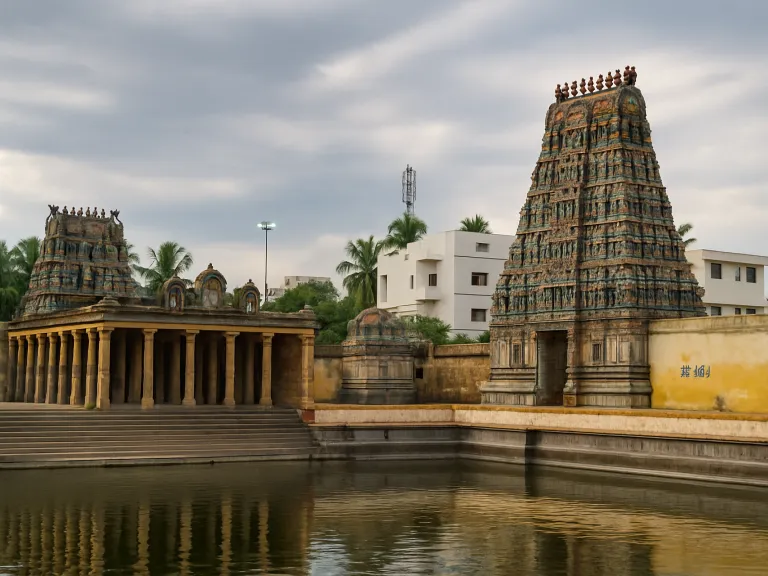
The architecture of Sattainathar Temple reflects the sacred geography of an old Tamil Shaiva temple complex. The temple has large enclosed prakaras, gopurams, mandapas, subsidiary shrines, and a prominent temple tank. Its layout supports circumambulation and ritual movement, while the principal sanctums are arranged in an unusual vertical sequence that distinguishes Sirkazhi from most other Shiva temples.
At the lower level, Brahmapureeswarar is worshipped as a Shiva linga. Above this level is the shrine of Thoniappar with the goddess, associated with the deluge legend and the preserving form of Shiva. At the highest level is the shrine of Sattainathar. This three-level arrangement is the temple’s most important architectural and ritual feature, combining multiple forms of the deity within one sacred complex.
The temple also contains spaces associated with Thirugnana Sambandar, including the sacred tank connected with the divine milk episode. Like many ancient temples of the Chola region, the present structure shows the results of centuries of additions and restorations. Stone shrines, pillared halls, stucco elements, and later-period embellishments together preserve the temple’s continuity as a major centre of worship rather than a monument of a single architectural period.
🌳
Sacred Features
🌳 Temple Tree
Parijatha
The Parijatha tree is associated with the temple as its sacred tree in temple tradition.
💧 Temple Tank
Brahma Theertham
The temple tank is closely associated with the divine milk episode of Thirugnana Sambandar and is an important sacred water source within the temple tradition.
✨
Temple Highlights
✨
Three-tiered Shiva shrine
The temple uniquely enshrines Brahmapureeswarar at the lower level, Thoniappar at an upper level, and Sattainathar at the top level.
✨
Paadal Petra Sthalam
Sirkazhi is one of the Shiva temples praised in the Tevaram hymns of the Tamil Saiva saints.
✨
Birthplace of Thirugnana Sambandar
The temple is closely connected with the life of Thirugnana Sambandar, one of the foremost Nayanmars.
✨
Divine milk tradition
The temple tank is associated with the episode in which the goddess gave divine milk to the child Sambandar.
✨
Historic Cauvery delta shrine
The temple belongs to the sacred landscape of old Chola country and has been a major Shaiva centre for many centuries.
🙏
Spiritual Benefits
Devotees worship Brahmapureeswarar for the grace of Shiva and spiritual clarity.
Worship at Sirkazhi is associated with devotion, learning, and divine wisdom because of Thirugnana Sambandar’s life.
Prayers to the goddess are connected with motherly protection and compassion.
Darshan of Sattainathar is sought for courage and removal of fear.
Circumambulation of the three sacred levels is valued as worship of multiple forms of Shiva.
Devotees visit the temple to deepen connection with the Tevaram and Tamil Shaiva tradition.
Families bring children to the temple seeking blessings for knowledge and devotion.
🎉
Major Festivals
🎉
Thirugnana Sambandar festival
The temple celebrates events connected with Thirugnana Sambandar, especially the sacred memory of the child saint receiving divine milk and beginning his hymns.
🎉
Maha Shivaratri
Maha Shivaratri is observed with special worship to Shiva, attracting devotees for night-long devotion and darshan.
🎉
Arudra Darshan
Arudra Darshan is an important Shaiva festival associated with Shiva worship and is observed in many major Shiva temples including Sirkazhi.
🎉
Pradosham
Pradosham worship is observed for Shiva, with devotees offering prayers during the sacred twilight period.
🎉
Navaratri
Navaratri is observed with worship of the goddess, reflecting the temple’s reverence for the divine mother.
🪔
Special Poojas
🪔
Pradosham Pooja
Special worship to Shiva is performed during Pradosham, a sacred period for Shaiva devotees.
🪔
Maha Shivaratri Pooja
Special rituals and extended worship are performed for Shiva on Maha Shivaratri.
🪔
Sambandar-related worship
Ritual observances honour the memory of Thirugnana Sambandar and his divine connection with the temple.
🪔
Abhishekam to Shiva
Abhishekam is performed to the Shiva deities according to the temple’s ritual schedule.
🚗
How to Reach
🛣️
By Road
Sirkazhi is connected by road with Mayiladuthurai, Chidambaram, Vaitheeswaran Koil, and other towns of the Cauvery delta. Buses and taxis are available from nearby towns.
🚆
By Rail
Sirkazhi has a railway station on the main line connecting Chennai, Chidambaram, Mayiladuthurai, and Thanjavur-side routes.
✈️
By Air
The nearest major airport with broad connectivity is Tiruchirappalli International Airport. Chennai International Airport is another option for long-distance travellers.
💡
Visitor Tips
Check the current temple opening hours locally before planning darshan, as timings may change on festival days.
Allow enough time to visit the lower, upper, and top shrines within the complex.
Visit the temple tank associated with Thirugnana Sambandar’s divine milk episode.
Wear modest clothing suitable for worship in a traditional Shiva temple.
Festival days can be crowded, especially events connected with Thirugnana Sambandar and major Shiva observances.
Sirkazhi is well connected by rail and road, making it convenient to combine with nearby temples such as Vaitheeswaran Koil and Thiruvengadu.
Follow temple staff instructions for access to upper shrines and ritual areas.

 WhatsApp Us